
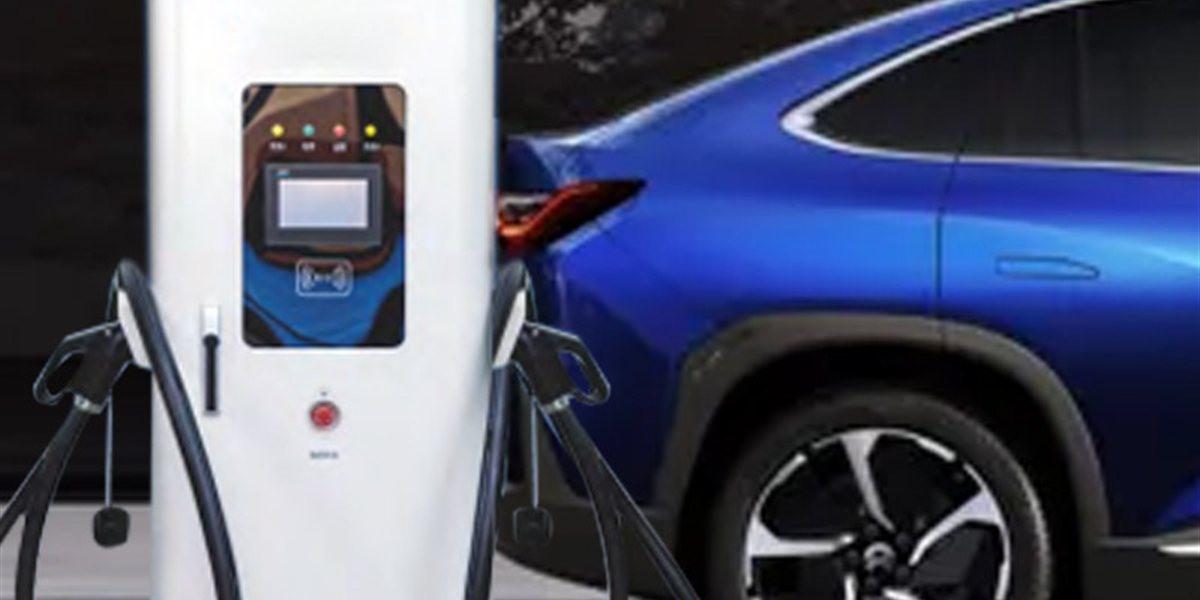
Scalable Power Stacks: Modular 480kW to 1440kW Units for Future-Proof Hubs
Quick Answer
A scalable power stack is a charging hub built from standardized, interchangeable building blocks — liquid-cooled power cabinets assembled from modular power modules, feeding dispensers through a shared site controller — so capacity grows in defined increments (480kW, 720kW, 960kW, 1,200kW, 1,440kW and beyond) instead of requiring a single, monolithic megawatt install. The operator buys only the capacity that today’s traffic justifies, provisions the trench, AC bus, and controller for the eventual peak, and then adds cabinets and dispensers as utilization rises. This staged approach lowers first CAPEX, preserves the option to reach megawatt capacity when heavy trucks arrive, and avoids the single-point-of-failure and upgrade dead-ends of all-in-one megawatt hardware. For hubs that must last a decade in an electrifying world, modularity is the only future-proof architecture.
Key Takeaways
- Build in defined steps: 480kW, 720kW, 960kW, 1,200kW, and 1,440kW are all multiples of standard cabinets — no custom megawatt hardware required.
- Lower first CAPEX: deploy only the capacity current demand supports, and let revenue fund each subsequent expansion.
- No stranded investment: power modules, cabinets, cooling, and control plane are reused as the site scales; only dispensers and connectors evolve with vehicle standards.
- Dynamic power sharing lifts utilization: because all dispensers draw from one pool, capacity shifts in real time to whichever vehicles can accept it.
- Future-proof by design: 1,000V+ wide-voltage modules, liquid cooling, OCPP 2.0.1, and BESS-ready DC architecture prepare the hub for MCS-class megawatt charging.
Why Monolithic Megawatt Units Fail in Practice
The intuitive approach to megawatt charging is to buy a megawatt charger. In practice, monolithic high-power units create problems that operators discover only after deployment.
Diseconomy of early oversizing. Demand rarely arrives at full scale on day one. A site that installs 1,440kW of capacity to serve a handful of daily sessions ties up capital for years before utilization justifies it. That capital earns nothing while it waits.
Single point of failure. When all power conversion lives in one large block, a fault in that block can take the entire site offline. At megawatt scale, the availability consequences are severe — a truck stop that goes dark during peak hours loses both revenue and reputation.
Upgrade dead-ends. A proprietary megawatt unit whose components are not interchangeable with the rest of the product line is difficult to expand, service, or repurpose. When vehicle standards shift or power demands grow, the operator faces replacement rather than extension.
Service complexity. Large, tightly integrated power blocks often require specialist tooling and factory-level repair. A minor fault becomes a major event.
The modular alternative eliminates each of these failure modes by decomposing the megawatt site into standardized, independently operable blocks.
The Modular Stack Principle
The core idea is that high site capacity does not require high-capacity single units. A 1,440kW hub can be assembled from four 360kW cabinets, or six 240kW cabinets, or a mix — interconnected by a site controller that treats their combined output as a single, dynamically shared power pool.
Each cabinet houses interchangeable liquid-cooled power modules. A 240kW cabinet typically holds four 60kW modules or six 40kW modules; a 360kW cabinet scales correspondingly. Because every cabinet uses the same module SKU, the operator carries one spares pool, one training program, and one service procedure across the entire site — and, indeed, across an entire network of sites.
This decomposition delivers three structural advantages:
- Granular redundancy. If one module fails, the cabinet sheds only that module’s capacity (40–60kW) while the rest continues charging. A field swap restores full power in minutes, often without taking the cabinet offline.
- Incremental growth. Capacity grows by adding modules, cabinets, or dispensers — not by replacing the power plant.
- Standard interfaces. Cabinet-to-controller, cabinet-to-dispenser, and module-to-cabinet interfaces are fixed and documented, so expansions do not require re-engineering.
The Power Ladder: 480kW to 1,440kW and Beyond
Because capacity is built from standard cabinets, the site scales in predictable increments. The table below maps common configurations to their building blocks and target applications.
| Site Capacity | Typical Cabinet Build | Dispenser Strategy | Target Application |
|---|---|---|---|
| 480kW | 2 × 240kW cabinets | 2–4 dispensers, dynamic sharing | Motorway rest stops, fleet depots, urban hubs |
| 720kW | 3 × 240kW or 2 × 360kW cabinets | 4–6 dispensers | High-traffic public hubs, logistics parks |
| 960kW | 4 × 240kW cabinets | 6–8 dispensers | Corridor hubs, multi-class vehicle sites |
| 1,200kW | 5 × 240kW or 10 × 120kW cabinets | 8–10 dispensers | Heavy-duty corridors, regional truck stops |
| 1,440kW | 6 × 240kW or 4 × 360kW cabinets | 8–12 dispensers + MCS-ready | Megawatt truck hubs, MCS staging sites |
Two properties make this ladder powerful. First, every rung is built from the same catalog of cabinets and modules, so moving up the ladder is an engineering routine rather than a project. Second, the ladder extends beyond 1,440kW: the same architecture reaches multi-megawatt capacity by adding cabinets, which is why the 1,440kW site built today is the scalable foundation for the megawatt hub of 2030.
Anatomy of a Modular Power Stack
A modular charging stack has four standard layers, and each is designed to be reused across the power ladder.
Power modules. The interchangeable heart of the system. MIDA’s 40kW/60kW liquid-cooling power modules are liquid-cooled, wide-voltage, and hot-swappable, so a single SKU populates every cabinet from 240kW to multi-megawatt clusters. Liquid cooling is what allows sustained high-power output without thermal derating, and it is the enabling technology for megawatt-class duty.
Power cabinets. Enclosures that house the modules, cooling distribution, and local controls. Cabinets come in standard capacities (typically 240kW and up) and connect in parallel onto a shared DC bus or distribution network. Because cabinets are independent, the site’s capacity grows one block at a time, and a fault in one cabinet leaves the others operating.
Dispensers. The driver-facing units that deliver power to vehicles. Dispensers are separated from the power cabinets — often by up to 100–200 meters of DC cable — which frees the layout of the site and centralizes heat, noise, and service in a power room. Dispensers carry the connectors (CCS2, NACS, GB/T, or MCS) and can be added or swapped without touching the power plant.
Site controller. The software and hardware brain that allocates power across dispensers, enforces grid limits, and integrates with the network backend via OCPP. A controller designed for the full power ladder manages dynamic power sharing from day one and scales seamlessly as cabinets are added. MIDA’s 360kW liquid-cooled charging station with RFID, OCPP, and POS demonstrates the protocol-complete control layer that this architecture depends on.
Dynamic Power Sharing: The Utilization Multiplier
Modular stacks do not merely scale power; they raise the value of every kilowatt installed.
In a fixed-allocation system, each dispenser owns a slice of capacity whether or not a vehicle is using it, so unused slices sit idle. In a dynamic-sharing stack, all dispenser capacity is pooled, and the controller routes power in real time to whichever vehicles can accept it.
The operational consequence is significant. A truck arriving at 10% state of charge can receive full power — potentially 500kW or more on a suitable dispenser — while a nearly full vehicle on another dispenser tapers to a lower rate. No cabinet sits idle; capacity follows demand. Measured against fixed systems, dynamic sharing typically lifts average dispenser utilization from the 40–60% band into the 85–95% band during peak windows. Because utilization is the denominator of revenue-per-charger, that improvement directly shortens payback.
Achieving this across standards and vehicle classes requires the controller to translate between protocols and share power across every connector type on site. A reference implementation at corridor scale is MIDA’s 480kW ultra-fast liquid-cooled DC charging station for motorways, which separates power conversion from dispensing and applies the same shared-pool logic that scales to a 1,440kW stack.
The Economics of Staged Build-Out
The business case for modularity rests on three financial properties.
Lower first CAPEX. The site installs only the capacity its near-term demand supports. Capital that would have been sunk into idle megawatt hardware instead stays available for other investments or is deployed later, when utilization justifies it. First-phase CAPEX can be 25–40% lower than a single oversized install.
Expansion follows revenue. Each additional cabinet and dispenser is justified by observed demand, so growth is funded by the site’s own cash flow rather than upfront speculation. The operator never has to forecast peak demand years in advance — only to build the infrastructure that makes future expansion cheap.
Preserved residual value. Because cabinets and dispensers are standardized, they retain value and utility across the site’s life. If demand shifts, hardware can be reconfigured or redeployed rather than written off. The power modules, cooling, and control plane persist across the entire ladder.
The one investment that should be made for the eventual peak, not the first phase, is the enabling infrastructure: trenching, the AC bus, the power-room footprint, and a controller provisioned for full capacity. These are cheap to install once and expensive to retrofit — which is precisely why they should be sized for the megawatt endpoint from the beginning.
Future-Proofing: MCS, High Voltage, and BESS Readiness
A modular stack is future-proof only if its building blocks are. Four attributes determine whether today’s 480kW site becomes tomorrow’s megawatt hub or a dead end.
- Wide-voltage output (1,000V+). Vehicle platforms are migrating from 800V to 1,000V and beyond. Wide-voltage modules that serve 400V, 800V, and 1,000V vehicles capture the entire installed base and stay ready for MCS-class trucks.
- Liquid cooling throughout. Sustained megawatt duty demands liquid-cooled modules, cables, and connectors. A stack engineered for liquid cooling scales to MCS power levels; an air-cooled one does not.
- Connector-agnostic dispensers. Because the power platform is standard-agnostic, the hub can add MCS, NACS, or GB/T dispensers as the vehicle mix evolves, without replacing cabinets.
- BESS-ready DC architecture. A grid-constrained site can integrate storage behind the same bus, enabling peak shaving and megawatt bursts on modest grid connections.
Together, these attributes mean the hub built at 480kW today is constructed from the same blocks that will later form a 1,440kW megawatt site — the cabinets gain higher-rated modules, the dispensers gain MCS heads, and the controller orchestrates it all without a redesign.
Procurement Checklist for a Scalable Hub
- Size the civil works and controller for the endpoint, not phase one. Trenching, AC bus, and controller capacity are the expensive-to-retrofit items.
- Standardize on one power module SKU. Confirm that every cabinet in the ladder uses the same interchangeable, hot-swappable modules.
- Require wide-voltage, liquid-cooled modules. Target 1,000V+ output to cover current and future vehicle platforms.
- Demand true dynamic power sharing. Verify the controller pools capacity across all dispensers and supports OCPP 2.0.1 for network integration.
- Keep the power platform connector-agnostic. Ensure dispensers can be added or swapped per standard (CCS2, NACS, GB/T, MCS) without cabinet changes.
- Plan for storage integration. Choose a platform whose DC architecture accepts BESS for grid-constrained sites and megawatt bursts.
- Buy from one accountable vendor. A single source for modules, cabinets, dispensers, and software removes interface risk and simplifies service. The MIDA commercial DC fast charging range shows how the blocks fit together across the ladder.
FAQ
1. Why not buy a single 1,440kW unit instead of assembling cabinets?
A monolithic unit concentrates failure risk, forces premature capital expenditure, and offers poor serviceability. A modular stack built from standard cabinets delivers the same aggregate capacity with granular redundancy, incremental cost, and reuse across the site’s life.
2. How much does each expansion step cost?
Each step costs one or more cabinets plus dispensers and a software license — using the same grid connection, modules, and control plane already installed. This makes expansion predictable and fundable from operating revenue.
3. Can a 480kW site really reach 1,440kW later?
Yes, if the trench, AC bus, and controller are provisioned for the endpoint during initial construction. The cabinets and dispensers are then added as demand grows, without civil rework.
4. What happens if a power module fails at a megawatt site?
The cabinet sheds only that module’s capacity (40–60kW) and continues charging; a technician swaps the failed module in minutes. Module-level redundancy is what makes high availability at megawatt scale achievable.
5. Does dynamic power sharing work across different connector standards?
Yes. Because all dispensers draw from a common power pool, the site controller can shift power between MCS, NACS, GB/T, or CCS dispensers in real time, so capacity is never stranded by connector type.
6. Is liquid cooling necessary for a 480kW stack?
For sustained high-power duty, yes. Liquid-cooled modules, cables, and connectors hold performance without thermal derating and are the same technology required for later megawatt expansion, so specifying them now avoids a future rebuild.
7. How does modularity prepare a site for MCS heavy trucks?
The power platform, cooling, and control plane are connector-agnostic and voltage-flexible, so MCS capability is added by deploying MCS dispensers and, if needed, higher-rated modules — the cabinets and site infrastructure already support the load.
Conclusion
The megawatt hub of 2030 will not be built in a single purchase; it will be assembled over years from standard blocks. That is the strategic case for scalable power stacks. By decomposing site capacity into interchangeable modules, modular cabinets, connector-specific dispensers, and one governing controller, operators can start at 480kW, grow through 720kW and 960kW to 1,440kW and beyond, and fund each step from the revenue the last one generated. The architecture lowers first CAPEX, eliminates single points of failure, lifts utilization through dynamic power sharing, and — through wide-voltage, liquid-cooled, connector-agnostic, storage-ready building blocks — remains ready for the MCS trucks that are already on the road. Buying modular today is not a hedge against an uncertain future; it is the only way to build a charging hub that can become whatever the next decade demands.
MIDA Power designs and manufactures modular, liquid-cooled charging platforms scalable from 480kW to multi-megawatt clusters, built on liquid-cooling power modules. Explore the commercial DC fast charging range and contact MIDA via midapower.com for scalable hub engineering.
Post time: Sep-10-2026


