
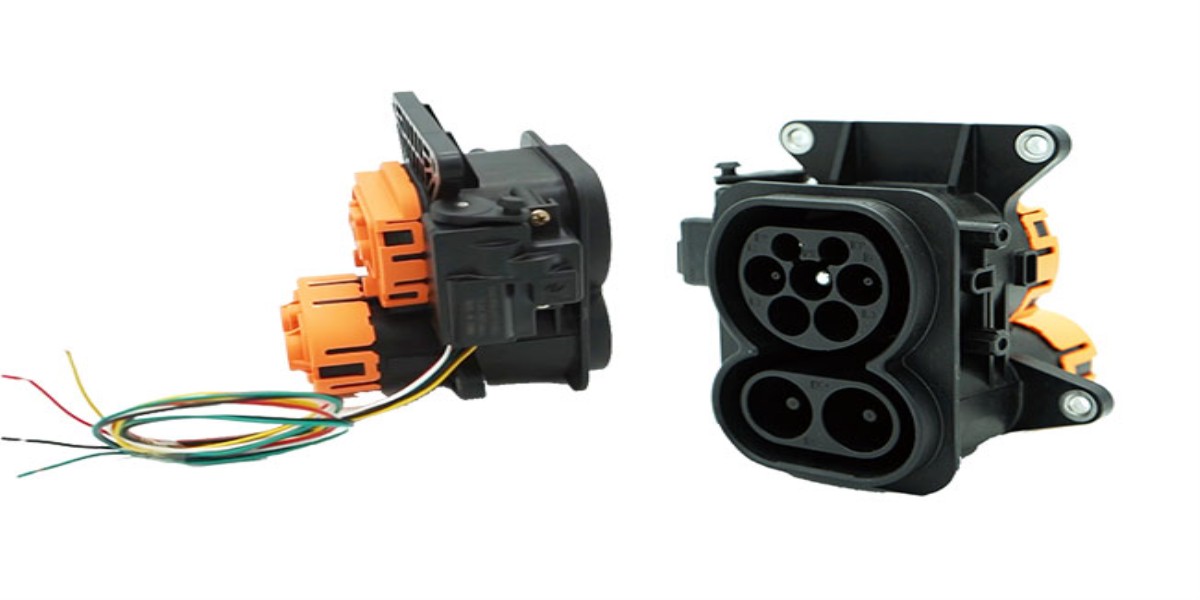
CCS2 vs NACS: Navigating Global Charging Standards for EV Network Operators
Quick Answer
The global EV charging market has consolidated around two connector standards: CCS2 (Combined Charging System Type 2, defined by IEC 62196-2), the de facto standard across Europe, Asia-Pacific, Latin America and most export markets, and NACS (North American Charging Standard, standardized as SAE J3400), which is displacing CCS1 across North America following mass OEM adoption since 2024. For EV network operators, the correct strategy is not to bet on a single standard but to deploy hardware that supports both. That means selecting chargers with modular, swappable connectors, 1000V wide-voltage power architecture, and OCPP 2.0.1 plus ISO 15118 communication stacks — so the same DC fast charging station serves CCS2 vehicles today and NACS vehicles as the transition completes. Operators who lock themselves into single-standard hardware risk stranding capital inside a five-to-ten-year transition window.
Key Takeaways
- CCS2 remains the dominant standard for DC fast charging outside North America, anchored by EU AFIR regulation and CCS2-native fleets.
- NACS (SAE J3400) has become the North American default; virtually every major OEM shipping in the US and Canada from 2025 has adopted NACS charge ports.
- The physical connector is only half the story: ISO 15118 (Plug & Charge) and OCPP compatibility determine interoperability, billing and remote management.
- Dual-standard-ready hardware — swappable connectors plus wide-voltage power modules — is now a core procurement requirement for international network operators.
- A phased migration plan, CCS2-first or NACS-first depending on region, protects utilization rates and avoids stranded assets.
The Charging Standards Landscape Has Changed
For most of the past decade, choosing a charging standard was a regional decision made once at specification time. Europe standardized on CCS2, North America on CCS1, Japan on CHAdeMO, and China on GB/T. Network operators procured chargers per market and rarely revisited the decision.
That stable picture broke in 2023. Tesla opened its North American Charging Standard (NACS) to other manufacturers, and within eighteen months Ford, General Motors, Rivian, Hyundai-Kia, BMW Group, Mercedes-Benz, Toyota, Volkswagen and Stellantis had all announced NACS adoption for their North American vehicles. SAE International published NACS as J3400 in December 2023, giving the connector formal standards-body status. By 2025, NACS became the default charge port on new vehicles sold in the United States and Canada, with most legacy CCS1 vehicles expected to transition via adapters until roughly 2030.
For operators running international networks, the consequence is direct: the hardware specification written today must remain valid across two incompatible connector ecosystems for at least a decade. This article breaks down CCS2 and NACS at the connector, protocol, regional and business levels, then translates the analysis into a practical procurement and deployment strategy.
CCS2 Explained: The Global Workhorse
CCS2 combines the Type 2 (Mennekes) AC connector with two additional DC pins, defined under IEC 62196-2. It supports AC charging up to 43kW and DC fast charging from 50kW upward, with liquid-cooled implementations now delivering well beyond 350kW in 2026-era hardware.
Geographic footprint. CCS2 dominates Europe (EU, UK, Norway, Switzerland), Australia, New Zealand, most of Southeast Asia, India, Brazil, Chile, and a growing list of Middle Eastern and African markets. Because European regulation (AFIR) mandates interoperable CCS2 infrastructure on the TEN-T highway network, CCS2 effectively anchors all DC charging investment across the EU.
Protocol stack. CCS2 uses Power Line Communication (PLC) per DIN 70121 and ISO 15118, enabling smart charging and Plug & Charge authentication. Billing, roaming and remote management run through OCPP 1.6J and 2.0.1, making CCS2 chargers fully interoperable across Charge Point Operators (CPOs) and eMSP platforms.
Key technical characteristics:
- Voltage range: typically 200–1000V, supporting both 400V and 800V vehicle architectures.
- Current: liquid-cooled CCS2 cables sustain 500A+ continuously without thermal derating.
- Plug & Charge: native ISO 15118-2/20 support for certificate-based automatic authentication.
- Certification: CE and TÜV marks are standard requirements for European deployment, with market-specific marks elsewhere.
NACS Explained: The North American Default
NACS, standardized as SAE J3400, is a single compact connector carrying both AC and DC power. Its small form factor, robust mechanical design, and the density of Tesla’s Supercharger network made it attractive to OEMs facing the cost and complexity of dual-port vehicle designs.
The J3400 specification was deliberately engineered with headroom: the connector is rated for up to 1MW, which supports megawatt-class truck charging without a connector change. Tesla’s V4 Supercharger cabinets deliver up to 500kW per stall, and third-party manufacturers are now shipping J3400-native DC fast chargers across North America.
Geographic footprint. The United States, Canada and Mexico lead NACS adoption, with early uptake in South Korea and other markets where Tesla infrastructure is dense. For every other region, CCS2 remains the operative standard.
Protocol stack. NACS vehicles and chargers use the same ISO 15118 PLC communication as CCS, meaning Plug & Charge works identically. The difference is purely the physical interface plus the legacy CCS1 accommodation period. OCPP-based network management applies unchanged.
Key technical characteristics:
- Single connector for AC (Level 1/2) and DC (Level 3).
- Rated up to 1MW in the J3400 specification.
- Backward compatibility with CCS1 vehicles via adapters during the transition.
- Same ISO 15118 and OCPP software stack as CCS2.
CCS2 vs NACS: Side-by-Side Comparison
| Dimension | CCS2 | NACS (SAE J3400) |
|---|---|---|
| Governing standard | IEC 62196-2 (Type 2 combo) | SAE J3400 (originally Tesla) |
| AC capability | Yes, up to 43kW (three-phase) | Yes, Level 1/2 (single-phase) |
| DC fast charging | 50kW – 600kW+ (liquid-cooled) | Up to 500kW deployed; 1MW rated |
| Primary regions | Europe, APAC, LATAM, Middle East, Africa | North America (US, CA, MX) |
| Communication | ISO 15118 / DIN 70121 (PLC) | ISO 15118 (PLC) |
| Plug & Charge | Native | Native |
| Connector design | Larger, two-piece design | Compact, single-piece |
| Legacy compatibility | Replaces Type 1/CCS1 in most markets | Adapters for CCS1 legacy vehicles |
| Certification path | CE, TÜV, market marks | UL, ETL, FCC, CSA |
The table shows that the practical difference is regional, not technical. Both standards share the same digital backbone — ISO 15118 for vehicle-to-charger communication and OCPP for network management — which is why dual-standard hardware is feasible at the connector level rather than requiring a complete electronics redesign.
Regional Adoption: Where Each Standard Wins
| Market | Dominant standard | Transition status | Operator implication |
|---|---|---|---|
| European Union | CCS2 | Stable, AFIR-mandated | CCS2-only is safe; plan 600kW liquid-cooled corridors |
| United Kingdom | CCS2 | Stable | CCS2-only; high-power motorway corridors expanding |
| North America (US/CA) | NACS (J3400) | Active transition from CCS1 | NACS-first for new sites; keep CCS1 adapters |
| Australia / New Zealand | CCS2 | Stable | CCS2-only; NACS vehicles rare |
| Southeast Asia | CCS2 | Stable | CCS2-only; GB/T legacy in some markets |
| India | CCS2 | Growing | CCS2-first; prioritize 30–60kW and 120kW tiers |
| Latin America | CCS2 (Brazil), NACS emerging (Mexico) | Mixed | Dual-standard procurement recommended |
| South Korea | CCS2 + NACS | Early NACS adoption | Monitor closely; dual-standard safest |
The most important takeaway for operators: the only markets requiring a NACS decision today are North America and, increasingly, Mexico and South Korea. Everywhere else, CCS2 remains the safe default — but the ability to swap connectors later protects the asset if market dynamics shift.
What the Transition Means for Network Operators
The CCS1-to-NACS transition in North America creates a five-to-ten-year dual-vehicle population. Operators who already deployed CCS1 infrastructure are not forced to rip it out — J3400 adapters keep those chargers usable — but new capital should favor NACS-native or dual-standard equipment. Three business-level consequences dominate:
- Utilization risk. A single-standard site in a transition market can develop utilization gaps when the dominant vehicle population carries the other connector. A four-stall highway site serving only CCS1 while new EVs are NACS-only loses revenue within 24 months.
- Capital efficiency. Because NACS and CCS2 share ISO 15118 and OCPP, the incremental cost of dual-standard capability sits in the connector and cable assembly — typically 5–8% of the charger bill of materials — not in the power electronics.
- Compliance exposure. European operators must meet AFIR uptime and interoperability rules (CCS2), while North American operators must satisfy NEVI requirements, which reference open standards. Procurement documents should name both OCPP and ISO 15118 to remain compliant in either regime.
The Protocol Layer: Why ISO 15118 and OCPP Matter More Than the Plug
A common mistake is to treat the connector as the whole standard. In practice, the interoperability that determines network revenue runs through two protocols:
- ISO 15118 (Plug & Charge): authenticates the vehicle cryptographically, negotiates power limits, and enables automatic billing without RFID cards or apps. Both CCS2 and NACS implement it over PLC.
- OCPP 1.6J / 2.0.1: governs charger-to-network communication — remote start and stop, real-time telemetry, smart charging, and firmware updates. OCPP 2.0.1 adds TLS security and a device model that network operators increasingly mandate.
For an operator, a charger that supports ISO 15118 and OCPP 2.0.1 on either connector is future-proof at the software layer. The connector becomes a field-swappable component rather than a strategic commitment.
Hardware Strategy: Building a Dual-Standard-Ready Network
The practical path for international operators is to standardize on one charger platform with modular connector options and wide-voltage power electronics. Three specification rules cover most scenarios:
- Specify 1000V wide-voltage power modules. An 800V-class vehicle — NACS or CCS2 — draws maximum power at high voltage; a module range of 200–1000V guarantees compatibility with 400V and 800V architectures and future 900V+ platforms.
- Choose liquid-cooled cables rated 500A continuous. High-power charging derates quickly with ambient temperature on air-cooled cables. Liquid cooling sustains full output in 40°C highway environments — the difference between a 480kW charger delivering 480kW and one delivering 300kW.
- Require swappable connector assemblies. A CCS2-to-NACS conversion should be a serviceable field operation, not a charger replacement. That single requirement converts a standards transition from a capital event into an operating line item.
MIDA Power’s 40kW/60kW liquid cooling power modules illustrate the module-first philosophy: standardized power blocks with 1000V output that scale from 60kW to 480kW+ inside the same cabinet, keeping the connector decision independent from the power architecture. The same philosophy carries through MIDA’s 480kW ultra-fast liquid-cooled DC charging stations for motorways, which separate power conversion from the charging terminal to simplify maintenance and future connector upgrades.
Operators serving mixed markets can deploy a single cabinet family in both configurations. For example, MIDA’s 360kW liquid-cooled charging stations with RFID, OCPP and POS support multiple authentication and payment paths — RFID, app, Plug & Charge, and point-of-sale — which matters when one site must serve CCS2 fleets, NACS passenger vehicles and ad-hoc customers simultaneously. As an EV charging station manufacturer with CE, UL and TÜV certification experience across the CCS2 and NACS ecosystems, MIDA’s engineering team can advise on the optimal connector configuration per market.
A Practical Decision Framework
- Operate only in Europe, APAC, Australia, India or LATAM (excluding Mexico): specify CCS2. Revisit annually; NACS adoption outside North America remains marginal.
- Operate in North America: specify NACS-native for new sites, maintain CCS1/CCS2 adapter availability, and require J3400-certified hardware (UL/ETL).
- Operate across multiple regions: standardize on one charger platform with swappable connectors and OCPP 2.0.1 + ISO 15118. This is the single highest-leverage decision available.
- Add highway capacity: prioritize liquid-cooled 480kW+ sites, because connector standards change but power demand only grows.
FAQ
-
Will CCS2 chargers become obsolete? — No. CCS2 remains the mandated standard across Europe and most of the world; OEMs continue shipping CCS2 vehicles globally. Obsolescence risk is confined to CCS1 in North America.
-
Can a CCS2 vehicle charge on a NACS charger? — Not directly without an adapter. NACS-to-CCS2 adapters exist and are used mainly in the reverse direction; adapter safety certification varies by market and should be verified for commercial deployment.
-
What is the difference between CCS1 and CCS2? — CCS1 uses the Type 1 (SAE J1772) AC connector with DC pins, used in North America; CCS2 uses the Type 2 connector, used in Europe and most other regions. CCS2 supports three-phase AC up to 43kW; CCS1 is single-phase.
-
Is NACS the same as Tesla’s connector? — Yes. NACS is the open name for Tesla’s connector, standardized by SAE as J3400. Tesla continues to use it across Supercharger and destination charging networks.
-
Do NACS and CCS2 use the same communication protocol? — Yes. Both use ISO 15118 over PLC for vehicle-to-charger communication and support OCPP for network management, which is why dual-standard hardware is technically straightforward.
-
How should I future-proof a new charging site in 2026? — Buy a charger platform with 1000V wide-voltage power modules, liquid-cooled 500A+ cables, OCPP 2.0.1, ISO 15118, and swappable connector assemblies. That combination survives any standards transition.
-
Does NACS support 800V vehicles? — Yes. NACS is rated up to 1MW and supports 800V+ architectures; Tesla Supercharger V4 and third-party J3400 chargers already deliver high power to 800V vehicles.
Post time: Aug-20-2026


