
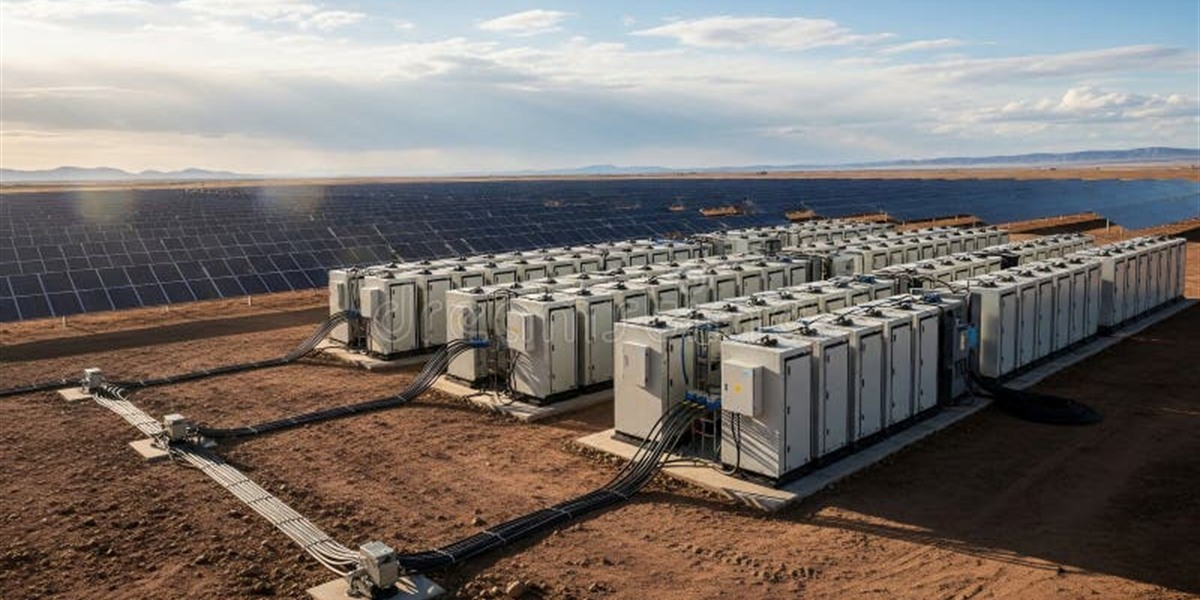
Deploying Containerized BESS for Scalable Ultra-Fast DC Charging Station Infrastructure
Quick Answer
A containerized Battery Energy Storage System (BESS) is the most efficient way to scale ultra-fast DC charging station infrastructure when the grid connection is the bottleneck. A 40ft containerized BESS integrates lithium-iron-phosphate (LFP) battery racks, a bi-directional power conversion system (PCS), liquid cooling, fire suppression, and an energy management system (EMS) into one factory-tested, transportable asset. By deploying 2–5MWh of storage per container in front of 360–480kW chargers, operators can open high-power sites on existing grid capacity, cut demand charges by 30–50%, and add power in predictable modular steps. Instead of waiting 18–36 months for a utility transformer upgrade, a site can go live in 8–12 weeks with a containerized BESS acting as a grid buffer that charges off-peak and discharges during charging peaks.
Key Takeaways
- Grid bottleneck bypass: Containerized BESS lets a site deliver 1–2MW of instantaneous charging power from a 400–600kVA grid connection, eliminating multi-year utility upgrade cycles.
- Modular scalability: Each 20ft or 40ft container adds a defined block of power and energy, so capacity grows in step with utilization instead of in one large upfront bet.
- Liquid cooling is mandatory at high C-rates: Sustained back-to-back 360–480kW sessions require liquid-cooled battery strings to hold cell temperature variance within ±3°C and prevent thermal derating.
- Revenue stacking pays the system back in 4–7 years: Demand-charge reduction, energy arbitrage, solar self-consumption, and grid-service revenue can each contribute to a single ROI model.
- Safety and certification determine permitting speed: UL 9540 / NFPA 855-compliant containers pass fire-marshal review faster and unlock insurance coverage that air-cooled, site-built alternatives cannot.
Why Ultra-Fast Charging Infrastructure Needs Storage, Not Just More Grid
The arithmetic of ultra-fast charging is unforgiving. A single 480kW stall draws as much power as roughly 400 average homes. A highway hub with six 480kW stalls can spike past 2.8MW in a morning rush — a load class that usually demands a dedicated high-voltage feeder, new transformers, and 18–36 months of utility engineering. Meanwhile, the same hub averages far less than its peak: most chargers sit idle at night and run at partial load through the day.
This mismatch between peak capability and average load is exactly what a containerized BESS monetizes. The battery is charged during low-tariff, low-load windows and discharged during the 15–45 minute charging peaks, so the site’s physical grid connection only needs to cover the average — not the worst-case minute. Operators who deploy storage-integrated EV charging solutions report that a 1.2MWh container in front of a 480kW charger can cover 80–90% of charging events without touching the grid peak at all.
Containerized storage also changes the land-planning equation: the battery arrives as a finished, self-contained asset on a truck, needing only a concrete pad, cable trench, and grid interconnection — not a building permit, HVAC design, or multi-month construction phase.
Anatomy of a 2026-Class Containerized BESS
A modern containerized system from MIDA Power is a fully integrated energy asset, not a pile of batteries in a box. Five sub-systems define its performance:
- High-voltage LFP battery racks — Grade-A 314Ah or 560Ah cells configured in strings up to 1500V DC. High string voltage reduces DC cable losses and lets the PCS run at its most efficient operating point.
- Bi-directional PCS — Converts DC battery power to grid AC and back, with 98%+ round-trip efficiency and four-quadrant operation for peak shaving, arbitrage, and grid services.
- Liquid cooling loop — A sealed coolant circuit through every rack holds cell temperature variance within ±3°C, the single biggest lever for cycle life (6,000–8,000 cycles at 80% DoD) and for sustained high-power discharge without derating.
- EMS and communications — The software layer that executes peak-shaving logic, manages state of charge (SoC) and state of health (SoH), and interoperates with the charger network via OCPP 2.0.1 for site-wide load management.
- Safety stack — Multi-layered gas/smoke detection, aerosol fire suppression, emergency venting, and thermal runaway containment per NFPA 855 and UL 9540A test protocols.
Container Sizing: 20ft vs. 40ft for Charging Hubs
| Parameter | 20ft BESS Container | 40ft BESS Container |
|---|---|---|
| Energy capacity | 1.0 – 2.5 MWh | 2.5 – 5.0 MWh |
| Power output | 500kW – 1.25MW | 1.25 – 2.5MW |
| DC bus voltage | 1000 – 1500V | 1000 – 1500V |
| Cooling | Air or liquid | Liquid (required at high C-rate) |
| Charging stalls supported | 2–4 × 480kW with buffering | 6–10 × 480kW with buffering |
| Footprint incl. clearance | ~80 m² | ~150 m² |
| Best application | Fleet depots, urban hubs, pilot sites | Highway corridors, airport taxi ranks, logistics parks |
The sizing rule for charging sites is simple: energy in kWh must exceed the peak energy draw of the busiest hour, while PCS power must cover the difference between site demand and grid capacity. A 40ft 3MWh container behind two 480kW ultra-fast liquid-cooled DC charging stations delivers roughly 45 minutes of full-power operation per 3MWh of storage — enough to absorb the morning and evening rush peaks when paired with overnight replenishment.
The Deployment Sequence: From Order to Live Site
- Week 0–2 — Site engineering: Confirm grid capacity, transformer rating, pad location, and cable runs. The container needs only its footprint plus 3–5m safety clearance.
- Week 2–6 — Factory production and FAT: The container is built, tested, and shipped with a full factory acceptance test (FAT) report — no on-site assembly of battery strings, cooling, or fire systems.
- Week 6–10 — Civil works in parallel: While the container is in transit, the pad, trench, and interconnection cabinet are completed. This parallelization is what collapses a 12-month project into 10 weeks.
- Week 10–12 — Commissioning: PCS, EMS, and charger integration are configured, OCPP 2.0.1 connection to the charging management platform is validated, and the site enters commercial operation.
ROI Stacking: How One Asset Pays Multiple Bills
The business case for containerized BESS at a charging site is built on revenue stacking — using one asset to attack several cost lines simultaneously:
1. Grid upgrade avoidance (CAPEX deferral). If the utility quotes $450,000 and 2 years for a feeder upgrade, a $380,000 container that lets the site open now on existing capacity pays for itself before the transformer would even arrive.
2. Demand-charge reduction. In demand-charge-heavy markets (US, Germany, Australia), shaving 400kW off the monthly peak at $20/kW saves $8,000/month — $96,000/year. This alone returns the battery investment in 4–6 years.
3. Energy arbitrage. The battery charges at $0.04–0.06/kWh off-peak and displaces $0.15–0.30/kWh peak energy, capturing $0.10–0.20 per kWh cycled. At 1.5 cycles/day and 3MWh, that is $165,000–$330,000 of gross spread per year at full cycling — though most sites deliberately cycle less to preserve battery life.
4. Solar self-consumption. Sites with PV carports store midday solar surplus and sell it to EVs at retail rates, capturing the highest margin per kWh of any use case.
5. Grid services. In deregulated markets, the container can earn $50–150/kW-year through frequency regulation or demand response — pure incremental revenue that requires no extra hardware.
Deployment Checklist for CPOs and Site Developers
- Specify liquid cooling for any site with >4 charging events/hour. Air-cooled containers derate under sustained high C-rate discharge.
- Require UL 9540/UL 9540A and NFPA 855 documentation up front. Certified containers shorten permitting by weeks and keep insurance premiums sane.
- Demand an OCPP 2.0.1-compliant EMS. The battery must coordinate with the chargers through the same platform, not a separate island of software.
- Ask for a 10-year augmentation plan. Batteries degrade; the supplier should price and schedule capacity additions to maintain rated MWh.
- Match PCS power to charger power, not just energy. A 480kW charger behind a 500kW PCS cannot deliver full power during grid outages or peak windows.
FAQ
1. How quickly can a containerized BESS charging site go live? With civil works prepared in parallel, 8–12 weeks from order to commercial operation is realistic. The container arrives fully assembled and needs only pad placement, cable connection, and EMS commissioning.
2. What is the design life of a containerized BESS? Modern LFP chemistry with liquid cooling delivers 15 years or 6,000–8,000 cycles at 80% depth of discharge, with most warranties guaranteeing 70–80% capacity retention at year 10.
3. Can one container serve both ultra-fast chargers and grid services? Yes. The same PCS and EMS can shave the site peak during the day and bid into frequency regulation or demand response at night — the two duties use different hours, not conflicting hardware.
4. Do we still need a grid connection? Yes, for charging energy in most configurations. Containerized BESS shrinks the required connection dramatically — often by 60–80% — and can keep the site running for hours during outages, but a grid feed (or large solar array) is still needed to replenish energy over time.
5. What certifications should the container carry? UL 9540 (system listing), UL 9540A (thermal runaway propagation testing), NFPA 855 (installation code compliance), and IEC 62619 for cells. For Europe, CE marking plus IEC 62477 for the PCS.
6. How is the container cooled in hot climates? Liquid-cooled systems use a sealed water-glycol loop with chiller assist above ~40°C ambient, holding cells within their optimal 15–35°C band even in desert or tropical conditions.
7. Can capacity be added later without stopping the site? Yes. Containers are independently operable assets; a second unit can be paralleled onto the same AC bus with a software update, adding MWh and MW without touching the first container.
Conclusion
Containerized BESS is the missing link between a constrained distribution grid and the megawatt-class demand of ultra-fast charging. By packaging storage, power conversion, cooling, and safety into a factory-built container, operators replace a two-year infrastructure project with a 10-week deployment and a scalable modular block that grows with utilization. For CPOs, site developers, and fleet operators planning 360–480kW infrastructure, the 360kW liquid-cooled charging station with RFID, OCPP and POS paired with containerized storage is the deployment pattern that turns grid limits into a competitive advantage.
MIDA Power is a global manufacturer of integrated EV charging and BESS solutions, from liquid-cooled power modules to complete storage-integrated charging hubs. Contact MIDA via midapower.com for site-specific container sizing and deployment engineering.
Post time: Aug-24-2026


