
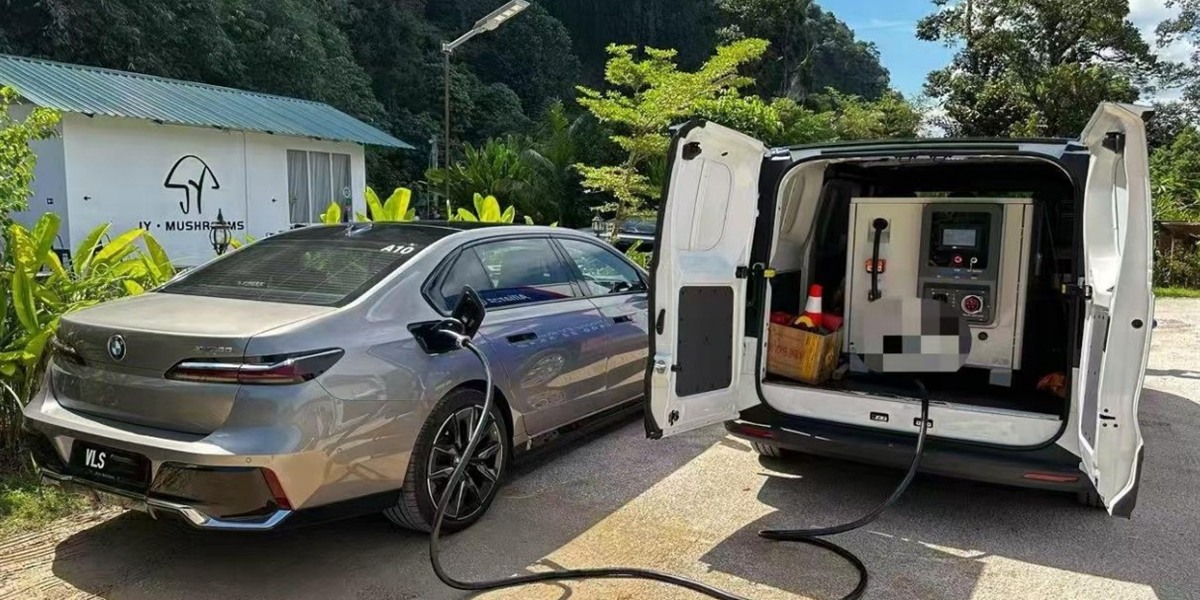
Emergency Road Assistance with Portable DC Chargers: A Business Model for Towing
Emergency Road Assistance with Portable DC Chargers: A Business Model for Towing
Quick Answer
Dead-battery EVs now account for 20–30% of all electric-vehicle roadside assistance calls, and towing a flat EV is slow, risky, and expensive — many EVs cannot be towed conventionally without damage, and flatbed recovery can cost the operator $150–$300 per job. Portable DC chargers turn this liability into a revenue line: a 20–40 kW portable charger with a battery buffer can restore 60–120 km of range in 30–45 minutes at the roadside. With a typical ticket of $60–$150 (call-out fee plus per-kWh energy charge), a towing operator running 5–8 charging jobs per day recovers the equipment investment in under 12 months — while protecting EV-driver relationships and opening insurance and automaker partnership contracts.
Key Takeaways
- Dead-battery EVs are 20–30% of EV roadside calls — a fast-growing, underserved market for towing and roadside companies.
- A 20–40 kW portable DC charger with a battery buffer restores 60–120 km of range in 30–45 minutes on site, without needing a grid connection at the breakdown location.
- Ticket economics: $60–$150 per call-out (fee + per-kWh), with equipment payback under 12 months at 5+ jobs per day.
- High-voltage safety is the moat: level-3 certified technicians and CE/UL-listed equipment separate professional operators from amateurs.
- Partnership models with insurers, automakers, and fleet operators convert one-off jobs into recurring revenue contracts.
The EV Breakdown Gap
Roadside assistance networks report a structural shift in call types. Traditional internal-combustion calls are mechanical: flat tires, failed starters, empty fuel tanks. Electric vehicles fail differently — most commonly a depleted battery, often from cold weather, an unplanned detour, or a charging session that never happened. In 2025–2026, leading assistance providers report that dead-battery calls represent 20–30% of EV incidents and are growing faster than any other category.
The towing industry has been slow to respond, and the gap is expensive. Towing a stranded EV often requires a flatbed because many EVs cannot be towed with wheels on the ground — the motor can generate current and damage the drivetrain, and manufacturers explicitly prohibit it in owner manuals. A flatbed call ties up a truck for 1–3 hours, risks battery damage, and delivers a miserable customer experience. Meanwhile, 60–70% of dead-battery calls need only a modest energy boost to reach the nearest charger. That gap — between “full tow” and “10 minutes of charge would fix this” — is the business opportunity.
From Towing to Energy Services
A roadside charging service flips the economics of the call. Instead of paying for fuel, truck wear, and driver hours to drag a vehicle 20 km, the operator drives to the vehicle, connects a portable DC charger, and sells energy at a premium. The vehicle is back on the road in 30–45 minutes, the driver continues their journey, and the operator collects a service fee plus an energy markup that can exceed $1.00/kWh at the point of emergency.
The service model has four components:
- Dispatch and qualification — The call center identifies the vehicle, battery state (if telematics are shared), and nearest charger; the operator quotes a fee and an estimated time to range.
- On-site boost — The technician connects the portable DC charger (or a trailer-mounted buffer battery), delivers 60–120 km of range, and advises the driver on the nearest working charger.
- Billing — Transparent pricing: a fixed call-out fee plus a per-kWh charge, settled by card, app, or insurance claim.
- Data and follow-up — Session logs feed the operator’s platform, building a map of recurring breakdown hotspots that can be monetized (e.g., proposing new charging locations to utilities and CPOs).
The Equipment Stack: What You Actually Need
| Equipment | Spec | Role in the workflow |
|---|---|---|
| Portable DC charger | 20–40 kW, CCS2/CCS1/NACS/GBT/CHAdeMO options | Direct battery DC charging; 30–45 min to useful range |
| Buffer battery | 10–50 kWh, vehicle- or trailer-mounted | Lets the charger run at full output without a grid feed |
| AC input kit | 32A three-phase or 63A single-phase | Slow recharge of the buffer where grid power exists |
| Adapter set | CCS1↔CCS2, NACS↔CCS, CHAdeMO | Coverage of the full vehicle parc |
| Telematics + app | OCPP-compatible backend | Dispatch, billing, session data, driver receipts |
The power rating matters more than it looks. A 20 kW portable charger delivers roughly 50–70 km of range in 30 minutes; a 40 kW unit doubles that to 100–140 km — enough to reach virtually any charger within a 50 km radius. Portable DC chargers using the same 40kW and 60kW liquid-cooled power modules used in fixed stations bring proven reliability, IP54+ enclosures, and hot-swappable serviceability to the roadside environment.
Pricing and Revenue Model
| Pricing element | Typical range | Notes |
|---|---|---|
| Call-out / service fee | $40–$80 | Covers dispatch, travel, and technician time |
| Energy charge | $0.45–$1.20 / kWh | Emergency premium vs. $0.25–0.40 public charging |
| Typical ticket | $60–$150 | 40–90 kWh delivered plus fee |
| Insurance / OEM contract rate | $80–$180 / event | Volume contracts, negotiated annually |
| Daily capacity | 5–12 jobs per truck | Limited by dispatch radius and buffer recharge |
A single truck with a 40 kW portable charger and a 50 kWh buffer running 6 jobs per day at an average $100 ticket generates $18,000 per month in gross revenue. Against a total equipment investment of $40,000–$90,000 (charger, buffer, adapters, van fit-out), the payback is 3–6 months in dense metro markets — and under 12 months even at half that volume.
ROI for a Towing Fleet
For an existing towing operator, the marginal cost of adding portable charging is low because the fleet, dispatch, and customer base already exist. The incremental economics are unusually favorable:
- Existing assets reused — trucks, drivers, call center, and insurance policies serve both towing and charging jobs.
- Higher-margin jobs — charging tickets carry 60–75% gross margins versus 25–40% for towing.
- Reduced flatbed utilization — every EV boosted on site frees a flatbed for jobs that genuinely require it.
- New contract revenue — insurers and automakers pay retainer fees for guaranteed response SLAs (e.g., 60-minute arrival), creating recurring monthly income independent of call volume.
The strategic upside is bigger than the direct P&L: the operator who owns the roadside charging relationship becomes the natural partner for automaker roadside programs, fleet operators electrifying their vans, and utilities mapping charging deserts.
Safety, Training, and Compliance
Portable DC charging is high-voltage work, and safety is the competitive moat:
- Technician certification — level-3 high-voltage training (e.g., NFPA 70E-based or national equivalents) with annual refreshers; first responders need to know exactly what they are dealing with.
- Equipment certification — CE / UL-listed chargers and battery buffers, IP54 or better, with integrated ground-fault and insulation monitoring.
- Vehicle protocols — operator manuals for each vehicle family (some EVs require specific shutdown sequences before external charging).
- Incident procedures — documented thermal-event and battery-damage response playbooks, shared with local fire services.
- Liability insurance — dedicated coverage for high-voltage work and vehicle damage, which professional certification unlocks at reasonable rates.
How to Start: A 90-Day Launch Plan
- Days 1–30 — Pilot gear and training: Purchase one 20–40 kW portable charger plus buffer, certify two technicians, and define pricing.
- Days 31–60 — Dispatch integration: Route charging jobs through the existing call center, add the OCPP backend, and run paid pilots with 2–3 insurer or fleet partners.
- Days 61–90 — Scale and contract: Add a second truck, sign SLA contracts, and use session data to pitch utilities and automakers on data partnerships.
Partnerships accelerate everything. Insurers pay for “first-response” contracts that keep claims small; automakers fund roadside EV programs to protect their brand; fleet operators need emergency charging for vans that cannot miss delivery windows. The portable charging stack from MIDA Power — built on the same liquid-cooled ultra-fast charging technology as permanent stations — ensures the roadside fleet matches the reliability standards of the networks it serves, and the module-level design scales from a single van to a national roadside fleet.
FAQ
1. Can a portable DC charger really charge an EV quickly at the roadside? Yes. A 20–40 kW portable DC charger delivers DC power directly to the vehicle battery, bypassing the slower onboard AC charger. In 30–45 minutes it restores 60–120 km of range — enough for the driver to reach the nearest public charger or destination.
2. How much does roadside EV charging cost the driver? Typical tickets range from $60 to $150: a $40–$80 call-out fee plus $0.45–$1.20 per kWh. The emergency premium reflects the mobile equipment, technician time, and 24/7 availability — and it is still a fraction of the cost and delay of a flatbed tow.
3. Do I need a grid connection to charge an EV at the roadside? No. The portable charger runs from a buffer battery (10–50 kWh) carried in or on the vehicle, so charging works on any roadside. The buffer recharges overnight from a standard socket or three-phase feed between jobs.
4. Is portable DC charging safe for the stranded vehicle? Yes, when done with certified equipment and trained technicians. The charger communicates with the vehicle (ISO 15118 / DIN 70121), monitors isolation and temperature, and follows the manufacturer’s charging envelope — the same protocol stack used in fixed fast chargers.
5. What certifications do I need to offer roadside EV charging? Equipment must be CE/UL-listed with IP54+ enclosures. Technicians need level-3 high-voltage training and, in many regions, specific EV-extrication and charging certification. Operators also need dedicated liability insurance for high-voltage field work.
6. How many jobs per day make this profitable? Break-even is typically 2–3 charging jobs per day for a single equipped truck. At 5–8 jobs per day, equipment pays back in under 12 months and gross margins run 60–75%.
7. Can towing companies combine charging and towing on one truck? Yes — this is the strongest model. The truck carries both the portable charger and towing equipment, the dispatcher routes the right resource per call, and the same fleet serves two high-margin revenue lines with no additional vehicles.
Post time: Aug-24-2026


