
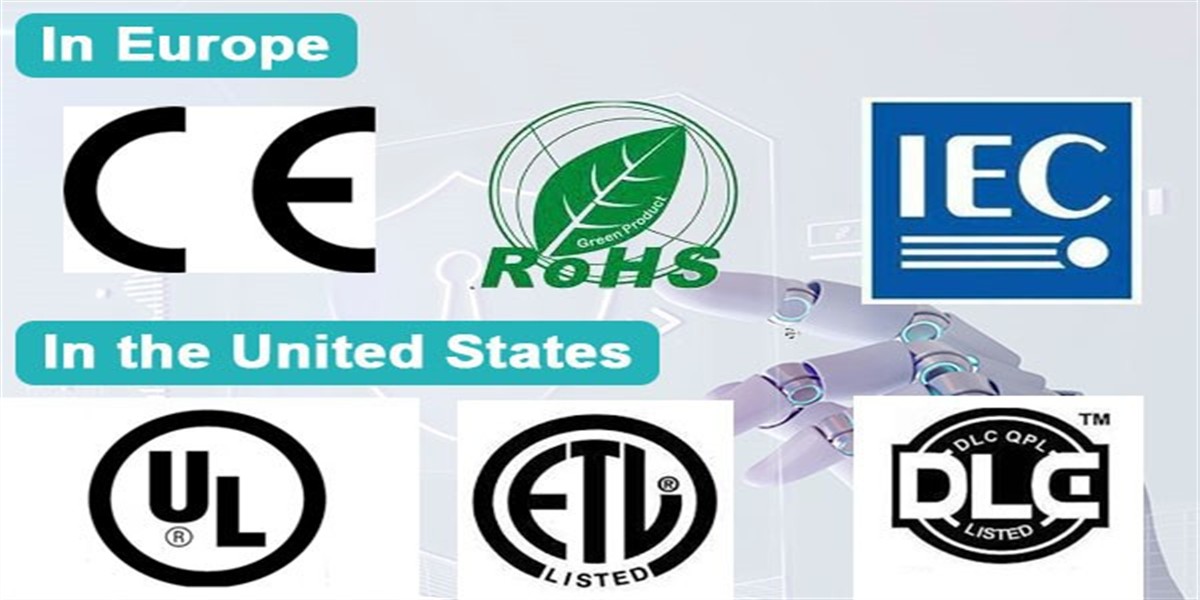
Global Compliance Guide: CE, UL, and TUV Standards for DC Fast Chargers
Quick Answer
CE marking, UL certification, and TUV testing are the three pillars of market access for DC fast chargers — and they are not interchangeable. CE marking is a mandatory self-declaration for selling in the EU, built on directives such as LVD (Low Voltage), EMC, and RED. UL certification (UL 2202, UL 2594, UL 2251) is a third-party safety certification required in practice for the North American market under NEC Article 625. TUV certification is an independent third-party mark (TUV Rheinland, TUV SUD) that validates safety, EMC, and cybersecurity and is widely accepted across Europe, the Middle East, and Asia. Exporters must map the correct standard stack per target region, budget 6–12 months and $50k–$150k for full certification programs, and verify that power modules, connectors, and communication layers — OCPP, ISO 15118 — are covered in the certification scope.
Key Takeaways
- CE marking is mandatory for the EU and is a manufacturer self-declaration; UL and TUV are third-party certifications that buyers and regulators in their regions effectively require.
- North America runs on UL 2202 (DC EV supply equipment), UL 2594 (AC stations), and UL 2251 (connectors), enforced via NRTL listing and NEC Article 625.
- The EU stack is IEC 61851-23 (DC charging), EN 61851-23, LVD 2014/35/EU, EMC 2014/30/EU, and RED 2014/53/EU for connected chargers.
- TUV certification adds independent verification of safety, EMC, and increasingly cybersecurity (IEC 62443 / ETSI EN 303 645), and is treated as a de facto requirement in Germany, the Gulf states, and parts of Asia.
- A single “universally certified” charger is rare: plan one design per region cluster (EU, North America, plus emerging markets) and confirm standards before quoting — not after shipping.
Why Compliance Decides Market Access
For DC fast chargers, certification is not paperwork — it is the gate to the grid. European distribution networks require CE-marked equipment before grid connection, US utilities and AHJs (authorities having jurisdiction) inspect for UL-listed equipment during permitting, and Middle Eastern tenders frequently list TUV certification as a bid condition. Selling unverified chargers risks destroyed shipments at customs, voided insurance, and legal liability if equipment fails. This guide maps the standards landscape so buyers and distributors can specify compliant hardware the first time — and manufacturers can plan certification into the product roadmap.
The European Union: CE Marking and the Core Directives
CE marking is mandatory for any DC fast charger sold in the EU/EEA. It is a self-declaration of conformity — the manufacturer tests to harmonized standards, issues a Declaration of Conformity (DoC), and affixes the CE logo. The relevant directive stack for a DC fast charger includes:
- Low Voltage Directive (LVD) 2014/35/EU — electrical safety of equipment operating at 50–1000V AC / 75–1500V DC, which covers most DC charger power stages.
- EMC Directive 2014/30/EU — electromagnetic compatibility, tested against EN 61851-21-1 for conductive charging systems.
- Radio Equipment Directive (RED) 2014/53/EU — applies to chargers with wireless connectivity (4G, Wi-Fi, Bluetooth), adding radio spectrum and cybersecurity requirements (EN 18031 under the 2025 update).
- Machinery Directive 2006/42/EC — applies to chargers with moving parts such as cable management systems.
The product standard beneath these directives is IEC 61851-23 / EN 61851-23 for DC EV supply equipment, covering safety requirements, plus EN 61851-1 for general requirements. Chargers that claim bidirectional capability additionally reference IEC 62933 and grid-connection standards such as EN 50549 where they interact with the distribution network.
Critical for buyers: CE is declared by the manufacturer, not granted by a third party. A CE mark without supporting test reports from an accredited laboratory (e.g., TUV, SGS, Bureau Veritas) is a red flag. Professional importers require the full Technical File — test reports, risk assessment, and DoC — as part of the purchase contract.
North America: UL Certification and NRTL Listing
The US and Canada do not have a “CE equivalent” — they run on third-party certification to standards developed by UL Standards & Engagement, enforced through state adoption of the National Electrical Code (NEC). The key standards for DC fast charging:
| Standard | Scope | Typical Use |
|---|---|---|
| UL 2202 | DC EV supply equipment — charging stations that output DC to the vehicle | Primary standard for DC fast chargers in North America |
| UL 2594 | AC EV supply equipment | Wallbox and AC stations (not DC) |
| UL 2251 | Plugs, receptacles, and couplers for EVs | Connector/cable assemblies (CCS1, NACS) |
| UL 2231 | Personnel protection systems for EV supply circuits | Required alongside UL 2202 |
| NEC Article 625 | Installation requirements for EV charging systems | Governs electrical inspection and permitting |
A UL mark is issued through an NRTL (Nationally Recognized Testing Laboratory) such as UL, Intertek, or CSA after factory audits and follow-up inspections. In practice, US utilities, building inspectors, and grant programs (including NEVI-funded highway corridors) require UL-listed equipment. Canada adds CSA certification with largely aligned standards via UL/CSA harmonization.
Note the connector dimension: North America uses CCS1 (SAE J1772 combo) and increasingly NACS (Tesla’s North American Charging Standard). UL 2251 covers the connector hardware — a compliance item separate from the station itself. Chargers built for Europe ship with CCS2 connectors and cannot legally or practically be sold into the US market without redesign, which is why regionalized product lines remain the industry norm.
TUV Certification: Independent Third-Party Assurance
TUV is not a single standard — it is a family of independent certification bodies (TUV Rheinland, TUV SUD, TUV Nord) that test to the same harmonized standards as CE/UL but issue their own widely recognized marks. For DC fast chargers, TUV certification typically covers:
- Safety testing to EN/IEC 61851-23, including dielectric strength, insulation, thermal, and fault conditions.
- EMC verification to EN 61851-21-1 / CISPR 11 and immunity standards.
- Functional safety and cybersecurity — increasingly TUV Rheinland certifies EV chargers against IEC 62443-4-2 and ETSI EN 303 645, a differentiator for grid-connected equipment exposed to remote attack surfaces.
- Component and module certification — TUV-certified power modules (e.g., 40kW/60kW liquid-cooling power modules) simplify whole-station certification because the highest-risk subassembly already carries verified test data.
TUV marks carry outsized commercial weight in Germany, the Gulf Cooperation Council countries, and Southeast Asian tenders, where buyers use TUV reports as independent evidence of quality — a form of risk transfer that purely self-declared CE marks cannot provide.
CE vs UL vs TUV: Side-by-Side Comparison
| Dimension | CE Marking | UL Certification | TUV Certification |
|---|---|---|---|
| Nature | Mandatory self-declaration (EU) | Third-party listing (NRTL) | Third-party certificate |
| Governing body | Manufacturer (notified/accredited labs test) | UL/Intertek/CSA (NRTLs) | TUV Rheinland / TUV SUD / TUV Nord |
| Key standards | EN 61851-23, LVD, EMC, RED | UL 2202, UL 2594, UL 2251, UL 2231 | EN/IEC 61851-23, EMC, IEC 62443 (cyber) |
| Geographic weight | EU/EEA, UK (UKCA), many emerging markets | USA, Canada | Germany, Middle East, Asia, global tenders |
| Cost (typical) | $30k–$80k incl. lab testing | $80k–$150k incl. factory audit | $50k–$120k per scope |
| Timeline (typical) | 4–8 months | 6–12 months | 5–10 months |
| Renewal | Continuous obligation; DoC upkeep | Follow-up factory inspections (quarterly/annual) | Certificate validity 1–5 years, periodic audits |
| Cybersecurity | EN 18031 (RED, from Aug 2025) | UL 2900-2-2 (optional/emerging) | IEC 62443-4-2 / ETSI EN 303 645 |
The practical implication: a charger targeting both Europe and North America carries CE + UL, with TUV commonly added for tender credibility in high-growth markets. Certification should be treated as a per-region investment, not a one-time expense.
Compliance Beyond the Label: Communication and Interoperability
Safety certification gets equipment onto the grid, but interoperability keeps it in revenue service. Three additional compliance layers matter commercially:
1. OCPP conformance. OCPP (Open Charge Point Protocol) is not mandated by law, but virtually every charging network operator requires it — typically OCPP 1.6J today, with 2.0.1 gaining ground for smart charging and signed transactions. Buyers should request the OCPP conformance test report, not just a marketing claim. The liquid-cooled ultra 360kW charging station with RFID, OCPP, and POS integration from MIDA Power is an example of a station built around OCPP 1.6J/2.0.1 from day one.
2. ISO 15118 (Plug & Charge). Increasingly specified in European and US public charging tenders, ISO 15118 enables automatic authentication and, in Part 20, bidirectional energy transfer. It is a compliance differentiator that protects against obsolescence as V2G programs scale.
3. Grid connection codes. EU countries require inverters and bidirectional stations to meet national grid codes (e.g., EN 50549 in many member states); US projects reference IEEE 1547 for distributed energy resources. Verify these with the local DSO before deployment.
How to Verify Compliance When Sourcing
Use this checklist when evaluating chargers or suppliers:
- Request the actual certificates — CE DoC plus test reports from an accredited lab, UL file number (verifiable on UL Product iQ), or TUV certificate number — and verify them online with the issuing body.
- Check the certification scope — the certificate must list the exact model number, power rating, connector type (CCS1/CCS2/CHAdeMO/NACS), and output voltage range you intend to buy.
- Confirm factory audit validity — UL and TUV marks depend on follow-up factory inspections; a lapsed audit voids the mark in practice.
- Map region to standard — never assume a CE-marked charger is acceptable in the US, and never assume UL certification covers Europe; the connector systems alone (CCS2 vs CCS1) are incompatible.
- Ask about module-level certification — stations built on pre-certified subassemblies such as liquid-cooling power modules tend to certify faster and more reliably than fully custom power stages.
- Check grid-connectivity compliance — OCPP reports, ISO 15118 statements, and national grid-code declarations for the destination country.
- Put compliance in the contract — make certificate delivery, validity period, and re-certification responsibility explicit commercial terms.
Regional Market Entry Matrix
| Target Market | Mandatory / Required Marks | Key Standards | Connector | Practical Notes |
|---|---|---|---|---|
| European Union | CE (mandatory) | EN 61851-23, LVD, EMC, RED | CCS2, CHAdeMO | TUV mark strengthens DSO and tender acceptance |
| United Kingdom | UKCA (CE accepted until transition end) | EN 61851-23 + UK amendments | CCS2 | Plan UKCA transition for new designs |
| United States | UL (NRTL listing) | UL 2202, UL 2231, UL 2251, NEC 625 | CCS1, NACS | NEVI-funded sites require UL-listed equipment |
| Canada | CSA / cUL | CSA C22.2 No. 281.2, UL equivalents | CCS1, NACS | Harmonized but separate certification |
| Gulf (GCC) | TUV + local approvals (SASO etc.) | EN/IEC 61851-23, EMC | CCS2 | TUV reports commonly required in tenders |
| Australia | RCM (mandatory) + AS/NZS standards | AS/NZS 4777 series (grid), IEC-based safety | CCS2, CHAdeMO | State-level rebate programs check compliance |
| Japan | PSE (mandatory) + CHAdeMO certification | JIS standards, CHAdeMO protocol | CHAdeMO, CCS2 | CHAdeMO membership needed for protocol conformance |
| China | CCC (mandatory) | GB/T 18487, GB/T 27930 | GB/T | Domestic standard ecosystem, largely separate |
How Long Does Certification Take?
Realistic timelines: CE-oriented testing runs 4–8 months; UL listing with factory audit runs 6–12 months; TUV certification runs 5–10 months; China CCC similar to UL. Budget accordingly — and sequence regional certifications so one design’s test data (e.g., IEC 61851-23 safety test reports) can be reused across programs. Suppliers with pre-certified platforms, such as MIDA Power‘s liquid-cooled product line including its 480kW ultra-fast liquid-cooled DC charging station for motorways, shorten procurement risk because the certification burden is already absorbed at product level.
FAQ
1. Is CE marking mandatory for DC fast chargers sold in Europe?
Yes. CE marking is a legal requirement for placing electrical equipment on the EU market. The manufacturer must test to harmonized standards (EN 61851-23, LVD, EMC, RED where applicable), issue a Declaration of Conformity, and affix the CE logo. Importers should demand the full technical file, not just the logo.
2. What is the difference between UL certification and CE marking?
CE marking is a mandatory self-declaration by the manufacturer for the EU market; UL certification is a third-party safety listing required in practice in North America, backed by factory audits and periodic follow-up inspections. They cover different standards (EN 61851-23 vs UL 2202) and neither substitutes for the other.
3. Can one charger be certified for both Europe and North America?
Rarely as a single SKU. The connector systems differ (CCS2 in Europe vs CCS1/NACS in North America), grid requirements differ, and UL and CE test regimes are separate programs. Manufacturers typically maintain regional variants sharing a common power-stage platform, which keeps certification costs manageable.
4. What is the difference between UL 2202 and UL 2594?
UL 2202 covers DC EV supply equipment (stations that deliver DC directly to the vehicle), while UL 2594 covers AC EV supply equipment (wallboxes that deliver AC, with conversion inside the vehicle). DC fast chargers require UL 2202 plus UL 2231 (personnel protection) and UL 2251 for the connector.
5. Does TUV certification replace CE or UL?
No. TUV certification is an independent third-party verification by TUV Rheinland/TUV SUD/TUV Nord — it does not replace mandatory CE marking in Europe or NRTL listing in the US. It adds market credibility, especially in Germany, the Gulf states, and international tenders, and increasingly covers cybersecurity under IEC 62443.
6. Do I need OCPP certification to sell chargers?
OCPP is not a legal requirement, but charging network operators generally refuse to onboard chargers without verified OCPP conformance. Specify OCPP 1.6J minimum, prefer OCPP 2.0.1 for smart-charging and signed-transaction support, and request the conformance test report in procurement.
7. How long does the certification process take?
Typically 4–8 months for CE-oriented testing, 6–12 months for UL listing, and 5–10 months for TUV certification, depending on design maturity and lab queue. Budget both the timeline and the $50k–$150k cost per program, and prefer suppliers whose platforms are already certified to compress project schedules.
Conclusion
Compliance is the single most under-budgeted line item in DC fast charging projects — and the one that stops projects cold when it is wrong. CE, UL, and TUV answer different questions: legal market access in Europe, third-party safety assurance in North America, and independent quality verification in global tenders. Add OCPP and ISO 15118 conformance, verify certificate validity and scope, and treat certification as a per-region investment rather than a one-time sticker. Operators who buy from manufacturers with certified, module-level-tested platforms reduce their own risk, compress deployment timelines, and keep their charging networks on the right side of the grid — in every market they serve.
Post time: Aug-20-2026


