
Liquid-Cooled DC Fast Charging: The Future of High-Power EV Infrastructure
Quick Answer
Liquid-cooled DC fast charging actively circulates coolant through the charger’s power modules and charging cable to remove heat at the source, enabling continuous output at 360 kW, 480 kW, and higher without thermal derating. Where air-cooled chargers typically sustain peak power for only minutes before throttling, liquid-cooled systems hold rated output indefinitely, use cables that are up to 60% lighter, and deliver station availability above 98%. The result is a step change in throughput per stall, operator revenue, and total cost of ownership. For anyone building new high-power EV charging infrastructure in 2026 — motorway corridors, fleet depots, or urban hubs — liquid cooling is no longer a premium option; it is the baseline architecture.
Key Takeaways
- Air cooling reaches a physical ceiling around 120–180 kW of continuous output; liquid cooling removes that ceiling, enabling 360–600 kW and beyond.
- Liquid-cooled cables are roughly 40–60% lighter than air-cooled cables of equivalent rating, improving ergonomics, reducing wear, and cutting downtime caused by cable damage.
- Sustained output drives utilization: a single 480 kW liquid-cooled stall can serve 2–3× more vehicles per day than a 120 kW air-cooled unit.
- Modular 30–60 kW liquid-cooled power cabinets simplify maintenance, reduce spare-part inventory, and make future capacity upgrades plug-and-play.
- Cooling the power module separately from the cable extends component life, lowers failure rates, and reduces lifetime service costs.
Why High-Power Charging Hits a Wall Without Liquid Cooling
The physics is unforgiving. Every kilowatt delivered to a battery generates heat — in the power electronics, in the cable, and in the connector. An air-cooled DC charger relies on fans and heatsinks to push that heat away, but heat dissipation scales with surface area while power output scales with volume. Beyond roughly 180 kW of continuous output, an air-cooled architecture either requires impractically large heatsinks or it throttles: the station software reduces output to protect components, and the “350 kW” charger a driver plugged into delivers 150 kW after ten minutes.
That derating behavior is exactly what operators experience in the field. An air-cooled charger rated at 360 kW peak may deliver its full rating for only 10–20 minutes in moderate ambient temperatures, and far less in summer heat or at altitude. Since the average modern EV session lasts 20–40 minutes, the practical throughput of air-cooled hardware is often 50–70% of its nameplate rating. The revenue loss is direct: charging revenue is a function of delivered energy, not installed capacity.
There is a second, equally practical problem: cable weight. A 250 kW air-cooled cable with liquid-free construction requires large cross-section copper conductors to limit resistive heating, which makes the cable thick, stiff, and heavy — frequently 15–25 kg. Drivers struggle to handle them, connectors suffer mechanical stress from repeated handling, and cable damage becomes one of the most common causes of charger downtime. Liquid cooling solves both the thermal ceiling and the ergonomics problem at once, which is why it has become the defining technology of the current generation of ultra-fast charging.
How Liquid Cooling Works: The Core Principle
Liquid cooling in a DC fast charger is a closed-loop system. A coolant — typically a water-glycol mixture with corrosion inhibitors — circulates through two critical zones: the power modules inside the charging cabinet and the charging cable itself.
Inside the cabinet, each power module is mounted on a cold plate. Coolant flows through micro-channels in the plate, absorbing heat directly from the IGBT or SiC switching components that convert grid AC to vehicle DC. The heated coolant then passes through a radiator or plate heat exchanger, where fans reject the heat to ambient air. Because liquid has roughly 20–50× the heat capacity per unit volume of air, the module can operate at full rating continuously while its junction temperatures stay well within specification.
In the cable, the same principle applies in miniature. The DC conductors run alongside small coolant tubes inside a compact jacket. The coolant absorbs resistive heat from the conductors, so the copper cross-section can be dramatically reduced. A liquid-cooled 500 A cable — the type used for 480 kW and megawatt-class charging — weighs roughly half of an equivalently rated air-cooled cable and bends easily, which matters enormously for drivers and for the robotic or assisted connectors planned for future autonomous-vehicle charging.
The engineering benefit compounds over time. Cooler power electronics have higher conversion efficiency (typically 96–97% for modern modules versus 93–95% for older air-cooled designs), which means less energy lost as heat and more revenue per kilowatt-hour purchased. Cooler operation also slows component aging: electrolytic capacitors, busbars, and semiconductor junctions all degrade faster with heat, so liquid-cooled systems consistently show lower failure rates and longer service intervals.
Liquid-Cooled vs. Air-Cooled DC Chargers: Side-by-Side
| Parameter | Air-Cooled DC Charger | Liquid-Cooled DC Charger |
|---|---|---|
| Continuous power output | 60–180 kW typical; derates above ~180 kW | 360–600 kW sustained, scalable to 1 MW+ (MCS) |
| Time at peak rating | 10–20 minutes before thermal throttling | Indefinite at rated output |
| Cable weight (500 A class) | 15–25 kg, stiff | 6–10 kg, flexible |
| Conversion efficiency | 93–95% | 96–97% |
| Station availability | 92–96% | 98%+ |
| Cooling system maintenance | Fan filter cleaning, periodic fan replacement | Coolant top-up every 2–3 years, pump service |
| Noise at full load | Loud fan banks (70+ dB) | Low (pumps, minimal fans) |
| Suitable applications | Destination, workplace, small commercial | Motorways, highway corridors, fleet depots, MCS hubs |
| Typical CAPEX per kW | Lower ($150–250/kW) | Higher ($250–400/kW) |
| Lifetime TCO (10-year, per stall) | Higher due to derating losses and downtime | Lower due to throughput and availability |
The table makes the decision logic clear. Air cooling remains perfectly adequate for low-power destination charging, where vehicles park for hours and 20–60 kW is enough. The moment a site’s business case depends on moving vehicles quickly — which is the definition of motorway, fleet, and urban public charging — the derating and downtime penalties of air cooling destroy more value than the CAPEX saving ever creates.
The Economics: Availability, Revenue, and Total Cost of Ownership
For charging network operators, the unit of value is the delivered kilowatt-hour per stall per day. A liquid-cooled 480 kW station serving vehicles with 400–800 V architectures can complete a 20–80% charge for a long-range EV in 10–15 minutes, enabling 15–25 sessions per stall per day in high-traffic corridors. An air-cooled 120 kW station at the same location might manage 8–12 sessions, each lasting 40–60 minutes. At an average ticket of $12–18 per session, the liquid-cooled stall generates 2–3× the daily revenue on a comparable footprint.
Total cost of ownership follows the same logic. Yes, liquid-cooled hardware carries a higher upfront price per kilowatt. But the calculation that matters is revenue per stall over the asset’s 10-year life, net of energy costs, maintenance, and downtime. Industry analyses of motorway charging sites consistently show that the additional CAPEX of liquid cooling is recovered within 12–24 months purely through higher throughput, and that lifetime profitability is dominated by availability, not purchase price.
There is also a grid-facing argument. High-power sites pay connection fees based on contracted capacity. A liquid-cooled station’s ability to actually deliver its contracted power means operators extract full value from the grid connection they are already paying for — and, when combined with battery storage, can smooth the load profile to reduce demand charges (a subject explored in depth in our analysis of BESS-integrated solar EV charging stations).
Modular Power Modules: The Heart of the System
The most important architectural decision in a liquid-cooled charger is the power module. Modern stations are built from standardized 30–60 kW liquid-cooled modules, each a self-contained AC-DC conversion unit with its own cold plate, control board, and monitoring. This modularity transforms operations: a failed module is swapped in minutes by a field technician without specialized tools, and the station continues delivering the remaining capacity during the swap.
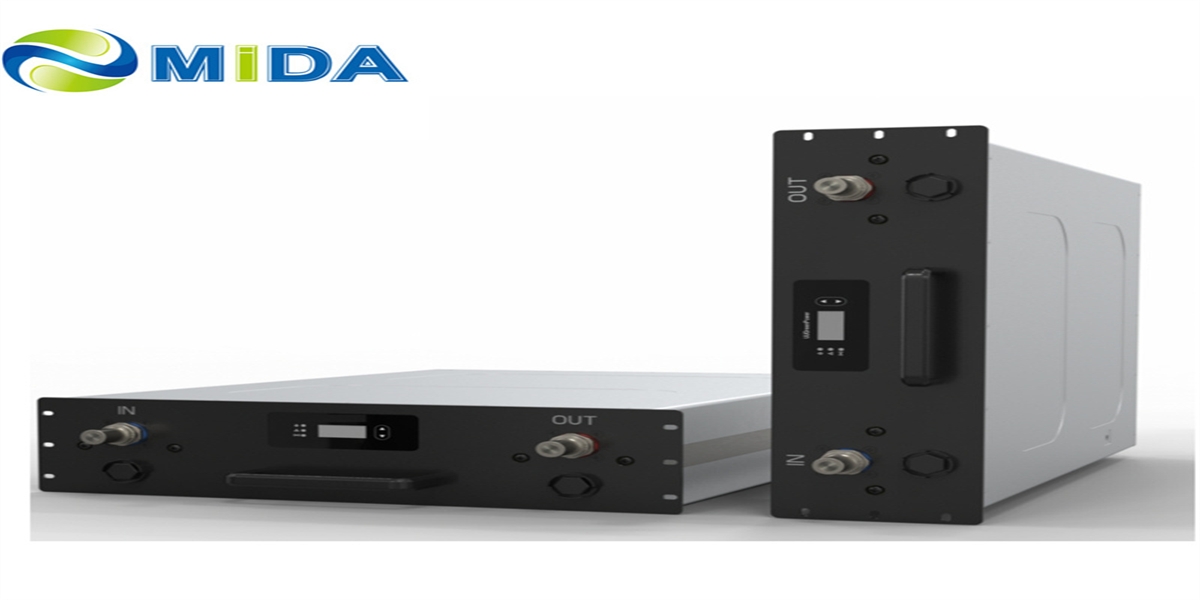
The 40–60 kW liquid-cooling power module class has become the industry sweet spot because it balances efficiency, thermal performance, and serviceability. A 480 kW station built on 40 kW modules uses twelve parallel units; on 60 kW modules, eight. Fewer modules mean fewer failure points and lower inventory costs, while 1000 V wide-voltage output support ensures compatibility with both 400 V and 800 V vehicle platforms — a mandatory requirement for 2026 fleets. When evaluating suppliers, request module-level data: conversion efficiency at 20/50/100% load, coolant flow requirements, MTBF figures, and the module’s derating curve at 45 °C ambient. These specifications, more than the station’s headline power figure, determine real-world performance.
Where Liquid-Cooled Charging Delivers the Biggest ROI
Motorway and highway corridors. High traffic volume, time-sensitive drivers, and premium per-kWh pricing make corridors the natural home for ultra-fast charging. Dedicated 480 kW liquid-cooled charging stations for motorways are now a proven configuration in Europe and North America, with multi-stall hubs of 8–24 dispensers sharing a centralized power cabinet. The MCS (Megawatt Charging System) standard, finalized for heavy-duty trucking, extends the same liquid-cooled architecture to 1 MW+ output — a market that only becomes addressable with this technology.
Fleet depots. Electric bus and truck depots charge overnight, but the window is short and the vehicles are large. A depot with forty 400 kWh buses needs to return up to 16 MWh of energy in a 4–6 hour window. Liquid-cooled high-power dispensers, combined with storage buffers, allow depots to charge vehicles sequentially at 350–480 kW while keeping grid demand within contracted limits.
Urban and retail hubs. City centers rarely have the grid capacity for banks of air-cooled chargers. Liquid-cooled stations deliver more energy per parking space, and their quieter, lighter-cable design improves the customer experience in locations where charging happens in full view of retail customers. Operators pairing 360 kW liquid-cooled stations with battery buffers can serve high volumes without transformer upgrades.
Future-proofing for NACS and 800 V platforms. The shift of North American OEMs to the NACS connector and the proliferation of 800 V vehicle platforms mean stations must support 500 A+ continuous current. Liquid cooling is a prerequisite for that current class in a user-friendly cable form factor — air-cooled cables capable of 500 A continuous simply do not exist in a practical weight.
What to Look for in a Liquid-Cooled Charger
The market now offers a wide range of liquid-cooled products, and specifications vary more than headline numbers suggest. When specifying hardware for a high-power site, evaluate the following criteria:
- Wide voltage range: The charger must deliver full power across 200–1000 V to serve 400 V and 800 V vehicles without derating at low voltages.
- Connector flexibility: CCS2 for Europe and much of Asia-Pacific, NACS for North America, and dual-gun configurations for split charging of two vehicles from one cabinet.
- Communication and billing: OCPP 1.6J/2.0.1 compliance for network integration, plus optional RFID and POS modules for unattended operation.
- Environmental protection: IP65-rated cabinets for outdoor deployment, with coolant systems tested for -35 °C to +55 °C operation.
- Smart features: Load management, remote firmware updates, and predictive maintenance alerts — all of which protect uptime.
- Module redundancy and serviceability: Hot-swappable modules and a local spare-part strategy that matches your site’s maintenance reach.
A well-specified unit, such as a 360 kW liquid-cooled DC fast charger with RFID, OCPP, and POS capability, gives operators a single hardware platform that works across motorway, urban, and retail sites with one spare-parts set and one training curriculum.
A Practical Path to Deployment
Adopting liquid-cooled charging does not require replacing an entire network overnight. The pragmatic sequence is: (1) identify the sites where throughput is the binding constraint — motorway corridors and high-traffic urban hubs; (2) pilot one liquid-cooled station and measure delivered energy per stall, uptime, and customer dwell time against your air-cooled baseline for 90 days; (3) expand based on measured revenue uplift rather than vendor claims; and (4) standardize on modular 40–60 kW liquid-cooled power platforms so future capacity additions are cabinet upgrades rather than civil works. This measured approach keeps capital discipline while capturing the revenue advantage of high-power charging where it matters most.
Frequently Asked Questions
1. Is liquid-cooled DC fast charging worth the extra upfront cost? Yes for high-throughput sites. The CAPEX premium is typically recovered within 12–24 months through higher delivered energy, lower downtime, and reduced maintenance. For low-utilization destination sites, air cooling may still be the economic choice.
2. What is the difference between liquid-cooled and air-cooled EV chargers? Liquid-cooled chargers circulate coolant through power modules and cables to remove heat, sustaining 360 kW+ output indefinitely with lighter cables. Air-cooled chargers rely on fans, derate at high power, and use heavier cables at equivalent current ratings.
3. How much do liquid-cooled charging cables weigh? A 500 A liquid-cooled cable weighs roughly 6–10 kg, compared with 15–25 kg for an equivalently rated air-cooled cable — a 40–60% reduction that significantly improves driver ergonomics.
4. Can liquid-cooled chargers support 800 V vehicles? Yes. Modern liquid-cooled platforms with 1000 V wide-voltage modules deliver full power across both 400 V and 800 V architectures, and support 500 A+ continuous current required by NACS and MCS roadmaps.
5. What maintenance does a liquid-cooled charging station require? Routine maintenance is minimal: coolant level checks and top-ups every 2–3 years, pump and hose inspections, and periodic connector wear checks. Module failures are handled by hot-swapping 30–60 kW modules on site.
6. How long do liquid-cooled EV chargers last? With rated operating conditions, a 10-year design life is standard. Lower component temperatures slow aging of semiconductors and capacitors, and many operators report lower failure rates than legacy air-cooled hardware.
7. Is liquid cooling required for megawatt charging (MCS)? Effectively, yes. MCS targets 1 MW+ output at up to 1250 V / 3000 A, which is physically unachievable with air-cooled cables in a practical form factor. Liquid cooling is the enabling technology for heavy-duty truck charging.
MIDA Power designs and manufactures high-power charging and energy storage solutions. Explore our full range of DC fast charging products, including liquid-cooled ultra-fast 360 kW charging stations and 40–60 kW liquid-cooling power modules.
Post time: Aug-20-2026


