
Mobile Energy Storage Trailers: Delivering High-Power DC Charging Wherever It’s Needed
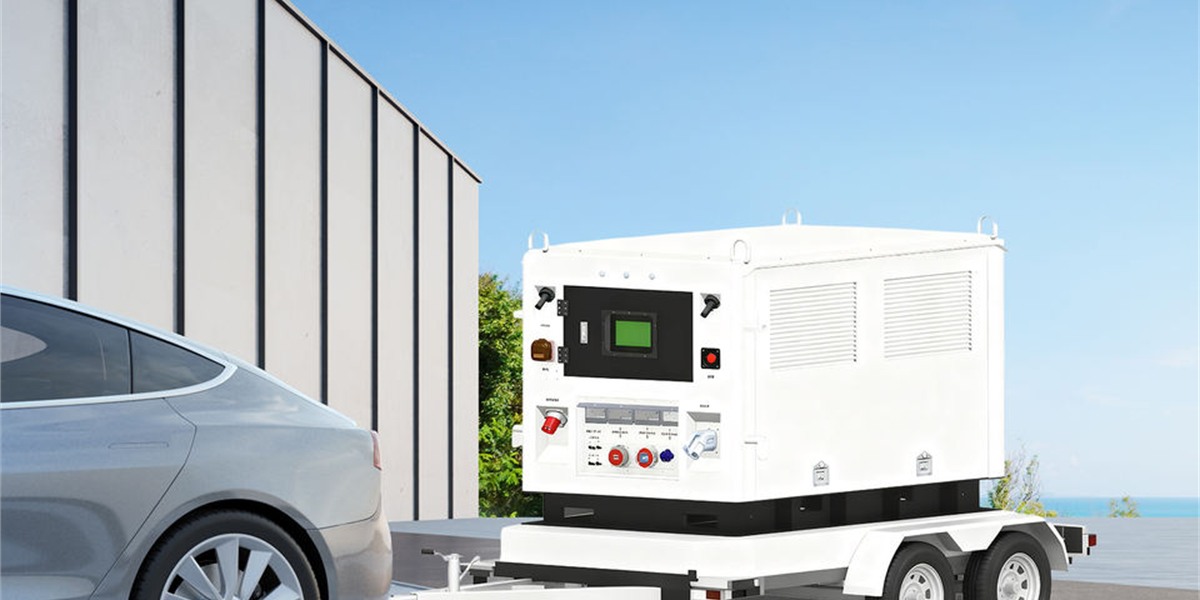
[Image Placeholder: Thumbnail 400*350, ~100KB — mobile energy storage trailer with integrated DC fast charger deployed at a construction site]
Quick Answer:
A mobile energy storage trailer (MEST) is a self-contained unit that pairs a lithium-ion battery bank (typically 100kWh–500kWh) with a bi-directional power conversion system and one or more DC fast charging dispensers (60kW–240kW), all mounted on a roadworthy trailer chassis. It delivers high-power EV charging, temporary grid reinforcement, or backup power at any location within hours — no transformer, no civil works, no multi-month grid upgrade. For fleets, construction sites, event venues, disaster response, and remote operations, the mobile trailer converts a 12–24 month infrastructure project into a same-week deployment. Because the battery charges from any available AC source (or solar), it operates where the grid is weak, expensive, or absent.
Key Takeaways:
- Deployment in Days, Not Months: A mobile trailer is operational within 24–72 hours of arrival, versus 6–24 months for permanent grid-fed infrastructure.
- Grid-Independent Peak Power: The battery delivers 60–240kW of charging power from a modest 32A–125A AC feed, effectively multiplying connection capacity 3–5x.
- Multi-Duty Versatility: One asset rotates between charging, peak shaving, event power, and emergency backup — maximizing utilization and ROI.
- Fleet-Proof for Heavy Duty: Liquid-cooled battery racks and IP55-rated enclosures sustain high discharge rates in extreme climates without derating.
- Transport-Compliant Design: Trailerized BESS is engineered to UN38.3 / ADR transport rules, so the asset moves legally and safely on public roads.
The Mobility Imperative: Why Fixed Infrastructure Is Not Always the Answer
Every EVSE deployment begins with a location audit: grid connection capacity, transformer availability, civil works, permitting, and lead time. In 2026, that audit returns bad news far more often than good. Distribution feeders in urban and industrial areas are congested; utility connection studies run 6–18 months; transformer upgrades cost $100,000–$500,000; and in remote or temporary locations, there is simply no grid to connect to.
Meanwhile, the demand for high-power charging is moving faster than infrastructure can be built. Fleet operators need interim charging while depots are upgraded. Construction contractors electrify equipment before site power is available. Event organizers need zero-emission power for a weekend. Disaster response needs energy in places where the grid just failed. For all of these, the mobile energy storage trailer is the fastest economically rational answer — power delivery as a logistics operation rather than a construction project.
Anatomy of a Mobile Energy Storage Trailer
A purpose-built mobile trailer integrates five subsystems into one roadworthy package:
- Battery bank: LFP (LiFePO4) cells in high-voltage strings (600–900V DC), sized 100kWh to 500kWh depending on duty cycle. LFP chemistry provides 6,000+ cycles, thermal stability, and no thermal runaway propagation under normal fault conditions.
- Bi-directional PCS: Converts grid AC to DC for battery charging, and battery DC to vehicle-compatible DC for the charging dispensers. Modern units reach 97–98% conversion efficiency.
- DC fast charging dispensers: 60kW to 240kW output, 150–1000V wide range, with CCS1, CCS2, NACS, or GBT connectors — the same dispenser ergonomics as permanent stations.
- Thermal management: Liquid cooling for the battery rack maintains cell temperature variance within ±3°C, which is decisive for sustained high-rate discharge in summer heat or winter cold.
- Control & telemetry: OCPP 1.6J/2.0.1 connectivity plus 4G/5G, enabling remote dispatch, session management, billing, and battery SoC/SoH monitoring from a central platform.
MIDA Power supplies the commercial EV charging solutions and liquid-cooling power modules that anchor these mobile systems, ensuring the same module platform, certifications (CE, TUV, UL), and OCPP stack as permanent infrastructure — so a mobile asset and a fixed site operate under one management platform.
Sizing the Trailer: Matching Battery and Charging Power to Duty
The golden rule of mobile storage design: the trailer’s grid input plus battery discharge must cover the worst-case session pattern, and the battery must recharge between sessions. The table below maps typical configurations:
| Trailer Class | Battery Capacity | Charging Output | Grid Input (AC) | Typical Use Cases |
|---|---|---|---|---|
| Compact (20ft) | 100–200kWh | 60–120kW | 32A–63A (22–43kW) | Events, roadside rescue, small fleets |
| Standard (20–30ft) | 200–350kWh | 120–180kW | 63A–125A (43–86kW) | Construction sites, depot interim charging |
| Heavy-Duty (40ft) | 350–500kWh | 180–240kW | 125A–250A (86–170kW) | Truck corridors, mining, military, disaster relief |
A 200kWh trailer feeding a 120kW charger delivers roughly 1.5 hours of continuous high-power charging, then recharges overnight from a standard industrial socket. For fleets running 8–12 vehicles per day, this pattern covers the “interim depot” use case perfectly while permanent infrastructure is built.
[Image Placeholder: Content 1200*600, ~250KB — mobile energy storage trailer charging an electric truck and a van at a highway service point]
The Business Case: Cost and Time Compared to Fixed Infrastructure
The decisive comparison is total time-to-value. A permanent 120kW site requires grid studies, transformer procurement, civil works, and commissioning — typically $60,000–$180,000 and 8–18 months. A mobile trailer delivers the same charging power in week one for $150,000–$350,000 (higher for larger battery sizes), and it can be redeployed to the next site when the permanent installation is ready.
| Cost/Time Item | Fixed Grid-Fed Station | Mobile Storage Trailer |
|---|---|---|
| Grid connection upgrade | $30k–$200k, 6–18 months | Not required (32A–125A feed) |
| Civil works & permitting | $20k–$80k, 3–6 months | Minimal (parking surface) |
| Equipment CAPEX | $40k–$120k (120kW) | $150k–$350k (incl. battery) |
| Time to first charge | 8–18 months | 24–72 hours |
| Redeployability | None | Full (trailer moves) |
| Residual value | Site-bound | Transferable asset |
The trailer’s redeployability changes the accounting treatment: it is a movable asset that can serve sequential projects, seasonal peaks, and multiple markets — converting what would be stranded site CAPEX into a reusable fleet resource.
Deployment Use Cases in 2026
1. Interim Depot Charging During Electrification
Fleets electrify trucks before depot infrastructure is complete. A 200–350kWh trailer at the depot charges the first tranche of vehicles, keeps operations running during construction, then moves to a second depot — one asset serving the entire fleet rollout.
2. Construction and Remote Sites
Mining, tunneling, and large construction sites electrify heavy equipment but have no grid or a very weak feed. Trailers pair with solar or diesel-charged sources to run electric excavators, haulers, and site vehicles with zero local emissions.
3. Event and Temporary Power
Festivals, sports events, and film productions need high-power charging for EVs and backup power for stages and equipment. A trailer delivers both from one asset, then disappears with the event — no stranded infrastructure.
4. Emergency and Disaster Response
When the grid fails, mobile storage trailers become rolling microgrids: they power shelters, communications, and medical equipment, and they charge electric rescue vehicles. Deployment speed is the defining requirement, and trailers deliver it.
5. Highway and Remote Corridor Gap-Filling
For corridors where permanent ultra-fast sites are still under construction, a 240kW-class trailer at a rest stop bridges the gap — exactly the pattern MIDA’s 480kW ultra-fast liquid-cooled DC charging station for motorways is designed to eventually serve permanently.
Safety, Standards, and Transport Compliance
Mobility adds risk dimensions that fixed sites do not face. Compliant trailerized BESS must meet:
- UN38.3 battery transport testing and ADR (road transport of dangerous goods) packaging — including crash protection, tie-down systems, and documentation.
- NFPA 855 / UL 9540A fire-safety engineering: the battery compartment must contain thermal events with gas detection, venting, and aerosol or water-mist suppression.
- IP55+ enclosures and IK10 impact resistance for road vibration, weather, and on-site abuse.
- Remote shutdown and telemetry: the control platform must be able to isolate the battery and stop charging from anywhere, which MIDA’s OCPP 2.0.1-ready station controllers provide as standard on the 360kW liquid-cooled charging station with RFID, OCPP, and POS family.
Operational Playbook for Fleet and Site Managers
- Right-size the battery to the duty, then add 20%: under-sizing causes range anxiety at the wrong moment; oversizing strands capital in a battery that rarely cycles.
- Plan the recharge: the trailer’s AC feed and recharge window define daily energy throughput — for multi-shift operations, verify that overnight recharge covers daily demand.
- Standardize the dispenser interface: use the same OCPP/ISO 15118 stack and connector mix as your permanent network so drivers and software see one seamless system.
- Contract for telematics: SoC, SoH, session logs, and location tracking are non-negotiable for a movable asset that may be deployed by different teams.
FAQ
1. How long does it take to deploy a mobile storage trailer on site?
From arrival, a typical deployment is 24–72 hours: position, level, connect the AC feed (or solar), verify telemetry, and commission the chargers. No crane or civil works are required.
2. Can a trailer power chargers and buildings at the same time?
Yes — the PCS can allocate power between charging dispensers and AC loads, making the trailer a combined charging and backup-power asset for sites like construction camps.
3. What happens if the battery is empty and vehicles still need charging?
The trailer recharges from its AC input (typically overnight) or solar. For continuous daytime operation, size the battery for the daily pattern or add a second trailer.
4. Is it legal to transport a loaded battery trailer on public roads?
Yes, when built to ADR/UN38.3 requirements with proper packaging, tie-downs, and documentation. MIDA’s trailerized BESS units are engineered for legal road transport from the design stage.
5. How long does the battery last?
LFP cells deliver 6,000–8,000 cycles to 80% state-of-health — 10–15 years in typical mobile duty. Liquid cooling is the key longevity factor, keeping cell temperature variance within ±3°C.
6. Can the trailer integrate with solar?
Yes. Solar inputs charge the battery during daylight, extending daily throughput and enabling fully renewable operation in remote sites.
7. How does a mobile trailer compare in cost to renting diesel generators?
Diesel rental is cheap per day but expensive per kWh and emits continuously. A trailer’s payback versus diesel typically lands between 1.5 and 3 years at 2026 diesel prices, after which the asset keeps earning for a decade.
Conclusion
Mobile energy storage trailers close the gap between the pace of electrification and the pace of grid construction. They deliver high-power DC charging in days, operate on weak or absent grids, serve a rotating roster of use cases, and retain resale value as a movable asset. For fleet operators, contractors, event organizers, and responders, the question is no longer “when will the grid arrive?” — it is “where do we send the trailer this week?” MIDA Power’s integrated charging and storage portfolio — from DC fast charging stations to liquid-cooled power modules — provides the building blocks that make mobile storage trailers a practical, bankable, and standardized product rather than a custom engineering project.
Post time: Aug-24-2026


