
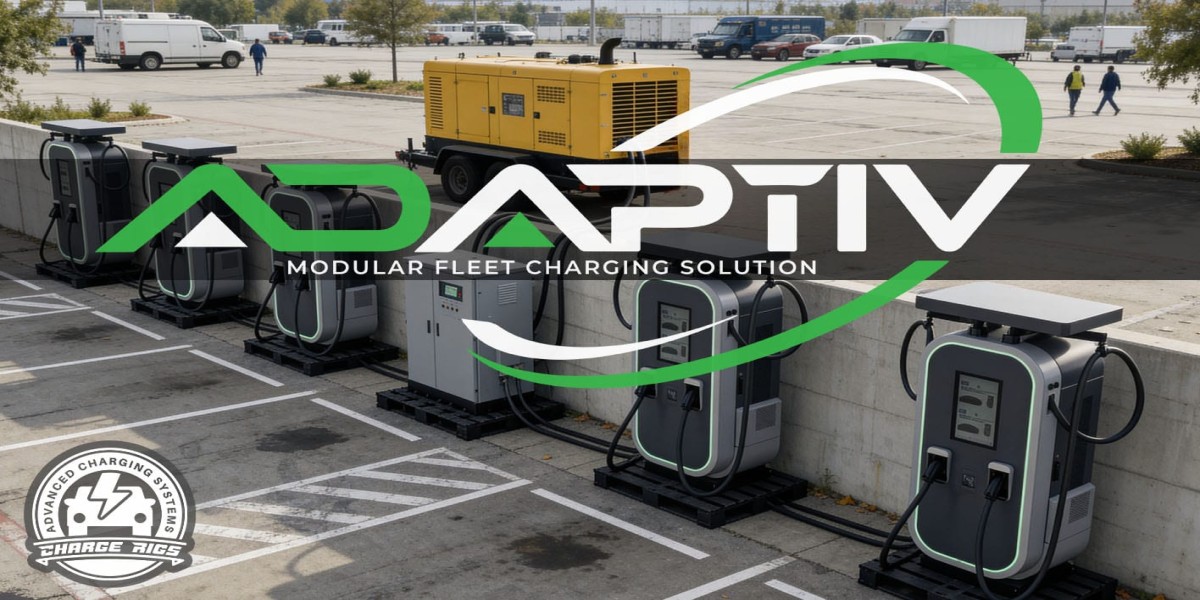
Modular 240kW DC Charging Stations: Scalable Solutions for Fleet Electrification
Quick Answer
A modular 240kW DC fast charging station uses swappable, rack-mounted power modules — typically 30–40kW each — to deliver up to 240kW output while allowing capacity to be added, repaired, or reconfigured without replacing the entire unit. For fleet operators electrifying depots, logistics hubs, and public corridors, this architecture lowers upfront capex by roughly 20–30% compared with oversized fixed-capacity chargers, cuts downtime through hot-swappable module replacement, and future-proofs assets as vehicle fleets migrate to 800V architectures. Modular 240kW stations support CCS2, CCS1, NACS, and CHAdeMO via interchangeable connectors, communicate over OCPP 1.6J/2.0.1 for central management, and can be paired with battery energy storage to reduce demand charges. In short, modularity converts a charging asset from a fixed cost into scalable infrastructure that grows in step with the fleet.
Key Takeaways
- Modular 240kW chargers scale from roughly 60kW to 240kW and beyond by adding power modules, so operators pay for capacity only when the fleet actually needs it.
- Hot-swappable 30kW/40kW modules reduce mean time to repair (MTTR) from days to under one hour, directly improving fleet vehicle availability.
- Wide-voltage (200–1000V) modules deliver up to 500A continuous current, covering both 400V light commercial vans and 800V heavy-duty trucks.
- Pairing modular charging with battery energy storage (BESS) and OCPP smart-charging logic can cut demand charges by 30–50% at depots with limited grid capacity.
- Prioritize modules and cabinets carrying CE, UL, or TUV certifications with IP55–IP65 enclosures for reliable outdoor depot duty.
The Fleet Electrification Bottleneck: Why Fixed-Capacity Chargers Fall Short
Fleet electrification is not a one-time purchase decision — it is a multi-year capacity journey. A depot that starts with 12 electric vans and 240kW of charging demand in 2026 may need 600kW by 2028 and 1.2MW by 2030 as route miles shift from ICE to battery-electric vehicles. That trajectory is exactly where fixed-capacity charging stations create the most damage.
A conventional 240kW charger with a single rigid power architecture forces the operator into an uncomfortable trade-off. Oversize the unit today and you pay for idle silicon capacity that generates zero revenue for years. Undersize it and you hit a hard wall mid-transition, forced to rip out working hardware and re-invest in a second or third unit — along with additional civil works, cabling, and switchgear.
Modular architecture removes this dilemma. Instead of one monolithic power stage, a modular 240kW DC fast charging station contains a cabinet that houses six to eight independent power modules (typically 30kW or 40kW each). Capacity is provisioned by populating modules, and it grows by adding modules to the same cabinet — or by paralleling additional cabinets into the same site controller. This is not a marginal feature; it is the structural difference between a charger you buy and infrastructure you build.
The consequence for fleet managers is measurable: infrastructure can be staged against vehicle deliveries, cash flow, and grid connection approvals rather than committed years in advance. For finance teams, this transforms charging capex from a risky lump-sum bet into a pay-as-you-grow investment that tracks utilization.
What Makes a DC Charging Station “Modular”?
Understanding modularity matters because the term is frequently used loosely in the market. A genuinely modular 240kW station has four distinguishing characteristics:
1. Independent, Replaceable Power Modules
The heart of the system is a set of paralleled power modules. In MIDA’s architecture, each 40kW or 60kW liquid-cooling power module operates independently and can be inserted or removed from the cabinet while the rest of the unit continues charging. If one module fails, the station degrades gracefully (e.g., from 240kW to 200kW) instead of going fully offline — a critical availability property for fleets with tight turnaround windows.
2. Shared or Dynamically Allocated Output
A modular station distributes total available power across output connectors based on demand. When one vehicle arrives, it can draw the full 240kW; when two arrive, power is split 120/120 or 160/80 according to configurable priority rules. This dynamic power sharing maximizes throughput at high-utilization stops — the single most important operational metric for depot charging.
3. Wide-Voltage, High-Current Capability
Modern fleet vehicles span a wide electrical spectrum: 400V delivery vans, 600V city buses, and 800V heavy trucks. A fleet-ready modular 240kW charger must therefore offer a 200–1000V DC output range with up to 500A continuous current, so the same cabinet charges a 350V e-van and an 800V e-truck without derating. Chargers locked to a narrow voltage window silently cap your fleet’s vehicle choices later.
4. Standards-Ready Connectivity
Modularity extends beyond power hardware to software and interfaces. Fleet-grade stations ship with interchangeable connector variants (CCS2, CCS1, NACS, CHAdeMO, or dual-gun configurations), plus OCPP 1.6J/2.0.1 communication, RFID/APP authentication, and — for attended sites — POS payment terminals. This matters because a station that cannot talk to your charge management software is just a very expensive pedestal.
The Business Case: Total Cost of Ownership and ROI
The most persuasive argument for modular 240kW stations is financial. Below is a representative TCO comparison for a 10-vehicle depot electrified in stages, based on typical 2026 market pricing (illustrative ranges):
| Cost Component | Fixed 240kW Charger (single unit) | Modular 240kW Charger (6× 40kW modules) |
|---|---|---|
| Initial capex (fully populated) | $28,000–$34,000 | $24,000–$30,000 |
| Start with 120kW, upgrade to 240kW later | Not possible — replace unit (~$28k) | Add 3 modules (~$3k–$5k each) |
| Failed power stage — repair cost | $4,000–$8,000, unit offline 5–14 days | Swap 1 module (~$2k), offline < 1 hour |
| 5-year TCO (incl. maintenance) | $41,000–$52,000 | $31,000–$40,000 |
| Peak-demand charges (with BESS pairing) | Baseline | 30–50% lower with storage + smart charging |
Three financial mechanisms drive the difference:
- Staged capex. Populating 4 of 8 module slots today (120kW) and adding modules when vehicles arrive converts ~$10,000–$15,000 of idle capital into productive cash flow.
- Availability economics. For a depot running two shifts, each hour of charger downtime strands multiple vehicles. Hot-swap repair measured in minutes, not days, is worth more than the module itself.
- Demand-charge control. A modular station integrated with a battery energy storage system and OCPP-based load management can shave depot peaks, cutting utility demand charges — often the single largest line item in fleet charging operating cost.
Modular 240kW vs. Alternative Configurations
Choosing the right architecture requires comparing what each option actually delivers across the fleet lifecycle:
| Criteria | Fixed 120kW Station | Modular 240kW Station | Liquid-Cooled 480kW HPC |
|---|---|---|---|
| Typical vehicle coverage | 400V vans, sedans | 400V vans to 800V trucks | 800V trucks, buses, motorways |
| Max output per vehicle | 120kW | 240kW (shared) | 480kW+ (split) |
| Scalability | Replace unit | Add modules | Add cabinets |
| Service model | Truck-roll repair | Module swap on site | Module swap on site |
| Best fit | Small lots, AC-heavy sites | Depots, hubs, corridors | Highway, public rapid hubs |
The 240kW modular class occupies the operational sweet spot for fleets: it delivers meaningful charge speed for 800V trucks (adding roughly 200km of range in 20–30 minutes), yet its power modules are compact enough to be handled and swapped by site staff without crane or specialist tooling. Where corridors demand extreme throughput, the same modular philosophy extends upward to MIDA’s 480kW ultra-fast liquid-cooled DC charging station, and for high-traffic public hubs, the 360kW liquid-cooled charging station with RFID, OCPP, and POS provides an attended-site variant with payment built in.
Deployment Playbook: From Site Survey to Go-Live
Fleet charging failures are rarely caused by the charger itself — they come from site-planning errors. Follow this sequence to de-risk a modular 240kW deployment:
- Load and utilization audit. Record each vehicle’s daily mileage, battery size, dwell time, and charging window. This determines the number of connectors and the minimum power per plug.
- Grid capacity check. Confirm transformer headroom and available kVA with the utility. A 240kW station draws roughly 260A at 400V three-phase AC input; budget for upstream protection and cabling.
- Future-proof the pad. Pour a foundation, conduit, and switchgear sized for the final target capacity — even if you populate only half the modules on day one. Civil works are the most expensive thing to redo.
- Select modules and connectors. Match module voltage range and amperage to the planned vehicle mix; order spare modules in line with the fleet’s uptime SLAs.
- Integrate software first. Confirm OCPP compatibility with your charge management system (CMS) and set up load-balancing rules, access control, and billing before energizing.
- Commission and monitor. Verify charging curves against a reference vehicle, then track utilization and module temperatures in the first 90 days to tune power-sharing policies.
Smart Charging and Storage Integration
A modular 240kW station is the natural partner for on-site storage. Because power modules can be throttled or gated by the station controller, the charger can orchestrate with a BESS to:
- Shave demand peaks. Charge vehicles from the battery during utility peak windows, drawing from the grid during off-peak — typically the 30–50% demand-charge reduction cited earlier.
- Increase site throughput on a fixed grid connection. A 200kWh BESS can buffer energy to deliver bursts of 240kW charging on a site with only 120kW of grid import capacity.
- Enable solar self-consumption. Modules accept DC or AC coupling configurations, letting depots charge directly from rooftop PV when irradiance is high.
MIDA’s integrated approach — modular DC chargers paired with BESS cabinets and the same OCPP-based management layer — means one vendor owns the interoperability risk instead of the operator stitching together mismatched components.
Why MIDA for Modular Fleet Charging
MIDA Power builds modular DC charging systems from the component level up, which is precisely what fleet buyers should look for. Because MIDA designs and manufactures the power modules themselves — including the 30kW/40kW air-cooled and 40kW/60kW liquid-cooled module families — spare-part availability, module pricing, and service response are controlled in-house rather than brokered through third parties. Global certifications (CE, UL, TUV, and country-specific marks), OCPP 1.6J/2.0.1 support, and IP55–IP65 enclosures qualify MIDA’s 240kW cabinets for depots, ports, airports, and highway corridors across North America, Europe, and Asia-Pacific.
For operators planning to scale beyond 240kW, MIDA’s product ladder extends seamlessly upward: 360kW liquid-cooled stations with RFID/OCPP/POS for attended public hubs and 480kW liquid-cooled ultra-fast chargers for motorway corridors. One hardware family, one software platform, one service desk — that is the scalable answer to fleet electrification.
FAQ
1. Can a modular 240kW DC charger charge an 800V electric truck?
Yes. Modular stations with a 200–1000V output range and up to 500A continuous current can charge 800V trucks at full rated power, delivering roughly 200–250km of range in 20–30 minutes depending on battery acceptance rate.
2. How many vehicles can one modular 240kW station serve?
With two output connectors and dynamic power sharing, a 240kW station typically serves 4–8 vehicles per day in depot duty (partial charges), or 10+ vehicles in opportunistic top-up scenarios. Total vehicles served scales with dwell time and average energy per session.
3. What happens if one power module fails?
The station degrades to the remaining modules’ capacity (e.g., 200kW from 240kW) and continues charging. The failed module is hot-swapped in under an hour, versus multi-day downtime for a monolithic charger.
4. Can I start with 120kW and upgrade to 240kW later?
Yes — that is the core value of modularity. Add 30kW or 40kW modules to the same cabinet as the fleet grows, subject to confirmed grid capacity at the site.
5. Which charging standards and connectors are supported?
CCS2, CCS1, NACS, and CHAdeMO are available as interchangeable connector variants, with dual-gun options for simultaneous vehicle charging.
6. Does the station support OCPP 2.0.1 and ISO 15118?
MIDA modular stations support OCPP 1.6J and OCPP 2.0.1, enabling integration with major charge management systems; ISO 15118 Plug & Charge options are available on request.
7. How does a battery energy storage system (BESS) pair with a 240kW charger?
The BESS buffers energy and discharges during peak demand, allowing higher charger output than the grid connection alone supports and reducing utility demand charges by an estimated 30–50%.
Post time: Aug-20-2026


