
Movable Energy Storage Systems: The New Frontier in Mobile Rapid EV Charging
Movable Energy Storage Systems: The New Frontier in Mobile Rapid EV Charging
Quick Answer
A movable energy storage system (movable ESS) is a containerized or trailer-mounted battery unit that delivers DC fast charging without a permanent grid connection. Output ranges from 100 kW to 500 kW, with 500 kWh to 1.5 MWh of energy, and the system can be operational within 15–30 minutes of arrival. Movable ESS assets are ideal for events, construction sites, temporary fleet depots, emergency response, and markets where a grid connection takes 6–18 months to secure. Built around 30/40 kW liquid-cooled power modules, LFP battery racks, and CE/UL-certified enclosures, a movable ESS turns “no grid” into “fast charging anywhere” — and opens rental, pop-up, and disaster-relief business models that fixed infrastructure cannot serve.
Key Takeaways
- Zero grid lead time: A movable ESS delivers 100–500 kW of fast charging in under an hour, bypassing utility queues of 6–18 months.
- Real capacity: 500 kWh–1.5 MWh of containerized LFP storage supports 100–300 EV sessions per week at typical highway utilization.
- Strong unit economics: Rental revenue of $800–$2,500/day against a $250k–$600k asset delivers 18–30 month payback in high-utilization markets.
- Safety-first by design: UL 9540A-tested cells, multi-layer fire suppression, IP54–IP55 enclosures, and UN38.3 transport certification make the asset insurable and movable.
- Multi-mode flexibility: Solar-ready, generator-hybrid, and grid-tie operating modes let one asset serve events, fleets, and emergency response year-round.
Why Mobile Infrastructure Is Winning
Fixed charging infrastructure has a timing problem. Utility interconnection studies, transformer upgrades, and civil works routinely take 6–18 months — and in congested urban grids, 24 months is not unusual. Meanwhile, the demand for charging is immediate: a festival running for ten days, a construction crew electrifying its equipment fleet for a two-year project, a logistics operator trialing electric vans before committing to a depot, or a region hit by a grid outage after a storm.
Movable energy storage collapses this timeline. The asset arrives on a flatbed or trailer, is craned or rolled into place, connected to a local feed (or nothing at all), and starts delivering 120–360 kW of DC fast charging within the hour. When the demand window closes, it moves to the next site. This “infrastructure as a service” model is why fleet managers, event organizers, utilities, and emergency services are treating movable ESS as a strategic asset rather than a stopgap.
Anatomy of a Movable ESS
A movable ESS is a fully integrated energy asset engineered for transport and rapid deployment:
- LFP battery racks — Grade-A cells in a 800–1,500V DC string, delivering 500 kWh–1.5 MWh. High string voltage minimizes cable losses and lets the PCS run at peak efficiency.
- Bi-directional PCS — Converts DC battery power to AC for charging, with 96%+ round-trip efficiency. The PCS rating (200–500 kW) defines how many chargers the system can feed simultaneously.
- 30/40 kW liquid-cooled power modules — The same modular charging blocks used in fixed stations. Liquid cooling keeps sustained output stable in 40°C heat and holds cell temperature variance within ±3°C.
- EMS and telematics — Remote monitoring of SoC, SoH, session data, and location. The EMS supports OCPP 2.0.1 so the movable unit joins the operator’s existing charging platform the moment it goes live.
- Safety stack — Gas/smoke detection, aerosol fire suppression, thermal-runaway containment per UL 9540A, and crash-rated transport frames per UN38.3.
Deployment Scenarios: Where Movable ESS Pays
| Scenario | Typical demand | System profile | Why movable wins |
|---|---|---|---|
| Events & festivals | 50–200 sessions over 3–10 days | 250–500 kWh / 200–360 kW | No grid connection available; asset leaves after event |
| Construction sites | Fleet of electric machines, 6–24 months | 500 kWh–1 MWh / 200–300 kW | Site power is temporary; permits impossible for fixed builds |
| Fleet trials & pop-ups | 20–60 vehicles/day for 3–12 months | 500 kWh–1 MWh / 300–480 kW | Validate routes before committing capex to a depot |
| Emergency response | Critical loads + EV rescue | 250–750 kWh / 100–250 kW | Arrives by truck, operates off-grid, refuels from generators |
| Grid-limited sites | Permanent but grid-starved | 1–1.5 MWh / 480 kW | Serves as bridge while the utility upgrade proceeds |
Movable vs. Fixed: The Economics
| Factor | Movable ESS | Fixed BESS + chargers |
|---|---|---|
| Time to live | 1–2 days | 6–18 months |
| CAPEX | $250k–$600k (transportable) | $400k–$1.5M (plus civil works) |
| Residual value | High — asset relocates and resells | Low — landlocked to the site |
| Utilization risk | Low — move it where demand is | High — stranded if site underperforms |
| Rental revenue potential | $800–$2,500/day | Not applicable |
| Maintenance | Factory-supported, hot-swap modules | On-site service contracts |
| Best owner | Rental providers, fleet operators, utilities | CPOs with proven sites |
The decisive number for rental operators is utilization: at 20 rental days per month and $1,500/day average, a $450,000 movable ESS grosses $360,000/year — a 16-month payback before operating costs. Even at conservative 10 days/month, the asset pays back inside 30 months and retains most of its value for resale.
Safety, Certification, and Transport
Movable assets face a stricter safety bar than fixed systems because they are craned, towed, and operated in temporary settings. Four requirements are non-negotiable:
- UN38.3 transport testing for lithium cells — required for road, rail, sea, and air shipment.
- UL 9540A / IEC 62619 cell- and system-level thermal runaway testing — the basis for insurance coverage and fire-marshal approval.
- IP54–IP55 enclosure rating — protection against the dust, rain, and coastal salt that temporary sites expose assets to.
- Structural certification — container corner-casting load ratings, tie-down points, and crane lift points documented for every deployment.
Operators should also demand a clear maintenance cadence: quarterly cell-balancing checks, annual cooling-system service, and telematics alerts for SoC drift or temperature anomalies.
Business Models and ROI
Three proven models monetize a movable ESS:
- Rental / charging-as-a-service — Charged by the session, by the kWh, or by the day. Event organizers pay $800–$2,500/day; emergency agencies sign framework contracts with guaranteed response times.
- Pop-up network building — Operators deploy movable units at unserved locations, measure real demand, and convert the best-performing sites into fixed infrastructure — the asset then moves to the next candidate location.
- Disaster and resilience service — Utilities and relief agencies lease movable ESS to power command posts, shelters, and EV evacuation traffic after storms. These contracts are multi-year and often fund the asset’s capital cost outright.
For fleet operators, the internal-ROI case is equally strong: a movable ESS replaces the cost of diesel generators on construction sites (fuel, maintenance, noise fines) while charging electric equipment at $0.10–0.15/kWh equivalent.
Selection Checklist for Movable ESS Buyers
- Match PCS power to your busiest hour, not your average. A 360 kW charger needs at least a 360 kW PCS to sustain full output.
- Verify module-level repairability — 30/40 kW modules should be hot-swappable with the same spares as your fixed fleet.
- Confirm the transport envelope — height, weight, and crane-lift configuration must fit your target sites’ access routes.
- Require OCPP 2.0.1 + telematics so the movable asset is visible in your charging platform from minute one.
- Check the fire-suppression medium — aerosol or clean-agent systems suit temporary deployments better than water-based suppression.
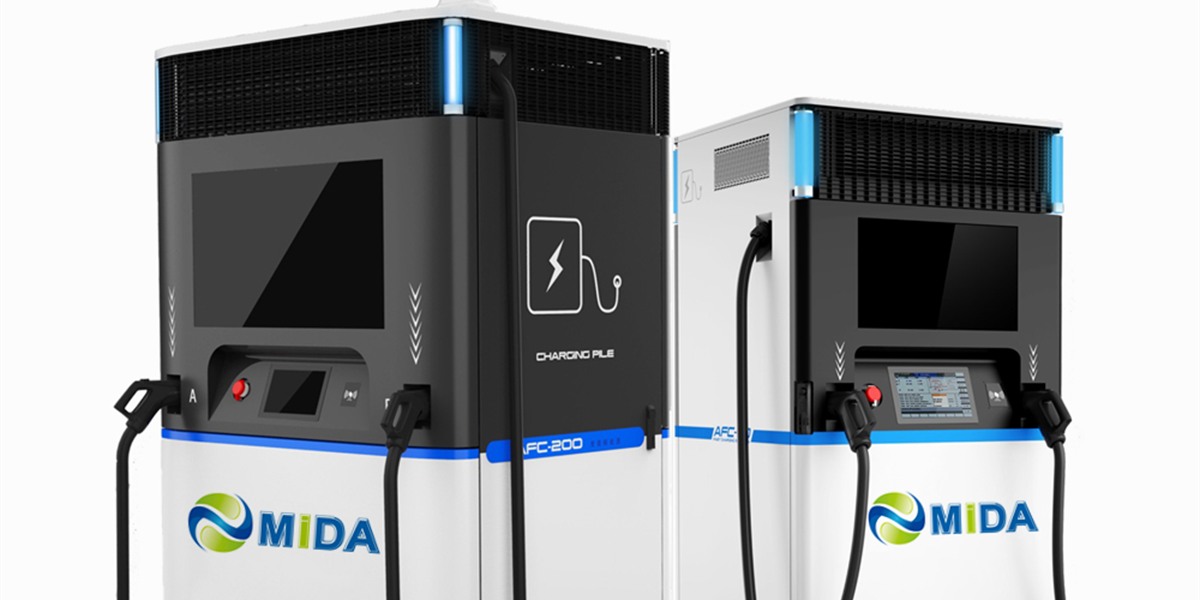
MIDA Power builds the modular core of these systems: the 40kW and 60kW liquid-cooled power modules that let a movable ESS deliver sustained high power without derating, and the liquid-cooled ultra-fast charging stations that mount directly on the mobile platform. For motorway-scale mobile hubs, the same 480kW ultra-fast liquid-cooled DC charging architecture used on highways scales down to a trailer. MIDA’s full DC charging portfolio is engineered so the modules in a fixed hub and a movable ESS are identical — one spares pool, one training program, one EMS.
FAQ
1. What is a movable energy storage system? A movable ESS is a containerized or trailer-mounted battery system with an integrated PCS and DC fast-charging capability, designed to be transported between sites. It delivers 100–500 kW of charging power with 500 kWh–1.5 MWh of energy, typically going live within 15–30 minutes of arrival.
2. How many EVs can a movable ESS charge before needing a recharge? A 1 MWh system delivers roughly 4,000–5,000 km of driving range per full cycle. In practice, it supports 100–300 sessions per week, recharging itself overnight from a low-voltage feed, a generator, or solar — depending on the deployment mode.
3. Can a movable ESS operate completely off-grid? Yes. In island mode it draws only from the battery. For sustained operation, operators pair it with a generator or solar array; the EMS automatically switches between battery, solar, generator, and grid input based on availability and cost.
4. What certifications does a movable ESS need for international transport and operation? UN38.3 for cell transport, UL 9540A or IEC 62619 for thermal-runaway safety, IP54–IP55 for environmental protection, and regional grid codes (CE, UL, or TUV) for any grid-connected operation. Insurance providers will also review the fire-suppression and structural certification.
5. Is a movable ESS more expensive than building fixed infrastructure? Per kWh, slightly more — the transport frame and rapid-deployment engineering add cost. But when time-to-market, civil works, permitting, and stranded-asset risk are included, a movable ESS is frequently cheaper for the first 1–2 years of operation, and it retains resale value.
6. Who typically buys or rents movable ESS systems? Rental providers, fleet operators, event organizers, utilities, emergency-services agencies, and CPOs testing new locations. Construction companies also lease them to power electric site equipment without diesel generators.
7. How long does a movable ESS last? With LFP chemistry and liquid cooling, the battery delivers 6,000–8,000 cycles at 80% depth of discharge — over 15 years at one cycle per day. The transportable container and hot-swappable power modules typically outlast two or three battery augmentation rounds.
Post time: Aug-24-2026


