
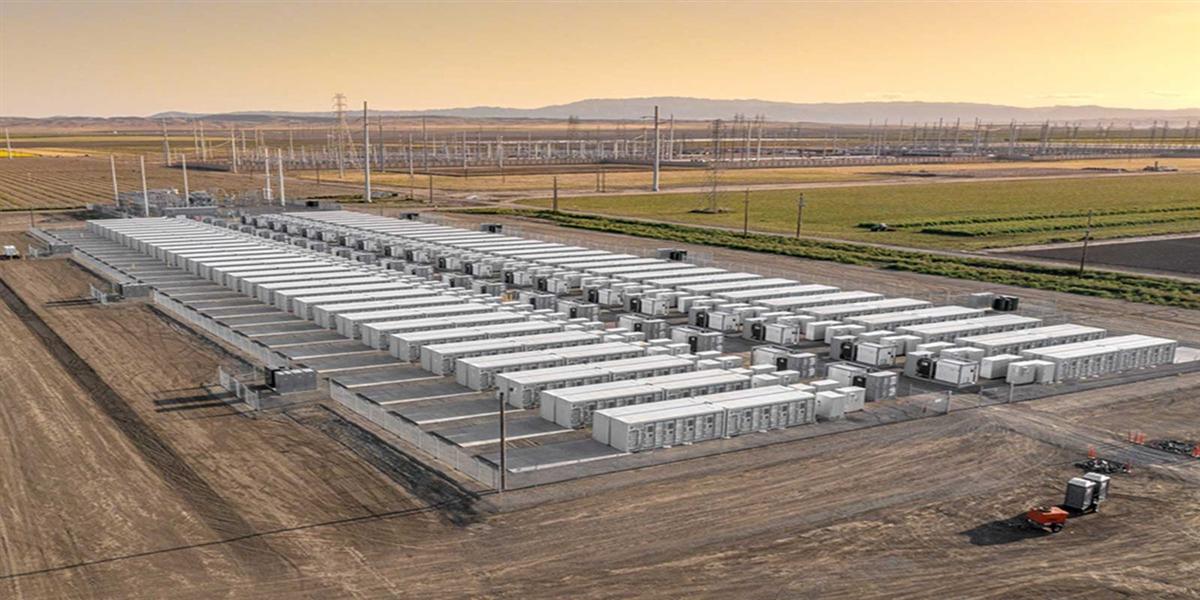
Movable Megawatt Storage: Providing Emergency 1MW+ Charging for Remote Mining Sites
Quick Answer
Remote mining operations face a hard contradiction: the haul fleets electrifying fastest are the ones furthest from any grid capable of charging them. Movable megawatt storage — a trailer- or skid-mounted Battery Energy Storage System (BESS) with an integrated 1MW+ DC charging output — resolves it. The unit is charged from whatever power is available at site (a diesel genset, a limited mine feeder, or a solar array), transported to where the trucks or equipment are working, and discharges at megawatt rates on demand. Because the asset moves, it serves multiple pits, phases, or sites over its lifetime instead of being stranded when a pit closes. For remote mining, movable megawatt storage is not a temporary workaround — it is the fastest, most capital-efficient way to bring 1MW+ charging to locations where fixed infrastructure is impractical.
Key Takeaways
- No grid required: A movable BESS delivers 1MW+ charging bursts from a small on-site genset or limited feeder, decoupling charging power from installed generation.
- The asset travels: Trailers and skids relocate as pits advance, phases close, or operations redeploy — protecting capital that fixed infrastructure would write off.
- Genset downsizing: Buffering megawatt charging through storage lets a site run a smaller, more efficiently loaded generator instead of sizing for instantaneous peak.
- Ruggedization is decisive: Sealed liquid cooling, high IP ratings, wide-temperature operation, and shock-tolerant mounting separate a mining-grade unit from a roadgoing one.
- Diesel displacement economics: Each megawatt-hour delivered from storage can offset diesel-generated charging, improving cost per tonne and cutting on-site emissions.
Why Remote Mining Is the Hardest Electrification Problem
Mining haul trucks and loaders are among the most energy-intensive mobile machines on earth, and they operate where infrastructure is thinnest. A single electric haul truck may carry a 600–1,000kWh battery pack; at 1MW charging, that pack refills in roughly 40–60 minutes. Deliver that power from a grid and the site needs a transmission-grade connection. Deliver it from a genset sized for the peak and the site buys a generator several times larger than its average load, running it at poor efficiency and burning fuel to stay spinning between charges.
Neither is acceptable on a remote site. Building a new high-voltage line to a mine pit can take years and cost more than the fleet it would serve. Oversizing generation wastes capital and fuel. The result, historically, has been that electrification stalls at exactly the sites where it would pay back most — because diesel logistics to remote pits are brutally expensive.
The engineering answer is to break the link between charging power and generation capacity. Generation supplies energy at a manageable continuous rate; storage supplies power at whatever rate the trucks need. A relatively modest genset — or a solar array with a battery — can then support megawatt-class charging, because the peak is buffered rather than generated.
What “Movable Megawatt Storage” Actually Contains
A mining-grade movable megawatt storage unit is a purpose-built power plant on wheels or a skid, not a repurposed container. Its defining systems are:
- High-voltage LFP battery racks — Lithium iron phosphate cells configured in strings up to 1500V DC, chosen for cycle life, thermal stability, and tolerance of daily deep cycling in hot, dusty environments.
- Bi-directional PCS — Power conversion sized to deliver 1MW+ at the DC output while accepting a lower, more efficient AC input rate from the on-site source.
- Megawatt-class DC charging output — Dispensers or connector assemblies capable of sustained high-current delivery, with liquid-cooled cables to prevent thermal derating.
- Liquid thermal management — A sealed water-glycol loop holding cells within their optimal band and cell-to-cell temperature variance within a few degrees, essential at high C-rates.
- Fire suppression and safety systems — Container-level detection and suppression designed for unattended, remote operation where fire response is hours away.
- Telemetry and remote control — OCPP 2.0.1-compatible control and monitoring so the unit can be managed from the mine’s control room or a remote operations center.
The DC charging output is the part that distinguishes a true megawatt storage unit from a generic battery bank. It must be able to sustain high current into a heavy vehicle pack without the voltage collapse or derating that cripples over-specified-but-under-engineered systems. Building that output on proven, liquid-cooled power modules — the same building blocks used in fixed ultra-fast stations — gives the movable unit the reliability of field-proven hardware rather than one-off custom electronics.
Fixed vs Movable: Choosing the Right Architecture
Movable storage is not always the right answer, but at remote sites it frequently is. The comparison below frames the decision.
| Factor | Fixed Megawatt Charging Site | Movable Megawatt Storage |
|---|---|---|
| Grid requirement | Large connection or dedicated generation | Minimal feeder or genset; storage buffers the peak |
| Deployment time | Months to years (civil works, interconnection) | Days to weeks (transport, pad, cable) |
| Relocation | Impossible; asset stranded when pit closes | Relocates with the operation |
| Capital risk | High — tied to one location’s lifespan | Low — serves multiple sites over asset life |
| Power capacity | Scales with grid upgrade | Scales by adding storage units |
| Best for | Long-life hubs, high sustained throughput | Advancing pits, phased projects, emergency backup |
The decisive variable is asset mobility versus site permanence. Mining pits advance; phases end; operations relocate. A charging asset bolted to the ground is only as valuable as the pit beside it. A movable unit is only as valuable as the next place it can go — which, across a mine’s multi-decade life, is almost always somewhere.
Sizing a Movable Unit for Haul Fleet Duty
Movable units are sized by three quantities: peak output power, usable energy, and recharge rate.
| Duty Cycle | Truck Pack | Charge Target | Energy Delivered | Suggested Storage |
|---|---|---|---|---|
| Opportunistic top-up | 400kWh | 20% → 60% | ~160kWh | 0.5–1MWh |
| Full shift charge | 600kWh | 20% → 80% | ~360kWh | 1–2MWh |
| Back-to-back sessions | 600kWh | 2 trucks/shift | ~700kWh | 2–3MWh |
| Continuous operation | 1,000kWh | 3+ trucks/shift | ~1.5MWh+ | 3–5MWh |
The recharge rate is as important as the discharge rate. If a unit delivers 1MWh per shift, it must be replenished between shifts from whatever source the site has. A 250kW genset replenishes 1MWh in about four hours — fast enough for overnight, too slow if the unit is needed again within the shift. Solar arrays, where space and climate allow, can carry part of the recharge load during daylight, reducing fuel consumption further. The optimum blend depends on the site’s fuel cost, solar resource, and utilization profile.
Ruggedization: What Makes a Unit Mining-Grade
A storage unit specified for a paved motorway site will not survive a mine. Mining-grade means:
- Wide-temperature operation: Full output from well below freezing to well above 45°C ambient, with liquid cooling and chiller assist where necessary.
- High ingress protection: IP54 minimum, IP65 preferred, against conductive dust, grit, and water.
- Shock and vibration tolerance: Reinforced rack mounting and skid or trailer frames engineered for unpaved haul roads.
- Sealed thermal loops: Coolant systems protected against dust ingress that would clog air-cooled alternatives within weeks.
- Unattended safety: Multi-level fire detection and suppression with remote alarms, since no operator can respond instantly at a remote pit.
These requirements raise the engineering bar. The reward is an asset that keeps delivering megawatt charging where air-cooled, road-spec hardware would spend most of its life derated or under repair.
The Commercial Case: Diesel Displacement and Utilization
Movable megawatt storage pays back through several channels, and on remote sites the dominant one is fuel.
- Diesel displacement: Every megawatt-hour delivered from storage that was recharged from a cheaper source replaces diesel-generated charging energy. On sites where diesel is trucked in, the savings per kWh are substantial.
- Genset right-sizing: Buffering peaks lets a site run a smaller generator at a higher, more efficient load factor instead of a large generator idling between spikes. Smaller and better-loaded generators cut both capital and fuel cost.
- Asset utilization: Because the unit moves, it serves each site during its high-demand phase and then redeploys, raising lifetime utilization far above a fixed asset at a single pit.
- Emissions and compliance: Displacing diesel generation reduces on-site emissions and noise, supporting environmental commitments and permit conditions.
- Residual value: A movable, standardized storage unit retains resale value and can be redeployed to a new project rather than written off.
Framed against the alternative — no charging, continued diesel hauling, or years of grid construction — movable megawatt storage is usually the lowest-cost route to electrified hauling at remote sites.
Deployment Considerations and Proven Building Blocks
Deploying movable megawatt storage well comes down to a handful of disciplines:
- Match output hardware to the vehicle class. Megawatt charging demands liquid-cooled cables and connectors rated for sustained high current. Reusing the power-module and cooling platform behind MIDA’s 480kW ultra-fast liquid-cooled DC charging station gives a movable unit field-proven reliability rather than custom risk.
- Standardize modules across fixed and movable assets. MIDA’s 40kW/60kW liquid-cooling power modules are the interchangeable heart of both stationary cabinets and mobile platforms, so a mine carries one spares pool and one training program.
- Integrate the control plane. The unit should speak OCPP 2.0.1 and report module-level telemetry, so remote operations can monitor state of charge, schedule recharge, and isolate the battery from a control room. MIDA’s 360kW liquid-cooled charging station with RFID, OCPP, and POS illustrates the protocol-complete platform that scales into mobile and storage-integrated configurations.
- Plan the recharge source up front. The value proposition collapses if the unit cannot be recharged between shifts. Confirm the genset, feeder, or solar capacity before committing to a duty cycle.
- Buy from one accountable vendor. When the battery, PCS, charging output, and control software come from one manufacturer, the interfaces are the vendor’s problem — not the mine’s. Explore the MIDA commercial DC fast charging range to see how modules, stations, and storage combine.
FAQ
1. How fast can a movable megawatt storage unit be deployed?
Typically days to a few weeks, versus months or years for a grid-connected site. The unit arrives on a truck or trailer, needs a prepared pad and cabling, and can begin charging shortly after connection.
2. Can it charge at 1MW from a small generator?
Yes. The generator recharges the battery at a continuous rate it can sustain, and the battery delivers 1MW+ to the vehicle in bursts. The generator’s size determines recharge time, not peak charging power.
3. What happens when the battery is depleted mid-shift?
Charging pauses until the battery recharges, so duty-cycle planning matters. Units can be sized for full-shift coverage, or the site can rotate two units so one charges while the other serves vehicles.
4. Is movable storage a replacement for a permanent charging site?
It is a bridge and a complement. On permanent, high-utilization hubs, fixed infrastructure is usually more cost-effective. For advancing pits, phased projects, and remote operations, movable storage is often the only practical option.
5. How long do the batteries last in mining conditions?
With LFP chemistry and liquid thermal management holding cells in their optimal band, a well-maintained system typically delivers several thousand full cycles. Harsh ambient conditions shorten life unless the thermal system is engineered for the environment.
6. Can solar be added to reduce diesel consumption?
Yes. A solar array sized to the site’s daytime load can carry much of the recharge demand, and the battery smooths the intermittent generation. The blend of solar, genset, and storage is optimized against local fuel cost and solar resource.
7. How is safety handled with no one on site?
Multi-level detection and suppression, sealed enclosures, and remote telemetry are standard. The unit reports alarms and can isolate the battery remotely, so the mine’s control room retains visibility and control without a permanent operator.
Conclusion
Remote mining is where electrification’s infrastructure gap is widest, and where the payoff for closing it is largest. Movable megawatt storage closes that gap by decoupling charging power from generation capacity and by turning a charging asset into something that follows the operation rather than being stranded by it. Built on proven liquid-cooled power modules, ruggedized for dust and temperature extremes, and managed through a protocol-complete control plane, these units let a mine bring 1MW+ charging to a pit in weeks instead of years — while shrinking fuel consumption, generator size, and capital risk at the same time. For heavy industry operating far from the grid, movable megawatt storage is not a stopgap. It is the standard.
MIDA Power manufactures movable and fixed megawatt storage and charging solutions, including liquid-cooled power modules and integrated storage systems. Contact MIDA via midapower.com for site-specific sizing and deployment engineering.
Post time: Sep-10-2026


