
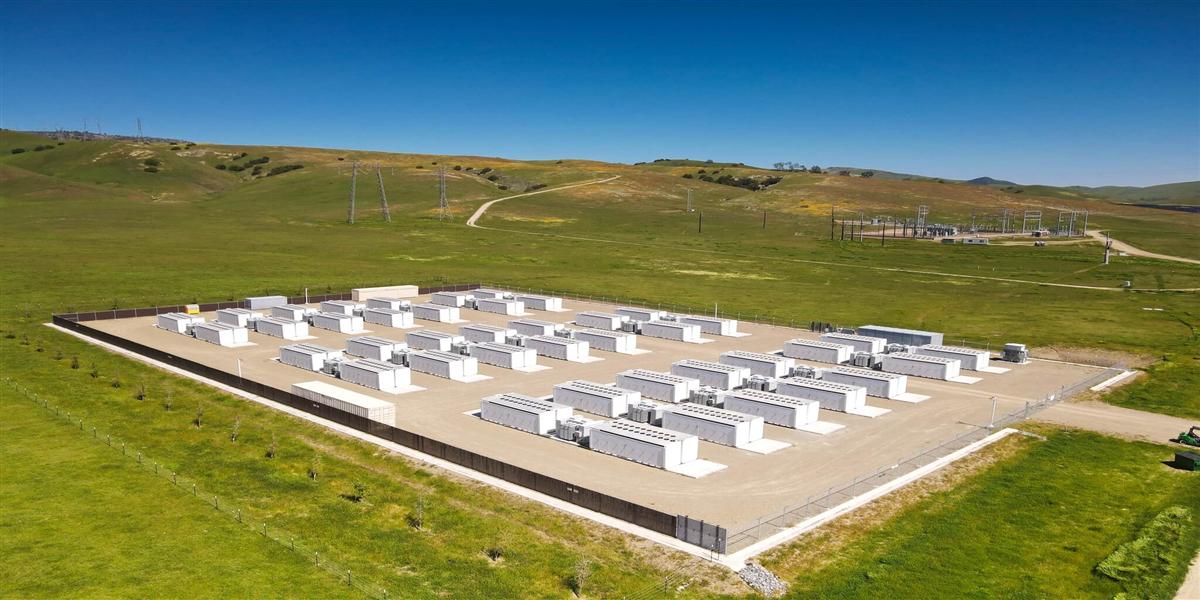
The Role of BESS in Supporting Megawatt Charging Infrastructure at Grid-Constrained Sites
Quick Answer
Megawatt Charging System (MCS) stalls draw 1–3.75MW each, a load class that most distribution feeders cannot supply without multi-year transformer and cable upgrades. A Battery Energy Storage System (BESS) solves this by decoupling the site’s peak deliverable power from its contracted grid capacity: the battery charges slowly from a modest grid connection and discharges rapidly into vehicles, so a 1–2MW charging hub can operate on a 400–800kVA feed. A correctly sized BESS (typically 1–5MWh for a multi-stall megawatt site) absorbs demand-charge spikes, enables peak shaving, provides outage ride-through, and turns a rejected or delayed grid application into a deployable site in months rather than years. For grid-constrained sites, BESS is not an accessory to megawatt charging — it is the enabling infrastructure.
Key Takeaways
- Peak decoupling: BESS lets a megawatt-class hub deliver 1–3MW of instantaneous charging power from a grid connection several times smaller, bypassing 18–36 month utility upgrade queues.
- Sizing rule: energy (kWh) must cover the busiest-hour draw above the grid limit, while PCS power (kW) must cover the gap between site demand and grid capacity.
- Demand-charge relief: buffering peaks with storage typically cuts monthly demand charges by 30–60%, the single largest controllable operating cost at high-power sites.
- Multi-stall MCS needs energy, not just power: back-to-back megawatt sessions demand one to several MWh of buffer storage to avoid exhausting the battery mid-shift.
- Modular deployment matters: containerized BESS paired with modular liquid-cooled chargers lets operators add power and energy in defined blocks as utilization grows.
Why Megawatt Charging Breaks Conventional Grid Planning
Heavy-duty electric trucks arriving on the MCS standard charge at 1MW and above, with the CharIN roadmap extending to 3.75MW per connector. A single megawatt stall is roughly equivalent to the average load of 800–1,000 households compressed into one point on the network. A modest truck stop with four MCS bays can therefore present a coincident load approaching 3–4MW — a load that, in most locations, does not exist anywhere on the medium-voltage distribution network except at industrial substations.
Utilities plan and reinforce the grid for aggregate, diversified demand, not for instantaneous, correlated spikes at a single address. When a developer applies for a megawatt connection, the utility typically responds with one of three outcomes: a long reinforcement timeline (12–36 months for a new feeder or transformer), a costly dedicated connection charge, or a refusal because the local feeder has no headroom at all. Any of these outcomes stalls the project. This is the “grid-constrained site” problem, and it is the defining bottleneck of the megawatt charging era.
The insight that resolves it is simple: charging demand is spiky, but energy demand is not. A truck charges at full power for 20–40 minutes and then leaves. Across a day, the site’s average draw is a fraction of its peak. If the site can store energy during the quiet hours and release it during the spikes, the physical grid connection only has to cover the average — and the average is something a normal commercial feed can supply.
What Makes a Site “Grid-Constrained”?
Not every site is equally constrained. The term covers a spectrum of conditions, and identifying which applies determines the BESS sizing strategy:
| Constraint Type | Symptom | BESS Response |
|---|---|---|
| Insufficient transformer capacity | Existing transformer cannot carry the new peak load | Discharge storage during peaks; recharge off-peak within existing capacity |
| No feeder headroom | Utility refuses or delays new load | Operate as an islanded buffer; grid only ever sees the recharge profile |
| Long reinforcement lead time | 18–36 month wait for upgrade | Deploy now on current capacity; upgrade later only if utilization justifies it |
| High demand charges | Monthly peak-kW tariff dominates OPEX | Peak shaving clips the spike that sets the tariff |
| Weak or unstable rural feeder | Voltage sag, low fault level, outages | Storage provides voltage support and ride-through |
| Expensive extension to a remote site | Cost of new line exceeds project budget | Standalone storage (with solar) reduces or removes the line requirement |
For operators, the practical test is straightforward: compare the site’s contracted capacity (kVA) against the coincident peak demand (kW) of the planned charging stalls. The difference between those two numbers, held over the duration of a typical charging session, defines exactly how much power and energy the BESS must supply.
How BESS Bridges the Gap: Power vs Energy
Two independent quantities determine whether a BESS can support megawatt charging, and conflating them is the most common sizing error.
Power (kW) is the rate. The power conversion system (PCS) inside the BESS must be able to inject enough power to make up the shortfall between the chargers’ demand and the grid limit. If four 1MW stalls pull 3.5MW while the grid supplies 800kW, the PCS must cover roughly 2.7MW — a substantial bi-directional converter array, usually built as paralleled units rather than one monolithic block.
Energy (kWh) is the duration. The battery must hold enough kilowatt-hours to sustain that power injection for the length of a charging peak. A 2.7MW shortfall lasting 30 minutes consumes 1.35MWh of stored energy; serving two overlapping truck sessions in the same window doubles that. This is why multi-stall MCS sites trend toward multi-megawatt-hour storage even though each individual session is short.
The relationship is captured by a simple design identity:
- Required PCS power (kW) ≈ coincident charging peak (kW) − grid limit (kW)
- Required energy (kWh) ≈ shortfall power (kW) × peak duration (h) ÷ usable depth of discharge
Usable depth of discharge matters because batteries are deliberately not cycled from 0% to 100%. A well-engineered system operates within a defined state-of-charge window (often 10–90%), so a nominal 3MWh container might deliver 2.4MWh in practice. Designers who forget this margin find their site unable to complete the busiest hour of the day.
Sizing a BESS for a 1MW+ Charging Site
The table below illustrates how storage requirements scale with the number and power of MCS stalls behind a constrained grid connection. Figures assume a 60-minute peak window and a 90% usable depth of discharge.
| Site Configuration | Coincident Peak | Grid Limit | PCS Shortfall | Buffer Energy (60 min) |
|---|---|---|---|---|
| 2 × 480kW stalls | 960kW | 400kW | ~560kW | ~0.6MWh |
| 2 × 1MW MCS stalls | 2,000kW | 600kW | ~1,400kW | ~1.5MWh |
| 4 × 1MW MCS stalls | 3,500kW (diversified) | 800kW | ~2,700kW | ~3.0MWh |
| 6 × 1MW MCS stalls | 5,000kW (diversified) | 1,000kW | ~4,000kW | ~4.5MWh |
Two patterns emerge. First, the storage requirement grows faster than the stall count because coincident peaks compound. Second, the grid limit is not fixed — it is a commercial decision. A developer who negotiates a larger connection reduces the BESS requirement but pays for the connection; a developer who accepts a smaller connection lowers the connection cost but increases the storage investment. The optimum varies by site, tariff, and utilization forecast, and it is worth modeling both before committing.
Modularity keeps this flexible. A megawatt-scale BESS is assembled from parallel container units, each integrating LFP battery racks, a bi-directional PCS, liquid cooling, fire suppression, and an energy management system. Because each container is an independent asset, a site can start with the storage that covers today’s traffic and parallel additional units onto the same AC bus as demand grows — with no redesign of the first installation.
DC-Coupled vs AC-Coupled Storage Architectures
How the battery connects to the chargers determines efficiency, flexibility, and cost.
| Architecture | How It Works | Advantages | Trade-offs |
|---|---|---|---|
| AC-coupled | BESS has its own PCS and connects to the site AC bus alongside the chargers | Simple to retrofit; independent vendors; grid services easy | Conversion losses on each power flow; extra AC switchgear |
| DC-coupled | Battery connects to a shared DC bus feeding the chargers | Fewer conversion stages; higher round-trip efficiency; compact | Shared DC bus design; less standard; tied to one DC ecosystem |
For most grid-constrained sites, AC-coupled storage is the pragmatic default: it is modular, vendor-flexible, and can be added to an existing charging installation without replacing the chargers. DC-coupled designs deliver higher efficiency but demand tighter integration between the charger and battery platforms. Where both the storage and the chargers come from one manufacturer, DC coupling becomes far more practical — the site controller and energy management system can treat the battery and the charging stacks as a single orchestrated resource rather than two systems negotiating over a protocol boundary.
The Economics: Demand Charges, Arbitrage, and Payback
Storage at a megawatt site earns its keep through several stacked value streams:
- Demand-charge reduction: The monthly peak-kW charge is set by the single worst 15-minute interval. Clipping those spikes with storage is often the fastest payback channel, cutting this line by 30–60% at high-power sites.
- Energy arbitrage: Charging the battery during low-tariff overnight windows and discharging during expensive peak periods captures the spread between them.
- Renewable self-consumption: Where solar is co-located, storage captures generation that would otherwise be exported at a low price and delivers it to vehicles instead.
- Grid-service revenue: In liberalized markets, the same battery can bid into frequency response or capacity programs, adding revenue during idle hours.
- Uptime insurance: A site that can ride through a feeder fault keeps charging when the grid is down — a differentiator that commands premium pricing and protects brand reputation.
Combined, these streams typically compress the BESS payback period to a range that makes the storage investment self-funding. Crucially, the alternative to storage is not “no cost” — it is the cost of a grid upgrade, a delayed launch, or a site that simply cannot be built. Framed against those options, BESS is usually the lowest-cost path to megawatt capability.
A Deployment Playbook for Grid-Constrained Sites
- Model the load profile first. Collect 15-minute-interval charging demand forecasts before specifying hardware. The storage sizing is only as good as the demand model behind it.
- Negotiate the grid connection deliberately. Ask the utility what capacity is available today versus what requires reinforcement, and treat the “today” figure as the design constraint.
- Specify modular, liquid-cooled hardware. Megawatt sites run power electronics and cables hard; liquid-cooled chargers such as MIDA’s 480kW ultra-fast liquid-cooled DC charging station for motorways maintain full output under sustained high-current duty without thermal derating.
- Standardize on interchangeable power modules. Building cabinets from one module SKU — for example MIDA’s 40kW/60kW liquid-cooling power modules for DC EV charging stations — keeps spares, training, and service identical across a growing fleet.
- Buy one control plane for storage and chargers. An energy management system that sees both the battery and the chargers can execute peak shaving and dynamic power sharing precisely; two disconnected systems cannot. MIDA’s 360kW liquid-cooled charging station with RFID, OCPP, and POS demonstrates the protocol-complete control layer that scales into storage-integrated hubs, and the broader MIDA commercial DC fast charging range shows how the building blocks fit together.
- Plan for expansion from day one. Size the trench, the AC bus, and the site controller for the eventual peak, even if the first phase installs less. Expansion then becomes a matter of adding containers and dispensers, not re-excavating the site.
FAQ
1. Can a megawatt charging site run entirely off-grid with BESS?
Yes, for sites with low daily throughput or co-located generation. A standalone BESS charged by solar and a backup generator can deliver megawatt charging bursts without any grid connection. For high-utilization sites, however, the energy has to come from somewhere, so most deployments use storage to reduce the grid connection rather than eliminate it.
2. How much storage does one MCS truck charge consume?
A 30-minute session at 1MW draws roughly 500kWh from the battery if the grid cannot supply it. Site-level storage of several MWh is therefore typical for hubs serving multiple trucks per shift.
3. Does BESS slow down charging?
No. A correctly sized PCS can inject its full rated power in parallel with the grid, so the vehicle still receives megawatt power. The battery only limits the duration for which that power can be sustained, not the peak rate.
4. What battery chemistry is used for megawatt-scale BESS?
Lithium iron phosphate (LFP) dominates because of its cycle life, thermal stability, and cost. It tolerates daily deep cycling better than higher-energy-density chemistries and is inherently safer in the high-duty commercial environment of a charging hub.
5. How long can a site ride through a grid outage?
Ride-through duration equals usable stored energy divided by site load. A site drawing 500kW from a 2MWh usable buffer sustains roughly four hours of full-power charging, or far longer if charging pauses and only auxiliary loads remain.
6. Is BESS worth it if the grid connection is already adequate?
Often yes — not for capacity, but for demand-charge reduction, arbitrage, and outage resilience. The business case is weaker than at a constrained site but rarely zero, especially where time-of-use tariffs are steep.
7. How does BESS integration affect certifications?
Storage systems are typically certified to UL 9540 with UL 9540A thermal-runaway testing in North America, or CE plus IEC 62477 for the PCS in Europe, alongside NFPA 855 installation compliance. Specifying pre-certified containers shortens permitting and opens insurance coverage that site-built storage struggles to obtain.
Conclusion
Megawatt charging does not fail because of chargers — it fails because of grids. The sites that will define the MCS era are not the ones with the strongest feeders, but the ones that learned to decouple peak deliverable power from contracted capacity using storage. By pairing a modular, liquid-cooled charging platform with a correctly sized BESS and a single energy management system, operators can build 1MW+ hubs on the connections they already have, in months rather than years — and then scale them in defined blocks as trucks arrive. That is how a grid-constrained site stops being a rejected application and becomes the most valuable charging asset on the corridor.
MIDA Power designs and manufactures integrated EV charging and BESS solutions, from liquid-cooled power modules to complete storage-integrated megawatt charging hubs. Contact MIDA via midapower.com for site-specific BESS sizing and grid-constraint engineering.
Post time: Sep-10-2026


