
Off-Grid EV Charging Solutions: Using BESS and Movable Storage in Remote Areas
Quick Answer
Off-grid EV charging is no longer a compromise — it is a deployable engineering solution built on three components: a battery energy storage system (BESS) as the energy anchor, solar PV (or another local generator) for replenishment, and DC fast chargers sized to the site’s duty cycle. In remote areas where grid extension costs $50k–$500k per kilometer, a self-contained system — a containerized or skid-mounted BESS with 100–500kWh of storage feeding 30–120kW DC chargers, plus 30–150kWp of solar — delivers dependable charging for mining camps, national parks, island communities, highway gaps, and construction sites. Movable storage variants (trailer-mounted or container-based) add the ability to relocate the charging point as operations shift, converting a capital asset into a reusable fleet resource. Modern systems operate autonomously via EMS and remote monitoring, with energy available 24/7 even when solar is zero, and they scale by adding battery containers rather than kilometers of cable.
Key Takeaways
- Grid extension is the real cost: At $50k–$500k per km, a 5km grid connection can cost more than the entire off-grid charging system — and take 12–24 months to build.
- The BESS is the grid: A 200–500kWh storage anchor decouples charging from solar intermittency, guaranteeing charging availability through the night and across cloudy weeks.
- Movable = multi-site ROI: Trailer and container systems redeploy to new sites as projects move, spreading one asset’s cost across multiple missions.
- Right-sized DC charging wins: 30–60kW DC for most off-grid EV traffic, 120kW+ for depot-style remote fleets — sized to the duty cycle, not to urban expectations.
- Autonomous operation is table stakes: EMS-driven solar-first logic, remote monitoring, and low-maintenance LFP chemistry keep staffing costs near zero.
The Remote Charging Gap: Why the Grid Will Never Reach Everywhere
Global EV adoption is urban-first, but the use cases that need charging most urgently are often the farthest from the grid: mine sites with 50 electric light vehicles and haul-truck support fleets, national parks managing e-bus shuttle services, island tourism economies, highway corridors through sparsely populated regions, and construction camps that move every 6–18 months. For these sites, the choice is not “grid or storage” — it is “storage or no charging at all.”
The cost arithmetic is decisive. Rural grid extension in OECD countries runs $50k–$500k per kilometer depending on terrain and transformer requirements. A remote lodge 8km from the nearest feeder faces a connection quote of $400k–$4M and a 12–24 month wait. A containerized off-grid system with 300kWh of storage and 60kW of charging delivers service in 6–10 weeks for a fraction of that cost — and it can be picked up and moved when the site changes.
In parallel, vehicle ranges are rising, which changes the equation further: a 400–600km-range EV needs only 60–120kWh of energy per visit, so even a modest storage anchor can serve 5–15 vehicles per day with solar replenishment between events.
The Three-Block Architecture
Every off-grid charging solution reduces to three blocks, sized to the site:
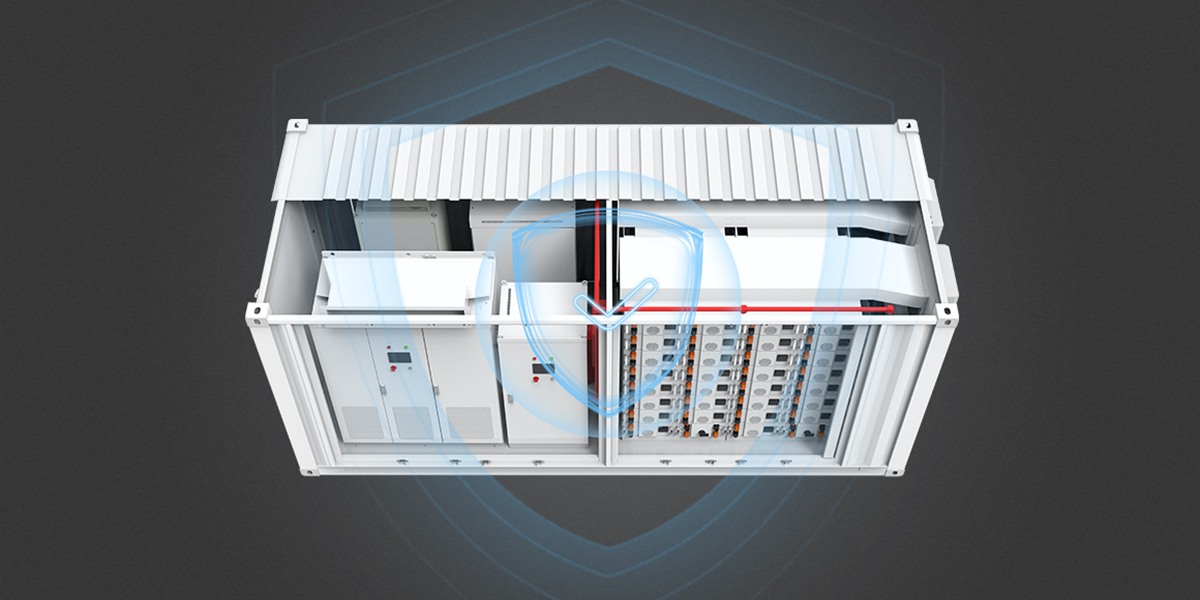
Block 1 — Energy anchor (BESS). The battery is the “virtual grid”: it stores solar energy and delivers it to vehicles on demand. Sizing follows the duty cycle: a 200kWh system supports 3–5 mid-size EVs per day at 40–60kWh each; 400–500kWh supports e-bus and light-truck fleets. LFP chemistry is standard for cycle life and safety in unstaffed locations.
Block 2 — Generation (solar PV, typically). Solar is the default source because it is fuel-free, silent, and low-maintenance. A rule of thumb: generation capacity (kWp) should equal 30–50% of daily energy throughput to keep the battery balanced across the week. Hybrid sites add a small diesel or hydrogen genset only where winter solar is structurally inadequate.
Block 3 — Charging (DC fast, right-sized). A 30–60kW DC charger is the sweet spot for most off-grid traffic — it delivers 80–150km of range in 20–40 minutes without drawing the battery down too fast. Sites with depot-style fleets step up to 120–240kW using commercial DC charging stations with the storage scaled accordingly. AC charging (7–22kW) is only viable where vehicles dwell for hours — overnight lodge parking, for example.
Movable vs. Fixed: Choosing the Right Deployment Format
| Parameter | Fixed Containerized System | Trailer/Skid-Mounted Movable | Hybrid (Container + trailer chargers) |
|---|---|---|---|
| Energy capacity | 200 – 1,000kWh | 60 – 300kWh | 200 – 500kWh fixed + movable chargers |
| Charging power | 60 – 240kW DC | 30 – 120kW DC | 60 – 120kW fixed + 30–60kW mobile |
| Relocation | Crane/truck, 1–2 days | Hook-and-go, <2 hours | Partial (mobile portion) |
| Best use | Permanent remote sites (mines, parks, islands) | Construction camps, events, disaster relief, seasonal sites | Base camp + satellite charging points |
| Civil works | Concrete pad + trenching | None (park on compacted ground) | Pad for container only |
The movable format deserves special attention from operators with shifting operations. A construction contractor with 40 electric light vehicles moves camp every 8–14 months; a trailer-mounted 120kWh system follows the camp, so one $90k–$140k asset serves the whole project lifecycle instead of being abandoned. Disaster-relief agencies and rental providers use the same logic: deploy the asset where the need is this month, redeploy it next month.
Sizing the System: A Worked Example
Consider a national park operating 6 e-shuttle vans (60kWh packs) with daily routes totaling 250km each — about 35kWh/day per vehicle, or 210kWh/day fleet demand.
- Energy anchor: 300kWh BESS covers the full daily demand plus a 30% reserve for cloudy days and unplanned trips.
- Generation: 100kWp solar array produces ~450–550kWh/day in a sunbelt climate, replenishing the battery and covering daytime charging simultaneously. Oversizing generation 1.5–2× daily demand protects against seasonal dips.
- Charging: Three 60kW DC chargers serve the fleet in staggered windows; each van completes a 35kWh top-up in ~35 minutes, and the fleet cycles through in 2–3 hours.
- EMS logic: Solar charges the battery first, then directly powers chargers; the battery fills the gap at night; remote monitoring pages the ranger station if energy reserves run low.
The system runs unattended, requires only quarterly filter and inspection visits, and costs a fraction of the grid connection the park was quoted.
Operations, Safety, and Autonomy
Unstaffed remote sites demand design discipline:
- LFP chemistry with full safety stack: cell-level fusing, gas detection, aerosol suppression, and thermal-runaway containment per NFPA 855 / IEC 62619 — non-negotiable where no fire brigade exists.
- Autonomous EMS: solar-first charging, battery-protection limits, generator start/stop (if any), and OCPP 2.0.1 integration for remote session management and billing.
- Remote telemetry: 4G/satellite monitoring of SoC, SoH, throughput, and alarms, with automatic alerts and over-the-air firmware updates — so an operator in the capital can manage a site 800km away.
- Environmental rating: IP54–IP65 enclosures, -30°C to +55°C operating range, and vandal-resistant hardware for exposed locations.
- Cold-climate provision: below ~0°C, the BESS needs self-heating (battery heaters or heater pads powered by the battery itself) to allow charging; this is standard on 2026-class systems and mandatory for alpine and northern sites.
FAQ
1. How much does an off-grid EV charging system cost? A complete deployable system — 200kWh BESS, 60kW solar, two 60kW DC chargers, EMS — typically ranges $150k–$350k installed, versus $400k–$4M for a multi-kilometer grid extension. Movable trailer units start around $90k.
2. How many EVs can an off-grid system charge per day? A 200–300kWh system with adequate solar serves 3–6 EVs per day at 40–60kWh each; 400–500kWh systems with 100kWp+ solar handle 8–15 vehicles or small shuttle fleets. Daily throughput is ultimately limited by solar replenishment, not battery size.
3. What happens during long cloudy periods? The BESS carries 1.5–2 days of reserve by design. Beyond that, sites either add generation (a small genset or more PV), curtail non-essential charging via the EMS, or accept reduced throughput — which is why generation is typically oversized to 1.5–2× daily demand.
4. Can the system be moved to a new site? Yes — that is the point of movable storage. Trailer units relocate in under 2 hours; container systems need a truck and crane and 1–2 days. Both are designed for multiple relocation cycles over a 15-year asset life.
5. Do off-grid chargers support all EVs? Yes. Wide 200–1000V DC output with CCS1, CCS2, GBT, and NACS options covers passenger EVs, vans, and light trucks. Fleet-specific connectors (CHAdeMO for legacy vehicles, or MCS for heavy trucks) can be added where required.
6. How long does deployment take? A trailer system is operational the day it arrives. A containerized system with a prepared pad is live in 1–2 weeks; from scratch, including civil works, 6–10 weeks — versus 12–24 months for a grid connection.
7. Who operates and maintains it? The EMS automates day-to-day operation; remote monitoring handles supervision. Maintenance is quarterly inspection plus battery and module service at 5–10 year intervals — typically a half-day visit per quarter for a trained local technician.
Conclusion
Off-grid EV charging has moved from pilot curiosity to standard practice for mines, parks, islands, corridors, and camps. By anchoring the site with a BESS, replenishing it with solar, and right-sizing DC charging to the duty cycle, operators deliver dependable electric mobility anywhere — without waiting for, or paying for, the grid. And because modern systems are movable, the investment follows the operation, converting what would be stranded infrastructure into a reusable asset. For remote sites in 2026, the question is no longer “can we charge EVs here?” but “which EV charging solutions configuration do we deploy first?”
MIDA Power supplies complete off-grid charging solutions — containerized and movable BESS, solar integration, and DC fast charging stations — engineered for autonomous operation in remote environments. For feasibility studies and system sizing, contact MIDA via midapower.com, or explore the 480kW ultra-fast liquid-cooled station family for grid-connected hub applications.
Post time: Aug-24-2026


