
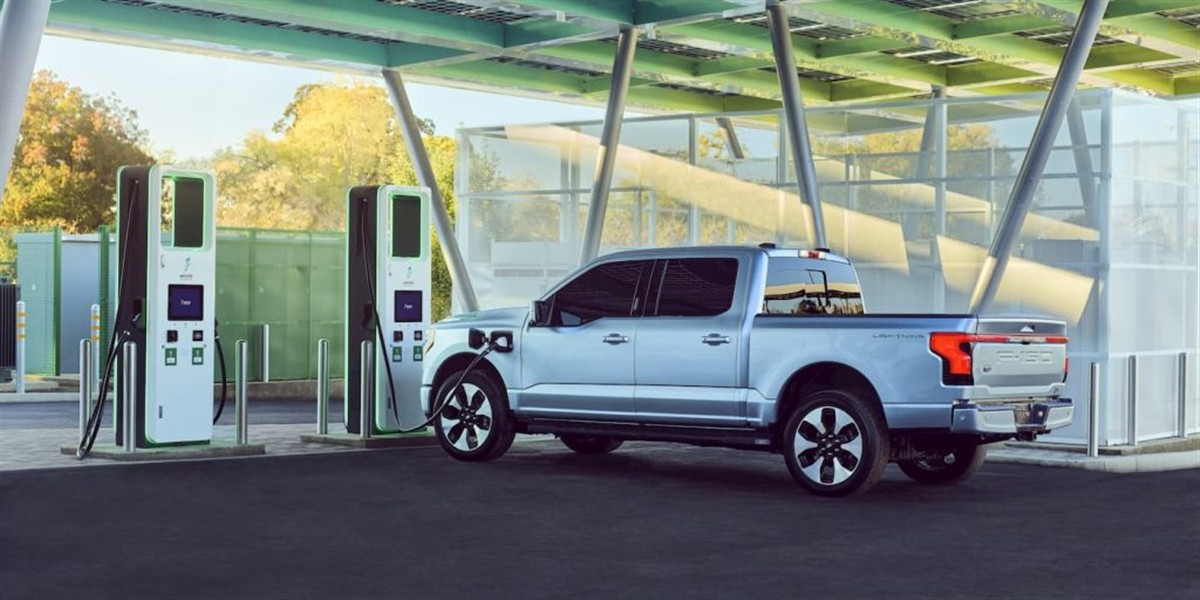
The Rise of 800V Systems: Powering the Next Generation of EV Superchargers
Quick Answer
800V high-voltage architecture is the single most important technology shift in EV fast charging since the adoption of CCS2. By doubling the pack voltage from 400V to 800V, automakers cut charging current in half for the same power output, which slashes cable heat, enables lighter connectors, and unlocks charging rates above 350kW without exceeding the 500A ampacity limits of today’s cooled cables. For charging station operators, the practical consequence is direct: an 800V-capable supercharger such as a 360kW or 480kW liquid-cooled DC fast charger can recover 80% of a 100kWh battery in roughly 10-15 minutes, versus 25-35 minutes on a 400V architecture. Global data supports the shift — by 2026, more than 45% of new EV models sold worldwide are expected to ship with 800V-class platforms, and major networks are retrofitting sites with 480kW liquid-cooled units to serve them. This article explains how 800V systems work, what infrastructure they demand, and how MIDA’s liquid-cooled charging portfolio positions operators for the next decade.
Key Takeaways
- 800V architecture halves charging current at equal power, enabling 350-600kW supercharging with lighter, cooler cables.
- Liquid-cooled power modules and charging cables are mandatory for sustained high-power output; passive air cooling caps out around 120-180kW in practice.
- A 480kW liquid-cooled station with CCS2 connectors delivers roughly 480km of range in 10 minutes for an 800V EV — a level of convenience that changes driver behavior and site economics.
- Operators upgrading to 800V-ready hardware now avoid stranded assets when vehicle-side 800V penetration accelerates after 2026.
- Pairing superchargers with battery energy storage (BESS) cuts demand charges and lets sites deliver megawatt-class bursts on limited grid connections.
Why 800V Architecture Became the Industry’s Answer to the Charging Bottleneck
For the first decade of mass EV adoption, nearly every passenger electric vehicle ran on a 400V electrical architecture. The logic was simple: 400V matched early lithium-ion cell chemistries, off-the-shelf power electronics, and the charging networks built around CHAdeMO and CCS1/CCS2 at 125-200A. That worked while vehicles carried 40-60kWh packs. It stops working when mainstream EVs carry 80-120kWh batteries and drivers expect “fuel-like” refill times.
The physics is unforgiving. Charging power equals voltage multiplied by current (P = V × I). To push 250kW into a 400V pack, a charger must deliver 625A — far beyond the practical continuous rating of even actively cooled 500A cables. Doubling the voltage to 800V cuts the required current to 312A at the same 250kW, comfortably inside cooled-cable limits and well below the thermal stress thresholds of power electronics. That single change unlocks 350kW, 480kW, and even 600kW charging with the same physical connectors and similar cable cross-sections.
Manufacturers did the math quickly. Porsche launched the first mainstream 800V passenger EV in 2019, and by 2024-2025 the architecture had spread across premium and mass-market brands, from Hyundai’s E-GMP platform to multiple Chinese OEMs shipping 800V sedans and SUVs at volume. The adoption curve is steep: industry forecasts tracked by MIDA’s market team project that 800V-class vehicles will represent roughly 45-50% of new EV registrations in major markets (EU, China, US) by the end of 2026, driven by cost-downs in SiC (silicon carbide) inverters and 1200V-rated power modules.
What actually changed for the driver is charging time. On a 400V, 150kW CCS2 stall, a typical 100kWh SUV takes about 35-40 minutes from 10% to 80%. On an 800V vehicle connected to a 480kW liquid-cooled supercharger, the same window closes in 10-12 minutes — fast enough to be a true “grab a coffee” stop rather than a planned meal break.
How an 800V System Works: From Battery Pack to Charging Station
Understanding what 800V means for infrastructure requires separating the vehicle side from the station side.
The Vehicle Side
An 800V system is not a single component; it is a coordinated platform. The battery pack is assembled from cells arranged so the nominal pack voltage lands near 800V. Traction inverters use silicon carbide MOSFETs rated for 1200V to handle the higher bus voltage with lower switching losses. Onboard chargers, DC-DC converters, and even the air-conditioning compressor are redesigned for the higher rail. Because current is halved for equal power, internal busbars and cables are thinner and lighter, which also trims vehicle weight — a double dividend that improves range and efficiency by roughly 5-8% in real-world driving compared with a 400V equivalent.
The Station Side
The charging station does not “know” whether a vehicle is 400V or 800V — it adapts via the CCS2 communication protocol (DIN 70121 / ISO 15118). A modern high-power charger contains modular power electronics that convert grid AC to regulated DC and then output the voltage the vehicle requests, from around 150V up to 1000V. This is why the “wide voltage range” spec matters: a charger with a 150-1000V output range can serve a 400V city car at 150A and an 800V luxury SUV at 600A+, simply by adjusting the output voltage.
The critical station-side enabler is liquid cooling. When a charger outputs 480kW continuously, roughly 3-5% of that power is lost as heat inside the power modules, and several kilowatts of heat are generated inside the charging cable itself due to I²R losses in the copper. Air cooling cannot remove that heat density at scale — connectors would derate or melt. Liquid-cooled designs, like MIDA’s 40kW/60kW liquid-cooling power modules, circulate coolant through both the power cabinet and the cable assembly, holding cable temperatures below 60°C at 600A continuous. That is the engineering foundation of every 360kW and 480kW supercharger deployed today.
800V vs. 400V: A Data-Driven Comparison
| Parameter | 400V Architecture | 800V Architecture |
|---|---|---|
| Nominal pack voltage | 350-400V | 700-850V |
| Current for 350kW output | ~875A (not feasible with CCS) | ~440A (within cooled cable limits) |
| Typical max charge rate | 150-200kW | 350-600kW |
| 10-80% charge time (100kWh pack) | 35-45 min | 10-18 min |
| Cable thermal load at equal power | Severe; heavy liquid cooling needed | Manageable; lighter cables possible |
| Inverter technology | IGBT, 650V class | SiC MOSFET, 1200V class |
| Drivetrain efficiency gain | Baseline | +5-8% typical |
| Charging network compatibility | Full (backward compatible) | Requires 150-1000V wide-range chargers |
Source: consolidated OEM platform data and MIDA engineering specs, 2024-2026.
The table makes the strategic point for site owners: 800V is not an exotic niche — it is the default trajectory. A station built today around 150kW air-cooled hardware will be the “slow lane” by 2028.
What the Next Generation of Superchargers Must Deliver
Upgrading for 800V vehicles means more than buying a bigger rectifier. The next-generation supercharger must satisfy five simultaneous engineering requirements:
- Wide DC output range (150-1000V) so one station serves 400V and 800V vehicles alike.
- High continuous current (500-600A) sustained indefinitely, not in 10-minute bursts — enabled only by liquid-cooled cables.
- Modular, hot-swappable power architecture so operators can scale from 240kW to 480kW by adding 40kW/60kW liquid-cooled power modules instead of replacing whole cabinets.
- OCPP 1.6J/2.0.1 and ISO 15118 (Plug & Charge) compliance for roaming, load management, and automatic billing.
- Grid-smart operation — dynamic power sharing, peak shaving, and BESS integration — because a 480kW site connected to a 250kVA grid feed cannot simply pull full power on demand.
MIDA’s 360kW liquid-cooled ultra charging station with RFID, OCPP and POS illustrates the current state of the art: 150-1000V output, 600A liquid-cooled connectors, and the payment/management layer (RFID, OCPP, POS) that operators need to monetize high-power stalls. Scaling beyond that, the 480kW ultra-fast liquid-cooled station designed for motorways adds the multi-stall architecture and 1000V system design that highway sites require.
How Fast Is Fast? Charging Time Benchmarks at Each Power Tier
The following table models a typical 800V vehicle with a 100kWh usable pack, charging from 10% to 80% (70kWh delivered), assuming realistic taper behavior. Figures are indicative; actual results depend on battery state of charge, temperature, and vehicle charge curve.
| Charger Power | Cable Cooling | Current at 800V | Est. 10-80% Time | km Range Added / 10 min* |
|---|---|---|---|---|
| 120kW | Air-cooled | 150A | 35-42 min | ~95 km |
| 180kW | Air-cooled | 225A | 26-30 min | ~145 km |
| 240kW | Liquid-cooled | 300A | 20-24 min | ~190 km |
| 360kW | Liquid-cooled | 450A | 14-17 min | ~285 km |
| 480kW | Liquid-cooled | 600A | 10-13 min | ~385 km |
| 600kW (MCS-class) | Liquid-cooled | 750A+ | 8-10 min | ~480 km |
*Assumes consumption of 18-20kWh/100km and a healthy battery acceptance curve.
Two insights matter commercially. First, the jump from 180kW to 480kW is not 2.7x better in time — it is roughly 2.5x faster because taper behavior flattens the gain; nonetheless, the difference between a 28-minute and an 11-minute session is the difference between a captive stop and a discretionary one. Second, throughput math favors high power: a single 480kW stall serving 4-5 vehicles per hour replaces 3-4 conventional 150kW stalls on land, grid, and capex.
The Grid Problem No One Can Ignore
Deploying megawatt-scale charging is, at its core, a grid engineering problem. A single 480kW station drawing full power for 20 minutes pulls roughly 160kWh per session; a 6-stall highway site can draw over 2.5MW simultaneously. Few distribution feeders can supply that without reinforcement lead times of 12-24 months in dense urban or highway locations.
The proven mitigation is co-locating battery energy storage. A BESS-backed site charges its batteries during off-peak or from on-site solar, then combines battery output with grid power to serve the instantaneous supercharging load. Benefits are concrete:
- Demand-charge reduction: peak demand can be shaved by 30-60%, cutting monthly utility bills significantly.
- Faster grid connection: a site that needs 480kW peak but only consumes 200kW average can often connect to a 250kVA feed.
- Revenue resilience: stored energy supports stations during grid events and captures time-of-use spreads.
This is why MIDA positions integrated BESS + DC charging as the default architecture for new high-power sites — the liquid-cooled ultra 360kW station is offered with optional battery integration, and the full MIDA EV charging solutions portfolio spans power modules, standalone chargers, and solar-plus-storage charging hubs.
What Comes After 800V: The 2026-2030 Roadmap
Three trends will define the next wave:
- Standardization of 1000V charging. Most new liquid-cooled hardware already outputs up to 1000V, and battery packs are climbing toward 900-1000V nominal. The distinction between “800V” and “1000V-ready” hardware is disappearing; wide-voltage modular chargers cover both today.
- Megawatt Charging System (MCS) for trucks. The MCS standard (up to 3.75MW, 1250A) targets heavy-duty electric trucks. Passenger superchargers and truck chargers will share liquid-cooling and BESS technology but diverge on connectors and power tiers.
- Plug & Charge and smart grid orchestration. ISO 15118-20 enables automatic authentication, bidirectional charging (V2G), and dynamic load management, turning every connected charger into a flexible grid asset.
Operators who deploy modular, liquid-cooled, BESS-integrated stations now are buying an upgrade path, not a dead end. Hardware that accepts pluggable 40kW/60kW power modules can grow with the vehicle fleet instead of being replaced by it.
FAQ
1. Does an 800V EV charge slower on a 400V charger?
Yes, in practice. If the vehicle can boost or split its pack voltage, it can still accept 150-200kW on a 400V charger via an active DC-DC converter, but full high-power charging requires an 800V-capable charger. Most 800V vehicles charge acceptably on 150kW stations; they simply cannot reach their peak rate.
2. Is an 800V charger backward compatible with 400V cars?
Yes. Wide-voltage-range chargers (150-1000V output) communicate with the vehicle via CCS2 and automatically output the requested voltage. A 480kW station serves a 400V car at reduced current-limited power — typically 200-250kW — without any action from the driver.
3. Why do superchargers need liquid-cooled cables?
At 500-600A, resistive losses in the cable generate several kilowatts of heat. Liquid cooling keeps the cable and connector below safe temperature limits so the charger can sustain high current continuously instead of derating after minutes.
4. What is the difference between 800V and 1000V charging systems?
800V refers to the vehicle battery architecture; 1000V refers to the charger’s maximum output voltage. Modern chargers are built for a 150-1000V output range, which covers both 400V and 800V vehicles and future 900-1000V packs.
5. How much does an 800V supercharger cost to install vs. a 150kW charger?
Equipment cost per stall is roughly 2-3x higher for a 480kW liquid-cooled station, but per-kW capex is lower. Including grid upgrades and site works, a 480kW stall typically costs 1.5-2x a 150kW stall while delivering 2.5-3x throughput — often a better ROI per charging session.
6. Can existing 150kW stations be upgraded to 480kW?
Often yes, if the site has a modular power cabinet and adequate grid capacity. Adding liquid-cooled power modules and cables can scale a station from 150kW to 360-480kW. Sites with fixed air-cooled hardware typically require full replacement.
7. Does every new EV need an 800V charger?
No. 400V EVs remain compatible with 800V-capable chargers, and lower-power AC/DC charging still works for overnight and destination charging. 800V supercharging matters when the goal is 350kW+ speeds and sub-15-minute charging sessions.
MIDA Power designs and manufactures liquid-cooled DC fast charging stations, 40kW/60kW power modules, and integrated BESS charging solutions for global operators. For technical specifications and deployment support, visit midapower.com.
Post time: Aug-20-2026


