
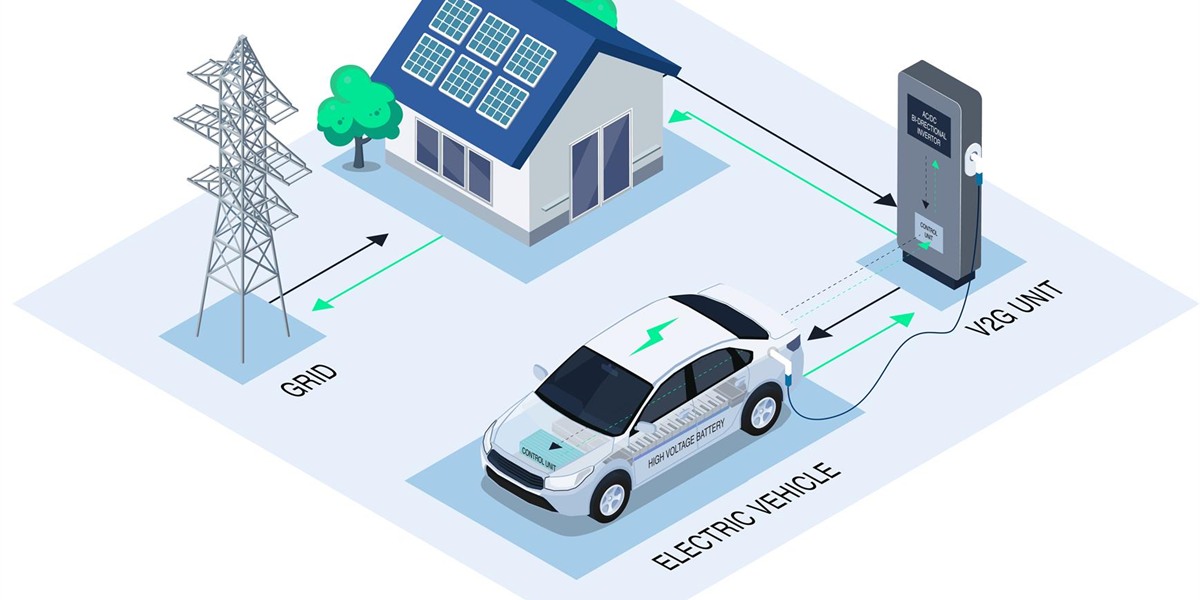
V2G and BESS Integration: Turning DC Charging Stacks into Grid Assets
[Image Placeholder: Thumbnail 400*350, ~100KB — bi-directional EV charging hub with battery storage feeding power back to the grid]
Quick Answer:
Vehicle-to-Grid (V2G) and Battery Energy Storage System (BESS) integration transforms a conventional DC fast charging stack from a passive electricity consumer into an active grid asset. By pairing ISO 15118 bi-directional chargers with a site-level BESS and a centralized Energy Management System (EMS), a charging hub can deliver frequency regulation, peak shaving, energy arbitrage, and demand response — revenue streams that typically add €40,000–€120,000 per MWh of storage capacity per year in mature European markets. The key architectural insight is that the BESS, not the vehicle fleet, provides the deterministic, dispatchable capacity that grid operators pay for, while V2G-capable DC stacks extend that flexibility into the parked fleet. For charge point operators (CPOs), this hybrid architecture converts a capital-hungry site into a self-funding infrastructure asset.
Key Takeaways:
- BESS First, V2G Second: A site-level BESS delivers guaranteed grid-service response (in milliseconds) regardless of which vehicles are plugged in, making it the revenue anchor; V2G adds fleet-scale flexibility on top.
- Protocol Stack Matters: ISO 15118 (Plug & Charge and bi-directional charging) plus OCPP 2.0.1 smart charging profiles are the non-negotiable control foundation for grid-integrated charging.
- Revenue Stacking: Frequency regulation, peak shaving, energy arbitrage, and demand response can be stacked on a single asset, multiplying payback speed.
- DC Architecture Wins: DC-coupled BESS + DC charging stacks avoid double conversion losses, lifting round-trip efficiency by 3–5% versus AC-coupled designs.
- Modularity De-risks Investment: Liquid-cooled, hot-swappable power modules let operators start with charging-only and add V2G/BESS capability in staged upgrades.
The Grid Asset Opportunity: Why Charging Infrastructure Must Earn Its Keep
A 480kW ultra-fast charging stack is a remarkable power delivery machine — and an expensive one to run. At a utilization of 20%, a single high-power site can draw peak loads that rival a small industrial plant, triggering demand charges of €8,000–€25,000 per month in regions like Germany, California, or New York. Meanwhile, the same site sits idle for 70–80% of the day. That idle capacity is exactly what the grid needs: fast, distributed, controllable power that can absorb surplus renewables and discharge during scarcity.
The European Union’s revised Electricity Market Design and the growing penetration of variable renewables (above 40% in Germany and Spain by 2026) have pushed distribution system operators (DSOs) to procure flexibility locally rather than reinforcing feeders. The result is a structural opportunity: a charging site that can charge vehicles *and* trade its flexibility with the grid becomes an asset with two revenue engines instead of one.
This is the core premise of the grid-asset charging station: combine bi-directional DC charging stacks with a site-level BESS, and let the EMS decide in real time whether each kilowatt flows to a vehicle, into the battery, back to the grid, or some combination. MIDA Power builds the modular DC fast charging stations that anchor this architecture — stations designed from the ground up for OCPP 2.0.1 smart charging, 150–1000V wide-range output, and storage-integrated operation.
V2G Explained: The Technical Foundation
V2G means an electric vehicle returns energy to the grid (or to the site) through a bi-directional charger. The technology rests on two standards:
- ISO 15118-20: Defines bi-directional power transfer (BPT) messaging, enabling Plug & Charge authentication and negotiated power flows between vehicle and charger. This is the standard that makes “the vehicle as battery” commercially viable.
- OCPP 2.0.1: The site-to-network protocol that lets a central system push smart charging profiles, limit power, and schedule sessions — the control layer every V2G and peak-shaving use case depends on.
At the hardware level, a V2G-capable DC charger must integrate a bi-directional AC/DC power stage. MIDA’s 40kW/60kW liquid-cooling power modules exemplify the module-level design discipline this requires: wide voltage range, high conversion efficiency, and sealed, liquid-cooled enclosures that hold performance in sustained high-power operation. The same module platform that charges forward also handles reverse power flow when paired with bi-directional variants — one family of hardware, one spare-parts kit, one service desk.
The Practical Reality Check
Here is the honest engineering picture: V2G-capable vehicles are still a minority of the 2026 fleet. Passenger V2G deployments concentrate in fleets with predictable parking patterns — school buses, delivery vans, municipal fleets — while heavy trucks are only beginning to adopt bi-directional capability. Grid operators need *guaranteed* capacity, and vehicles arrive and leave on schedules you do not control. That unpredictability is why V2G alone is rarely bankable, and why the site-level BESS is the indispensable partner.
Why BESS Is the Missing Piece
A BESS provides the three properties grid services demand and vehicles cannot guarantee:
- Availability: The battery is on-site and dispatchable 24/7, irrespective of vehicle occupancy.
- Determinism: Response in under 20ms with a known state of charge — the profile grid markets require for firm capacity.
- Isolation: Grid-service discharge does not strand a driver’s vehicle; the BESS absorbs the flexibility duty while the charger remains a charger.
The architectural consequence is elegant: the BESS buffers the grid connection, the charging stacks serve vehicles, and the EMS arbitrages between them. During a frequency event, the battery injects power into the grid in milliseconds. During a charging surge, the battery covers the excess above the grid contract. When renewable generation is cheap, the battery charges and resells energy at peak prices.
[Image Placeholder: Content 1200*600, ~250KB — schematic of BESS + V2G charging hub with EMS, solar, and grid connection]
The Integrated Architecture: How DC Stacks Become Grid Assets
The proven topology for a grid-asset charging site in 2026 is DC-coupled and split-architecture:
- High-voltage power stack: One or more liquid-cooled power cabinets (240kW to 480kW per cabinet) containing hot-swappable power modules, converting AC grid power to vehicle DC. The 480kW ultra-fast liquid-cooled DC charging station for motorways is a reference implementation of this class — separated power conversion and dispensers, built for continuous high-current duty.
- Site-level BESS: 100kWh to 2MWh of LFP storage, connected at the DC bus (DC-coupled) or via a bi-directional PCS at the AC bus (AC-coupled). DC coupling is preferred for new sites because it eliminates one conversion stage.
- EMS / site controller: The decision engine running OCPP 2.0.1, ISO 15118, and grid-market APIs. It forecasts session demand, tracks battery SoC/SoH, and executes the stacking logic.
- Grid connection: Sized to the *average* site load, not the peak — typically 30–50% smaller than a charging-only design, which is the single largest CAPEX saving.
Architecture Comparison
| Parameter | V2G-Only | BESS-Only | Hybrid (V2G + BESS) |
|---|---|---|---|
| Dispatchable capacity | Variable (depends on parked fleet) | Deterministic | Deterministic + fleet upside |
| Response time | 1–2 seconds (session negotiation) | <20ms | <20ms (BESS) |
| Grid-contract bankability | Low | High | High |
| Round-trip efficiency | ~92–94% (bi-directional vehicle path) | ~88–92% (battery) | ~90–93% (DC-coupled) |
| Revenue certainty | Low-Medium | Medium-High | High |
| CAPEX | Medium (bi-directional chargers) | Medium (battery) | Higher, but stacked returns |
| Best for | Fleets with fixed parking | Public hubs, depots | Corridors, depots, VPP members |
Revenue Stacking: Putting the Asset to Work
The business case depends on stacking multiple revenue streams over the same hardware. The table below summarizes the 2026 market mechanics:
| Revenue Stream | Mechanism | Typical Value (Europe, 2026) | Requirements |
|---|---|---|---|
| Frequency regulation (FCR/aFRR) | Battery charges/discharges to correct grid frequency | €80–€150/MWh-year of capacity | <2s response, prequalification |
| Peak shaving | Battery covers load above the grid contract | Saves €15k–€40k per site-year at high-demand tariffs | EMS load forecasting |
| Energy arbitrage | Buy cheap, sell expensive (daily spread) | €20–€60/MWh of cycled energy | Time-of-use tariffs |
| Demand response (DSO) | Local congestion relief on request | €5k–€20k per site-year | DSO contract, telemetry |
| V2G fleet export | Fleet vehicles discharge at peak | €0.10–€0.25/kWh exported | ISO 15118 vehicles |
A site with a 500kWh BESS participating in aFRR and shaving peaks can generate €60,000–€110,000 in combined annual value in favorable markets — before counting the charging business itself. This is what “turning stacks into grid assets” means in financial terms: the energy infrastructure stops being a cost center and starts paying its own demand charges.
Sizing and Control: What CPOs Need to Get Right
Three rules govern successful grid-asset design:
- Size the battery to the grid contract, not the station. Compute the difference between your peak session demand and your contracted grid capacity; the BESS covers the gap. A 480kW station on a 250kW grid connection needs roughly 300–500kWh of buffer for realistic session patterns.
- Buy protocol-complete hardware. OCPP 2.0.1 with signed transactions, ISO 15118-20 readiness, and module-level telemetry are table stakes. The 360kW liquid-cooled charging station with RFID, OCPP, and POS from MIDA ships with exactly this control plane, so grid-market participation does not require retrofits.
- Design for staged upgrades. Deploy charging-only today with the DC bus, controller, and space provisioned for tomorrow’s battery and bi-directional modules. Because MIDA’s power-module platform is hot-swappable and standardized, the upgrade from charging-only to grid-asset operation is a scheduled module addition, not a demolition project.
Real-World Deployment Patterns
Three deployment archetypes dominate in 2026:
- Depot VPP members: Fleet depots with 5–20 bi-directional trucks and a 500kWh–1MWh BESS aggregate into virtual power plants, exporting 1–3MW of flexibility during evening peaks.
- Highway corridors with storage: Motorway sites pair 480kW charging with 200–400kWh batteries to double session throughput on a constrained grid feed — MIDA Power’s commercial EV charging solutions portfolio is engineered for exactly this pairing.
- Urban hubs on weak feeders: Inner-city stations add BESS to open on an existing 100–250kVA connection, deferring multi-year feeder upgrades while capturing demand-response payments.
FAQ
1. Is V2G safe for the vehicle battery?
Bi-directional discharge is managed by the vehicle’s BMS within its own warranty envelope. With ISO 15118-20 negotiated limits and conservative depth-of-discharge settings, added degradation is typically <2% per year — and many fleets treat export revenue as compensation for it.
2. Do I need V2G-capable vehicles to start?
No. A site-level BESS delivers the grid-service value independently of the fleet. V2G vehicles add capacity later as the fleet turns over.
3. What is the difference between AC and DC coupling?
DC coupling connects the battery to the charger’s DC bus, avoiding AC conversion; AC coupling connects via a separate bi-directional inverter. DC coupling is 3–5% more efficient and is the default for new grid-asset sites.
4. How fast can a BESS respond to a frequency event?
Modern LFP BESS with grid-forming PCS respond in under 20 milliseconds — fast enough for the most demanding European prequalification classes.
5. Which regulations apply to V2G export?
Grid codes differ by country: Germany (VDE-AR-N 4105), UK (G99), and California (Rule 21) all now have explicit bi-directional export provisions. Work with a supplier whose EMS supports the relevant certification.
6. Can existing chargers be upgraded to V2G?
Only if they were designed with bi-directional power modules. MIDA’s modular platform supports staged upgrades because modules are hot-swappable; legacy monolithic chargers typically cannot.
7. How do I monetize the battery if my market has no frequency-regulation program?
Peak shaving and energy arbitrage work in every market with time-of-use tariffs. Demand-response contracts with the local DSO are also universally available — the stack delivers savings even without organized capacity markets.
Conclusion
The charging station of 2026 is no longer a passive load — it is a distributed energy resource. By integrating site-level BESS with modular, protocol-complete DC charging stacks and a central EMS, CPOs and fleet operators turn the grid constraints that limit their sites into the revenue streams that fund them. The path is staged and modular: deploy the 480kW-class liquid-cooled charging architecture today, provision the DC bus and control plane, and add storage and bi-directional capability as the business case matures. That is how charging infrastructure stops being a cost and becomes an asset.
Post time: Aug-24-2026


