
Emergency Resilience: MIDA 60kW DCDC Roadside Assistance Units for 2026
Quick Answer
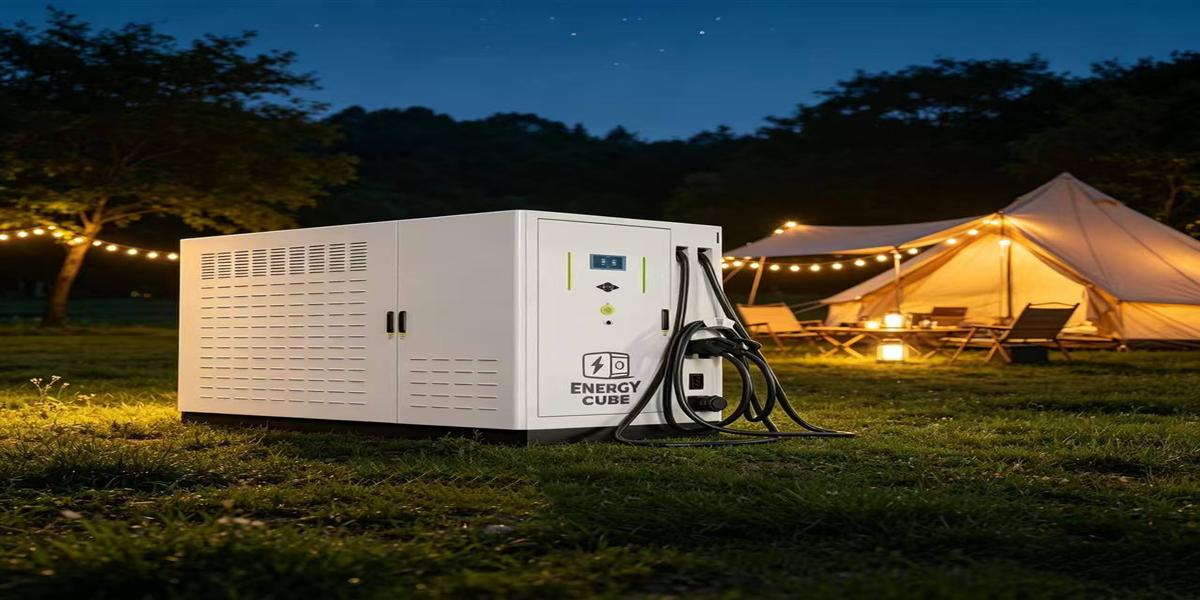
A 60kW DC-DC roadside assistance unit is a movable charging system that converts directly from a DC energy source — an on-board battery bank, a solar array, a depot DC bus, or another vehicle’s pack — to a vehicle’s DC charge port, without an intermediate AC conversion stage. Removing that stage raises round-trip efficiency to roughly 96–98%, cuts weight and volume, and allows the unit to draw on any available DC source rather than requiring a grid connection or a generator. At 60kW, a 20-minute session adds 60–90km of range to a passenger EV and enough energy for a light commercial van to complete its route. For 2026 roadside fleets, DC-DC architecture is becoming the reference design for emergency charging.
Key Takeaways
- DC-DC removes a conversion stage. No inverter, no rectifier stage duplication — fewer components, higher efficiency, lower weight, and fewer failure modes.
- Any DC source becomes fuel. A storage pack, a PV array, another EV, or a depot DC bus can all feed the converter, which is why the format is central to 2026 resilience planning.
- 60kW is the emergency-power sweet spot. It delivers decisive range in 15–25 minutes while remaining serviceable from a van-mounted unit with a manageable battery.
- Efficiency is a resilience metric. At 96–98% conversion efficiency, more of the stored kilowatt-hour reaches the driver, which directly extends the unit’s call capacity per charge.
- 2026 compliance is protocol-deep. OCPP 2.0.1, ISO 15118, and wide 200–1000V output are the baseline for units that must interoperate with modern vehicles and dispatch platforms.
Why DC-DC Is the Right Architecture for Emergency Charging
The first generation of mobile DC chargers was built by adapting stationary designs: AC in, rectification, DC out. That architecture is correct for a fixed site, where AC is available everywhere and the power conversion is amortised over years of high utilisation. It is the wrong architecture for an emergency unit, for three reasons.
Efficiency compounds in a small battery. A mobile unit carries a finite amount of energy. Every conversion stage consumes some of it. A DC-DC topology that eliminates one full conversion stage recovers several percentage points of round-trip efficiency — which, on a 100kWh pack, is 3–5kWh more energy delivered per charge cycle, or roughly an extra roadside call every eight to ten cycles.
Weight and volume determine deployability. An inverter stage, its filtering, its protection, and its cooling all add mass and packaging. A DC-DC converter of the same rating is materially smaller and lighter, which is the difference between a unit that requires a trolley or a second technician and one that a single operator deploys from a van.
Any DC source can serve as fuel. This is the strategic advantage. An AC-input unit needs AC. A DC-DC unit can be fed from a depot DC bus, from a co-located battery rack, from a PV array through an MPPT stage, from a second vehicle’s pack, or — as standards evolve — from fixed DC infrastructure. In a disaster or outage scenario, DC sources are frequently the only ones still available. That flexibility is what makes a DC-DC unit a resilience asset rather than a convenience tool.
Anatomy of a 60kW DC-DC Roadside Unit
| Subsystem | Function | Typical specification |
|---|---|---|
| DC source | Energy reservoir or DC feed | 60–150kWh LFP pack, or an external DC bus/PV input |
| DC-DC converter stage | Steps DC source voltage to the vehicle’s required charge voltage | 60kW continuous, 200–1000V output, 96–98% efficiency |
| Liquid-cooled power modules | Conversion hardware with thermal stability under sustained load | 30kW–60kW module platform, hot-swappable |
| Liquid-cooled output cable | High-current delivery without derating | 150–250A class, liquid-cooled connector |
| Safety and isolation | Pre-charge, insulation monitoring, fault isolation, E-stop | Automated pre-session diagnostics |
| EMS and telematics | Session control, SoC tracking, dispatch integration | OCPP 2.0.1, ISO 15118-ready, 4G, RFID/app auth |
The engineering centre of gravity is the converter stage. Because it carries the full 60kW continuously, it is built from the same modular building blocks used in fixed infrastructure — the 40kW/60kW liquid-cooling power modules for DC EV charging stations — rather than from bespoke electronics. That choice has three consequences that matter to an operator: proven efficiency curves, predictable thermal behaviour at sustained output, and a spares pool that already exists in the service network. An emergency unit built from custom converter hardware is an emergency unit that fails on its own schedule.
2026 Standards: What a Modern Unit Must Speak
The compliance landscape changed materially in 2024–2026, and vintage units are increasingly excluded from operator platforms and automaker programmes. A 2026-grade roadside unit should demonstrate:
- OCPP 2.0.1 with device management, smart-charging profiles, and signed transactions. OCPP 1.6J remains acceptable as a fallback but limits both telemetry depth and future grid-service participation.
- ISO 15118 Plug & Charge readiness, so a rescued vehicle can authenticate and settle without a card or app — critical when the driver, the vehicle, and the operator are three different parties.
- Wide-range output, 200–1000V, covering 400V legacy architectures, 800V mainstream platforms, and the 1000V systems now entering commercial vehicles.
- Safety and transport certification: UN38.3 for battery transport, IP54 or better enclosure, CE and IEC compliance for Europe, UL and ETL for North America, plus a documented vehicle-interface protection scheme.
- Cyber-hardening and remote management: authenticated firmware, remote capability to isolate the battery or stop charging, and a documented API for the operator’s dispatch system.
The reference standard for the control plane is already visible in fixed infrastructure. The 360kW liquid-cooled charging station with RFID, OCPP, and POS family demonstrates protocol-complete behaviour at the cabinet level — the same controller logic, scaled down, is what a movable DC-DC unit must deliver to be manageable at fleet scale. Operators who specify that standard now avoid a retrofit cycle when their unit count grows into the hundreds.
Deployment Scenarios: Where 60kW DC-DC Changes Outcomes
Motorway and corridor patrols. A unit carried on a patrol vehicle resolves the most common EV incident — a depleted pack within reach of a charger — without dispatching a flatbed. At 60kW, a 20-minute session typically adds 60–90km, enough to reach the next DC site.
Urban emergency response. For high-density cities, the constraining factor is time, not energy. A unit deployed from a central hub reaches the incident, charges the vehicle, and returns within a normal service window, freeing the recovery fleet for incidents that genuinely need recovery.
Fleet emergency cover. Mixed fleets running light commercial EVs need a fallback when a vehicle ends a shift short. A DC-DC unit stationed at the depot delivers the minimum energy required to complete a route or return to base, keeping the vehicle in the dispatch pool rather than in a workshop.
Disaster and outage response. After a grid outage, AC-based charging equipment is unavailable precisely when demand spikes. A DC-DC unit that can draw from a depot DC bus, a solar array, or another vehicle pack becomes part of the continuity plan rather than another casualty of the outage.
Remote and construction sites. Without a grid connection, an AC-input unit requires a generator. A DC-DC unit recharges from a DC source and delivers fast charging on demand — the pattern already established for off-grid heavy equipment and site vehicles.
Operational Comparison: DC-DC vs AC-Input vs Diesel Generator
| Factor | 60kW DC-DC Unit | AC-Input Mobile Charger | Diesel Generator + Charger |
|---|---|---|---|
| Input requirement | Any DC source: battery, DC bus, PV, other EV | AC supply or on-board battery with inverter | Diesel fuel |
| Round-trip efficiency | 96–98% | Lower (extra conversion stage) | Lowest — engine plus conversion losses |
| Weight and footprint | Lowest (no inverter stage) | Moderate | Highest (engine, alternator, tank) |
| Emissions and noise | Zero at point of use | Zero at point of use | Both, plus regulatory exposure |
| Fuel logistics | None — recharge from any DC source | None | Continuous diesel supply |
| Maintenance | Module swap, firmware, thermal loop | Module swap, firmware | Engine service, fuel system, exhaust |
| Best fit | Emergency response, resilience, off-grid, fleet cover | Sites with reliable AC and no DC source | Locations with no power source at all |
The comparison reframes what “resilience” means. A diesel generator has unlimited energy but depends on fuel delivery — a single point of failure in an emergency. A DC-DC unit has finite on-board energy but can be replenished from any available DC source, including in situations where fuel convoys are impossible. For most roadside and fleet applications, replenishability from diverse sources is a stronger guarantee than an on-site fuel tank.
Proving the Case: Availability, Uptime, and Cost per Call
Emergency charging programmes succeed or fail on unit availability, so the metrics that matter are operational rather than theoretical.
- Calls per charge cycle. A 60kW unit drawing on a 120kWh buffer, delivering 18–25kWh per incident, supports four to six rescue calls before returning to base. Two units in rotation keep a region continuously covered.
- Mean time to repair. Hot-swappable modules keep a single failure from removing the unit from service. A module replaced in under an hour preserves availability; a unit requiring factory return does not.
- Fleet productivity recovered. Every avoided flatbed is a recovery vehicle released for a job that genuinely needs it, plus hours of vehicle downtime avoided for the customer.
- Contract value. Automakers, insurers, leasing companies, and logistics operators all contract for certified first-response charging. A unit with OCPP 2.0.1, ISO 15118, and full certification clears procurement and insurance review faster than uncertified hardware.
- Deferred infrastructure. Where the same units are used to cover depot gaps, they substitute for capital works that would take 12–24 months — a value stream that extends the business case beyond rescue.
The unit also fits naturally into an operator’s wider estate. Vehicles and units that share a module platform with the fixed network — from portable units to the 480kW ultra-fast liquid-cooled DC charging station for motorways — carry one spares pool, one training programme, and one control platform. That standardisation is what makes a large distributed fleet of roadside units economically serviceable.
Specification Checklist for 2026 Procurement
- Confirm the DC-DC topology explicitly. Ask for the conversion architecture and the efficiency curve at rated output, not a headline peak number.
- Verify the full output window at current. 200–1000V with full rated current across the range is the requirement; a narrow window disqualifies the unit from modern vehicle fleets.
- Require OCPP 2.0.1 and ISO 15118 readiness. Insist on a documented API and evidence of interoperability testing with at least two backends.
- Specify liquid-cooled modules and cable. Sustained 60kW duty heats air-cooled components; liquid cooling preserves throughput and hardware life.
- Demand certification and test reports. UN38.3, IP54+, CE and IEC for Europe, UL and ETL for North America.
- Require remote isolation and diagnostics. The operator must be able to stop charging and isolate the battery from anywhere.
- Confirm serviceability. Hot-swap module access, a published fault-code map, and a stated mean-time-to-repair commitment.
For operators who need the full portfolio view, MIDA’s DC fast charging station range shows how the same module and control platforms scale from mobile roadside units to permanent depots.
FAQ
1. What does “DC-DC” actually mean in a roadside charger?
It means the unit converts directly from a DC source — such as an on-board battery or a depot DC bus — to the DC voltage the vehicle requires, without converting to AC in between. Fewer conversion stages mean higher efficiency, lower weight, and fewer failure modes.
2. How far can a vehicle drive after a 20-minute charge at 60kW?
Approximately 60–90km for a typical passenger EV, since a 20-minute session delivers roughly 18–20kWh. Light commercial vans gain less range per kWh but often enough to complete a route.
3. Can a DC-DC unit charge from another electric vehicle?
Yes, where both vehicles and the unit support the relevant protocol and connector arrangement. Vehicle-to-vehicle energy transfer is an emerging capability; the DC-DC topology is what makes it technically practical without an AC stage.
4. Is a DC-DC unit suitable for depot charging as well as emergency response?
Yes. The same unit handles depot gap charging, opportunity top-ups, and off-grid site duty. That versatility is a major contributor to utilisation and payback.
5. How is the unit replenished in the field?
From any available DC source: a depot DC bus, a battery rack, a PV array, or a site supply through an appropriate charger. Because it is DC-DC, it is not limited to locations where AC is available.
6. Are DC-DC units harder to certify than AC-input units?
Not fundamentally harder, but the certification scope differs — the DC source interface and isolation scheme need dedicated testing. Specifying a supplier with already-certified module platforms and documented safety architecture substantially shortens the process.
7. What availability should an operator expect from a roadside unit fleet?
With hot-swappable modules, remote diagnostics, and a module-level spares pool, 95–98% fleet availability is achievable. The dominant risk is not component failure but slow fault diagnosis, which is why telemetry and a published fault-code map are essential specifications.
Conclusion
Emergency charging is a resilience capability, not a convenience feature, and the architecture chosen decides how resilient it really is. By removing the AC conversion stage, a 60kW DC-DC roadside unit converts more of its stored energy into vehicle range, weighs less, deploys faster, and — most importantly — can be replenished from any DC source available, including ones that survive a grid outage. Combined with 2026-grade protocol compliance and a safety architecture built to be certified and insured, it gives roadside fleets, utilities, and logistics operators an asset that performs on the worst day as well as the best. For 2026 programmes, DC-DC is no longer an alternative design. It is the standard.
MIDA Power designs and manufactures mobile and fixed DC charging systems, liquid-cooled power modules, and integrated storage. Review the DC fast charging stations range or the MIDA commercial DC fast charging range for roadside, depot, and corridor deployments, and contact MIDA via midapower.com for technical configuration.
Post time: Sep-15-2026


