
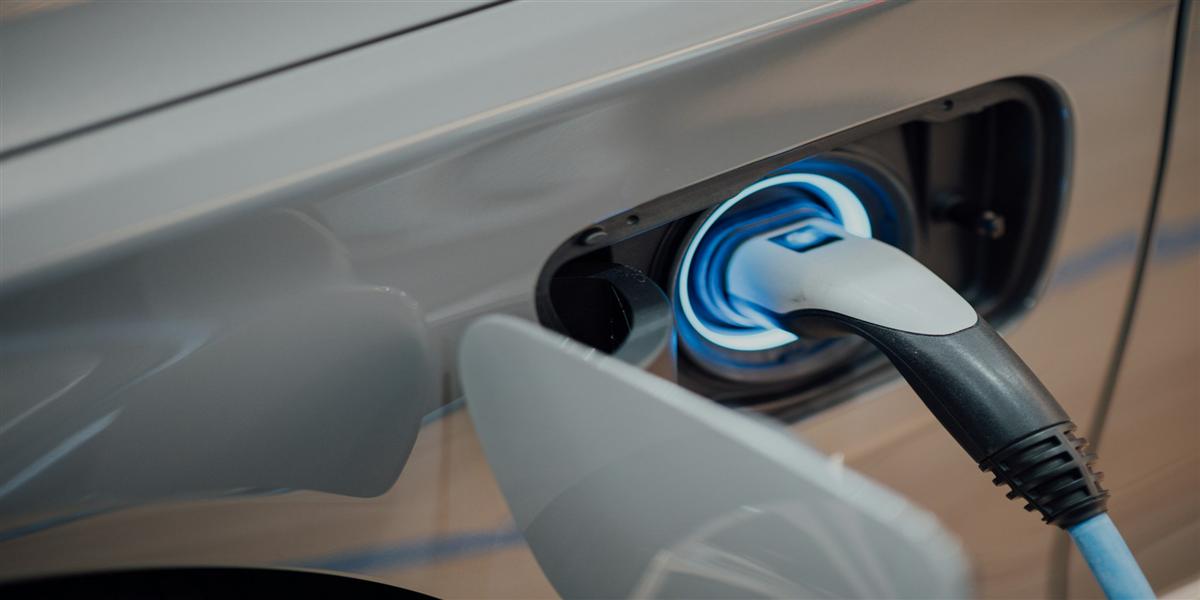
Maximizing Site Capacity: MIDA 240kW BESS-Integrated DCDC Chargers for Urban Hubs
Quick Answer
A MIDA 240kW DCDC charger with an integrated Battery Energy Storage System (BESS) lets an urban charging hub deliver its full 240kW Nameplate output from a grid connection of only 150–250kW. The battery absorbs the peak, the grid stays inside its existing fuse rating, and the site opens in months instead of waiting 12–36 months for a distribution transformer upgrade. For dense city sites — where land is scarce, demand charges are the highest line item on the utility bill, and neighboring loads already crowd the local transformer — BESS-integrated DCDC charging is the single highest-leverage capacity intervention available in 2026. Measured another way: a 240kW BESS-integrated site typically serves 2–3× more vehicles per day than a power-limited 120kW AC-side site using the same grid service.
Key Takeaways
- Capacity without a grid upgrade: An integrated 200–300kWh LFP battery buffers the utility connection, so 240kW of vehicle-facing power runs on a 150–250kW service.
- Demand-charge defense: Peak shaving trims the monthly billing peak by 30–50% — usually the dominant cost driver for urban fast-charging sites.
- Modular 40kW/60kW stacks: The 240kW output is built from redundant hot-swap DCDC modules, not a monolithic converter, so one module failure costs 17% of capacity, not the whole site.
- Revenue stacking: The same battery asset earns from energy arbitrage, peak shaving, and grid-services programmes while protecting charging uptime.
- City-ready footprint: Liquid-cooled cabinets and slim dispensers fit kerbside, forecourt, and parking-deck layouts where conventional installations cannot.
- Fast path to power: Typical commissioning is 4–8 months versus 12–36 months for a dedicated transformer.
Why Urban Hubs Hit the Capacity Ceiling First
Urban charging hubs fail for a reason that has nothing to do with charger hardware: the local distribution network is already committed. A typical inner-city commercial feeder serves retail, lighting, HVAC, and lifts, and its spare capacity at peak is measured in tens of kilowatts — not hundreds. When an operator applies for a 240kW service, the utility response is usually one of three things:
- A quote for a new or upgraded distribution transformer with a 12–36 month lead time.
- A firm capacity cap (for example, “you may draw 180kW”), which caps the site’s revenue ceiling.
- A requirement to fund reinforcement works — trenching, cable, switchgear — that frequently exceeds the cost of the charging equipment itself.
Each of those outcomes pushes a promising site toward an uneconomic power level. The operator then either downgrades to a 60–120kW AC-input installation that charges slowly and turns over stalls poorly, or abandons the location. BESS integration breaks that deadlock by decoupling installed charging capacity from contracted grid capacity.
What “BESS-Integrated DCDC” Actually Means
The term describes a charging architecture in which the battery is not an accessory bolted next to the charger but an active source on the same internal DC bus. In a MIDA 240kW BESS-integrated DCDC system, four subsystems cooperate:
- Power cabinets housing hot-swappable 40kW or 60kW DCDC modules, each with 1000V wide-voltage output and efficiency above 96%.
- A bidirectional PCS (Power Conversion System) that moves energy between the grid, the battery, and the charging DC bus with round-trip efficiency above 92%.
- An LFP battery bank built from Grade-A 314Ah cells, liquid-cooled and rated for 6,000–8,000 cycles at a cell temperature variance held within ±3°C.
- A site controller / EMS that arbitrates in real time between grid import, battery discharge, and dispenser demand over OCPP 2.0.1 and Modbus.
Because the battery sits on the same DC bus as the modules, discharge response is immediate: when three vehicles arrive together and the smart-sharing algorithm sees a deficit, the PCS injects power in milliseconds rather than waiting for a slow external demand signal. This is why integrated BESS outperforms a separately cabled battery container in urban hubs, where load steps are frequent and short.
The Capacity Math: 240kW Output From a 200kW Connection
The core promise of BESS integration is arithmetic. Consider a hub with a 200kW firm grid connection and a 240kWh battery. Over a typical weekday the site can serve a morning commuter wave and an evening retail wave while never exceeding the contracted import cap.
| Metric | Conventional 240kW site | BESS-integrated 240kW site |
|---|---|---|
| Grid service required | 250–315kVA | 150–200kVA |
| Transformer upgrade | Usually required, 12–36 months | Often avoided entirely |
| Peak import at full output | ~250kW | ~180–200kW, battery covers the delta |
| Monthly demand charge exposure | Full 250kW peak × tariff | 30–50% lower billed peak |
| Uptime during grid disturbance | Sessions terminate | Islanded DC output continues |
| Typical time to energise | 12–36 months | 4–8 months |
The practical consequence is that an operator can monetise a location years earlier, and the battery pays for itself partly through avoided infrastructure spend rather than through energy arbitrage alone.
Modular Stacks: 40kW Modules Build the 240kW Platform
A 240kW nameplate does not require a 240kW converter. MIDA builds the platform from interchangeable DCDC modules, which changes both the reliability model and the spare-parts strategy.
| Stack configuration | Modules | Typical use in an urban hub |
|---|---|---|
| 160kW | 4 × 40kW | Low-cost entry configuration for constrained feeder |
| 200kW | 5 × 40kW | Mid-tier forecourt with 3–4 dispensers |
| 240kW | 6 × 40kW | Standard urban hub, 4–6 dispensers |
| 240kW (60kW modules) | 4 × 60kW | Fewer slots, lower cabinet count, tighter footprint |
| 360kW (upgrade path) | 9 × 40kW | Growth configuration when a second feeder frees up |
The module-level redundancy is the commercial upside: with six modules, a single failure costs one sixth of capacity and can be restored by a field swap without a crane, a new cable run, or a site shutdown. Operators using a common liquid-cooled 40kW/60kW power module SKU across a city-wide fleet hold one spare type instead of six. For the highest-demand downtown flagship sites where dispenser count is high and cable runs are long, a liquid-cooled 360kW high-power station extends the same modular logic to a larger power pool.
Finding Space in a Dense City
Urban hub economics are governed by footprint as much as by power. A 240kW BESS-integrated system typically occupies 6–10m² of cabinet and battery space plus dispenser footprints, which matters when the site is a parking-deck corner or a retail forecourt edge. Three design choices keep the footprint viable:
- Liquid cooling instead of air cooling allows higher power density per cabinet and removes the need for large air-gap clearances and fan-driven dust ingress paths.
- Integrated battery skids stack vertically or sit against a wall, avoiding the fenced compound a containerised battery would require.
- Split cabinet-and-dispenser topology puts power conversion in a serviceable back-of-house position while keeping slim dispensers at the kerb, which reduces the pavement area consumed.
For underground or covered parking, the low-noise, low-heat-rejection profile of liquid-cooled cabinets is often the difference between a permitted and a rejected installation.
Duty Cycles: Matching Storage to Urban Traffic Patterns
Battery sizing is an economic decision driven by the shape of local demand. Very few urban hubs need a battery sized for the theoretical worst case; they need one sized for the recurring peak.
| Urban hub profile | Grid connection | Recommended BESS | What the battery covers |
|---|---|---|---|
| Commuter park-and-ride, sharp morning and evening waves | 150kW | 180–240kWh | Two daily surges, 4–6 concurrent sessions |
| Retail forecourt, spread all-day demand | 200kW | 100–150kWh | Short 15-minute peaks, coupon-driven spikes |
| Fleet depot inside a city | 200kW | 240–300kWh | Morning dispatch surge plus depot load |
| Hotel or office hub with overnight dwell | 150kW | 120–180kWh | Evening arrivals, TOU arbitrage overnight |
| Kerbside hub with no spare feeder capacity | 100kW | 300kWh+ | Full independence from the grid at peak |
The rule of thumb: size the battery for the energy in the peak window you must shave, plus a margin for two consecutive heavy days of poor solar or high traffic.
The Economics: Demand Charges, Arbitrage, and Payback
Urban fast-charging sites are frequently demand-charge-dominated. If the site’s own 240kW DC output without storage would bill a 250kW monthly peak, an integrated battery typically reduces the billed peak to 150–180kW. At a demand charge of $15–25 per kW per month, that is $1,000–$2,500 saved every month — before any energy arbitrage. Layered on top:
- Time-of-use arbitrage: charging the battery at off-peak rates and discharging at on-peak rates captures a 2–4× price spread in most urban tariffs.
- Grid services: where regulators permit, the aggregated battery can bid into frequency-response or capacity programmes for an additional revenue stream.
- Uptime value: islanded operation during a feeder fault keeps sessions alive and preserves the site’s reputation — a factor that becomes commercially significant once a hub is the region’s default fast-charge location.
Combined, these streams typically shorten the incremental payback on BESS integration to 3–5 years, and much faster where the alternative was a six-figure transformer upgrade.
Deployment Checklist for Urban Hub Operators
- Measure, don’t guess: pull 12 months of interval meter data before sizing the battery; the peak shape, not the nameplate, sets the specification.
- Confirm firm capacity in writing: get the utility’s contracted import limit in the interconnection agreement before finalising battery size.
- Lock the connector and payment mix: CCS2 for Europe, CCS1 and NACS for North America, RFID plus tap-to-pay for retail sites.
- Design the upgrade path: leave busbar and trench capacity for a future second cabinet rather than re-permitting later.
- Standardise the module: one module SKU across every site in the portfolio simplifies spares, training, and firmware management.
- Validate protocol compliance: OCPP 1.6J for legacy back offices, OCPP 2.0.1 and ISO 15118 Plug & Charge for new deployments.
Teams planning a multi-site rollout can benchmark against MIDA’s wider DC fast charger station platform and the motorway-grade architecture documented in the 480kW ultra-fast liquid-cooled corridor study, then scale the same building blocks downward into the city.
FAQ
What exactly is a DCDC charger?
A DCDC charger converts and regulates DC power internally — from a DC bus that may be fed by a battery, a solar array, or an AC-to-DC rectifier — to the DC voltage a vehicle’s pack requires. Because the intermediate conversion is DC, the architecture avoids repeated AC conversions, achieving higher round-trip efficiency and simpler battery coupling than AC-coupled designs.
Can a 240kW charger really operate on a 200kW grid connection?
Yes, for the duration the battery supports it. The site draws no more than the contracted cap at any instant; the battery supplies the balance during peaks and recharges during troughs. Sustained 240kW demand beyond the battery’s energy reserve will step down to the grid limit, which is why accurate duty-cycle data matters.
How long does an urban hub installation take with BESS integration?
Typically 4–8 months from order to energisation, versus 12–36 months when a distribution transformer upgrade is required. Most of the saving comes from avoiding network reinforcement, not from construction speed.
Does the battery need its own fenced compound and fire clearance?
Not in an integrated design. Liquid-cooled LFP battery skids with integrated fire detection and suppression, compliant with UL 9540 / NFPA 855 requirements, can be installed in parking structures and forecourts with far smaller clearances than containerised systems.
What happens to charging if the grid fails?
The site controller can island the DC output, and the battery continues to serve vehicles at a reduced power level set by the PCS rating and remaining state of charge. Sessions in progress are typically preserved rather than terminated.
Will 40kW modules still be available when the fleet ages?
That is the argument for standardisation. A module-based design means capacity can be restored or increased by swapping modules rather than replacing cabinets, and a single SKU across a portfolio keeps spares on the shelf for the life of the site.
Is BESS integration worth it if the site already has spare grid capacity?
It can still pay. Demand-charge reduction, TOU arbitrage, and islanding value stand on their own where tariffs are structured that way. The strongest business case, however, is where the grid cap is the binding constraint on revenue.
The Bottom Line
Urban hub capacity is limited by the grid far more often than by the charger. A MIDA 240kW BESS-integrated DCDC platform converts a constrained city connection into a full-power, demand-charge-defended hub — and does it on a timeline measured in months. Operators who treat the battery as part of the power architecture, rather than as a separate asset, are the ones who open first and stay profitable when the tariff peak arrives. Start with interval meter data, size the battery to the real peak window, and build the stack from standard modules so the site can grow when the grid finally catches up.
Post time: Sep-15-2026


