
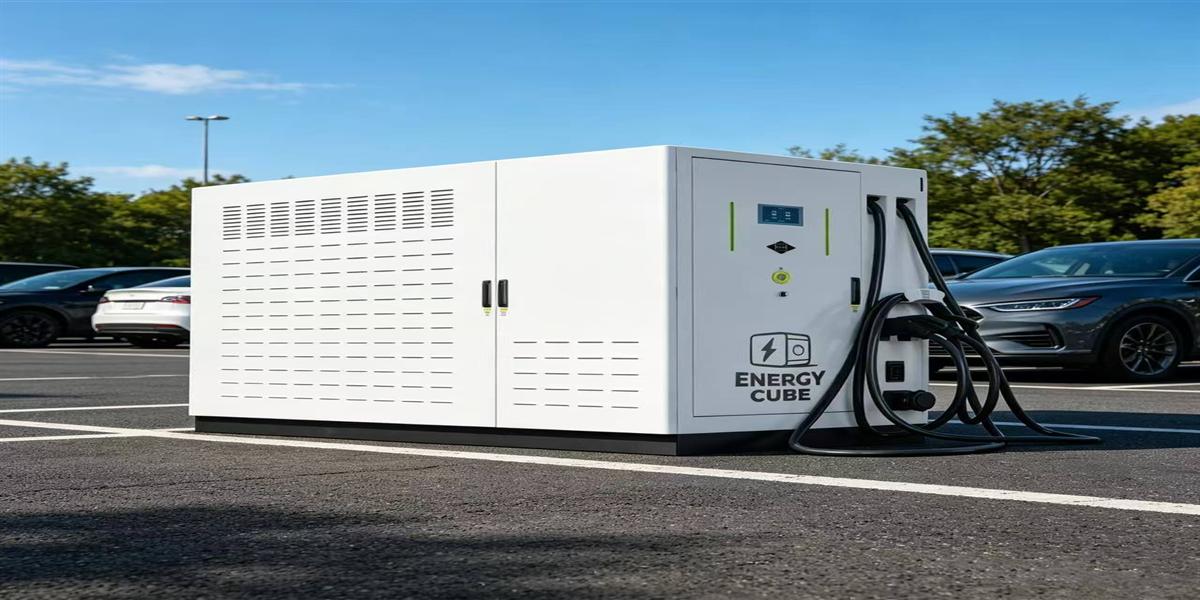
MIDA 80kW Movable Power Bank for Electric Heavy-Duty Logistics and Trucks
Quick Answer
An 80kW movable power bank is a trailer- or skid-mounted battery energy storage system with an integrated 80kW DC fast-charging output, designed to charge electric heavy-duty trucks and logistics vehicles where fixed depot infrastructure does not yet reach. With 200–400kWh of LFP storage and 800V–1000V wide-range output, a single unit delivers 200–300km of truck range in a 2.5–4 hour charging window — enough to complete a delivery shift, bridge a depot under construction, or recover an e-truck stranded away from a compatible charger. The unit recharges from a modest three-phase site supply, requires no transformer or utility upgrade, and redeploys between depots, yards, and customer sites as the operation changes.
Key Takeaways
- Moves to the truck, not the truck to the charger. An 80kW movable power bank eliminates the deadhead journey to a charger — a decisive advantage for trucks whose schedule cannot absorb a detour.
- Bridge infrastructure, not standby equipment. It puts a depot, a construction yard, or a temporary logistics hub into service in days instead of the 12–24 months a grid upgrade requires.
- Sized for shift completion, not full recharge. At 80kW, 200–300km of added range covers the majority of urban and regional duty cycles without a full overnight cycle.
- True 800V/1000V capability is mandatory. Heavy trucks operate at high pack voltages; a 400V-limited unit is not a truck charger, whatever its kW rating suggests.
- One platform serves depot, yard, and roadside duty. The same unit handles opportunity charging, cold-chain idle-power support, and emergency recovery — improving asset utilisation and payback.
The Electrification Gap Facing Heavy-Duty Logistics
Electric heavy-duty trucks have crossed the technical threshold. Range, payload, and driveability are adequate for a large share of real logistics work. The remaining obstacle is not the truck — it is the charging infrastructure that must exist where the truck works.
A depot that runs 25 electric tractors needs megawatt-scale installed capacity, a substation upgrade, trenching, civil works, and utility approvals. Even where the business case is obvious, the delivery timetable rarely matches the fleet’s electrification plan. Fleets face a familiar sequence: trucks arrive, chargers do not. The result is either stranded assets or continued diesel operation — both costly.
Three specific gaps dominate:
- Depots awaiting grid works. The trucks are delivered and the depot energisation is 8–20 months away.
- Temporary and project sites. Construction logistics, event freight, seasonal distribution, and pop-up hubs need charging for a defined period at a location that will not be permanent.
- Away-from-base duty. An e-truck that ends a shift short of energy, or arrives at a shipper’s yard without charging access, has no practical recovery option today other than a tow.
An 80kW movable power bank addresses all three with one asset. It is placed where the trucks are, charged from whatever supply the site can provide, and moved on when the requirement changes or the permanent infrastructure arrives.
What an 80kW Movable Power Bank Contains
The unit is a complete charging facility on a trailer or skid, not a battery with a cable bolted on.
| Subsystem | Function | Typical specification |
|---|---|---|
| LFP battery racks | Energy reservoir with high cycle life and thermal stability | 200–400kWh, modular rack architecture |
| Bi-directional PCS | Manages charge and discharge, grid interface, AC output | 50–100kW class, site-fed or standalone |
| DC charging stack | Delivers regulated DC to the truck per its charge profile | 80kW continuous, 200–1000V window |
| Liquid-cooled charging cable | Sustained high-current delivery without thermal derating | 250–400A class, liquid-cooled connector head |
| Thermal management | Keeps cells and power electronics in their optimal band | Liquid-cooled loop, −20°C to +55°C ambient |
| EMS and telematics | Session control, load scheduling, remote diagnostics | OCPP 1.6J or 2.0.1, 4G, fleet API |
Two details determine whether the unit performs as a truck charger. The first is the DC output window: heavy-duty platforms operate at 800V and increasingly 1000V, so the power stage must regulate across that range with full current capability. Building the DC stage on the same 40kW/60kW liquid-cooling power modules for DC EV charging stations used in permanent truck-depot cabinets gives the movable unit identical conversion behaviour, identical efficiency, and a shared spares pool.
The second is the cable. An 80kW DC session into a large truck pack runs at high continuous current, and air-cooled cables in the 200A-plus class become heavy and heat-limited. Liquid-cooled cable assemblies hold full current without derating, keep the cable manageable for the driver, and extend connector life — the same engineering discipline behind the 480kW ultra-fast liquid-cooled DC charging station for motorways applied at truck-manageable scale.
Fixed Depot, Movable Unit, or Both? A Deployment Comparison
Movable storage is not a universal replacement for fixed infrastructure. It is the right tool for specific conditions, and the comparison below makes the decision explicit.
| Factor | Fixed Depot Charging | 80kW Movable Power Bank | Hybrid (Fixed + Movable) |
|---|---|---|---|
| Time to first charge | 8–24 months (grid, civil, permits) | Days to weeks | Immediate, then permanent |
| Grid requirement | High — transformer and service upgrade | None beyond a modest site supply | Fixed: high; Movable: none |
| Capital structure | Heavy CAPEX, site-bound | Movable asset, redeployable, resale value | Phased CAPEX matched to fleet growth |
| Peak power delivered | High (hundreds of kW to MW) | 80kW per unit, stackable | Fixed baseline plus movable peak |
| Best for | Permanent, high-utilisation depots | Project sites, interim depots, shift top-ups, rescue | Fleets scaling up, seasonal peaks, corridor support |
| Utilisation risk | Stranded if site or route changes | Low — the asset follows the work | Balanced |
The decisive concept is asset mobility versus site permanence. A charging asset bolted to a yard is only as valuable as the yard. A movable unit is valuable wherever the trucks are this month — during a depot build, at a temporary distribution centre, at a customer’s site during a delivery campaign, or on the road as a recovery asset.
Charging Performance: What 80kW Actually Delivers
Truck operators think in kilometres and shift hours, not kilowatts. The conversion matters:
| Truck class | Typical consumption | Energy from 3h at 80kW | Range added |
|---|---|---|---|
| Electric rigid 18t (regional) | 1.1–1.4kWh/km | 240kWh | ~170–220km |
| Electric tractor 40t (urban/regional) | 1.3–1.6kWh/km | 240kWh | ~150–185km |
| Electric van / light commercial | 0.3–0.4kWh/km | 240kWh | ~600km+ |
| Yard tractor (terminal duty) | 1.0–1.2kWh/km | 240kWh | Full shift duty cycle |
Two implications follow. First, 80kW is a shift-completion tool rather than a full-recharge tool for the largest tractor units: it restores enough range to finish a duty cycle or reach a higher-power fixed charger. Second, for vans, yard tractors, and light commercial vehicles — a very large share of urban logistics fleets — 80kW is a genuinely complete charging solution.
Units can also be paralleled. Two movable units feeding a single truck, or one unit rotating between trucks during a driver break, both extend capability without advancing to fixed infrastructure. This is the same modular logic that lets a permanent site grow by adding cabinets — capacity added in defined, bankable blocks rather than a single irreversible investment.
Where the Unit Earns Its Place in a Logistics Operation
- Interim depot charging. The fleet electrifies now; the substation arrives later. Movable units cover the gap from day one and are redeployed to the next site once fixed chargers are commissioned — with no stranded capital.
- Opportunity charging during driver breaks. A 45–60 minute mandatory rest at a distribution centre can yield 60–80kWh if the unit sits at the loading bay. Over a day, three such breaks materially extend duty range.
- Yard and terminal duty. Terminal tractors cycle continuously within a small radius. A movable unit stationed in the yard keeps them charged without any yard electrification project.
- Project and event freight. Construction logistics and event operations relocate. The charging asset follows, which is why movable units — rather than fixed installations — are typical at these sites.
- Roadside recovery for e-trucks. Heavy electric vehicles cannot be recovered by light roadside equipment. An 80kW unit with a compatible connector provides a genuine recovery capability: enough charge to reach a depots or a high-power charger.
- Cold-chain and auxiliary support. Refrigerated units and auxiliary loads need power at rest. A movable unit with an AC output supports these loads while the truck charges, avoiding idling.
The Business Case: Avoided Cost, Deferred CAPEX, Higher Utilisation
The financial logic of an 80kW movable power bank rests on four channels:
- Deferred infrastructure CAPEX. Substation upgrades, trenching, and civil works for a mid-size electric depot commonly run into six figures and 12–24 months. A movable unit puts the fleet into service in weeks at a fraction of that cost, and remains a redeployable asset afterwards.
- Diesel displacement. Where the alternative is a diesel genset charging or continued diesel trucking, the fuel saving per delivered kWh is substantial, and it compounds with avoidance of engine maintenance and emissions compliance.
- Utilisation, not peak power, drives payback. A movable unit can serve a depot by day, a construction yard by night, and a customer’s site on weekends. Each additional duty cycle lowers the effective cost per kWh and shortens payback.
- Residual value. Battery-integrated movable assets hold resale value and can be redeployed across regions. Fixed infrastructure cannot be sold when a lease ends.
Framed against the realistic alternatives — delayed electrification, third-party charging at retail rates, or continued diesel — the movable power bank is usually the lowest-cost route to electrified heavy-duty logistics in the years before permanent infrastructure is available.
Specification Checklist for Fleet Buyers
Heavy-duty charging is unforgiving of underspecified hardware. Confirm each of the following before purchase:
- Output window: 200–1000V, full current across the range. Trucks need high-voltage capability. Verify the actual current curve, not just the kW figure.
- Liquid-cooled cable and connector rated for the duty cycle. High-current sessions heat connectors quickly; liquid cooling preserves throughput and hardware life.
- Protocol completeness. OCPP 1.6J or 2.0.1, ISO 15118 readiness for Plug and Charge, and a documented API for your fleet management platform. A unit that cannot report session data cannot be managed economically.
- Certification for the target market. CE and IEC compliance for Europe, UL for North America, plus UN38.3 for battery transport if the unit crosses borders. The 360kW liquid-cooled charging station with RFID, OCPP, and POS illustrates the certification and control-plane standard fixed truck depots expect; the movable unit should meet the same bar.
- Stackable and parallelable. Confirm that two units can serve one vehicle or one site simultaneously without conflicts in session management.
- Service model. Hot-swappable modules, remote diagnostics, and a defined mean-time-to-repair commitment. A truck charger that is down is a truck that is not earning.
FAQ
1. How long does it take to charge an electric truck from an 80kW movable power bank?
A three-hour session delivers 240kWh. For a 40t tractor consuming roughly 1.4kWh/km, that is approximately 170km of added range; for a light commercial vehicle, considerably more. It is best understood as a shift-completion capability rather than a full recharge.
2. Can the unit charge trucks at 800V and 1000V?
Yes, if specified with a 200–1000V wide-range DC output stage. This is the single most important specification for heavy-duty applications and should be verified with the manufacturer’s current-versus-voltage curve.
3. How do I recharge the movable power bank itself?
From a three-phase site supply — typically 22–43kW at a depot or yard. A 300kWh unit refills from 20% to 90% overnight. Where time is short, a higher-power AC or DC supply at base reduces turnaround.
4. Can it operate completely off-grid?
Yes. The unit carries its own energy and can charge trucks with no grid connection at all. Recharging the unit thereafter requires some power source, which may be a site supply, a generator, or solar PV.
5. Is a movable power bank more expensive per kWh than a fixed charger?
Per installed kilowatt, slightly — the transport frame and rapid-deployment engineering add cost. But when grid upgrades, civil works, permits, delayed launch, and stranded-asset risk are included, the movable unit is frequently cheaper for the first one to three years of operation, and it retains resale value.
6. How many trucks can one unit serve per day?
Typically three to five, depending on session length and shift patterns. Fleets with heavier demand stack additional units in parallel, sharing one control platform and one spares inventory.
7. What certifications should I require for a heavy-duty movable charger?
UN38.3 for the battery pack, CE and IEC compliance for electrical safety in Europe, UL certification for North America, IP54 or better for the enclosure, and documented vehicle-interface protection. Ask for test reports, not just declarations.
Conclusion
Heavy-duty logistics cannot wait for the grid. Electric trucks are ready for a large share of real duty cycles today; the infrastructure that serves them is not, and the timeline for grid reinforcement is measured in years. An 80kW movable power bank resolves the mismatch by putting genuine high-voltage DC charging where the trucks already are — at interim depots, project sites, yards, customer locations, and the roadside. Built on the same liquid-cooled module platform, wide-range output stage, and protocol-complete control plane as permanent truck infrastructure, it is engineered to be redeployed rather than stranded. For fleets electrifying ahead of their substations, that is the difference between a plan and an operating fleet.
MIDA Power manufactures movable and fixed DC charging systems, liquid-cooling power modules, and integrated storage solutions for heavy-duty logistics. Review the DC fast charging stations range, or contact MIDA via midapower.com for truck-depot sizing and movable-unit configuration.
Post time: Sep-15-2026


