
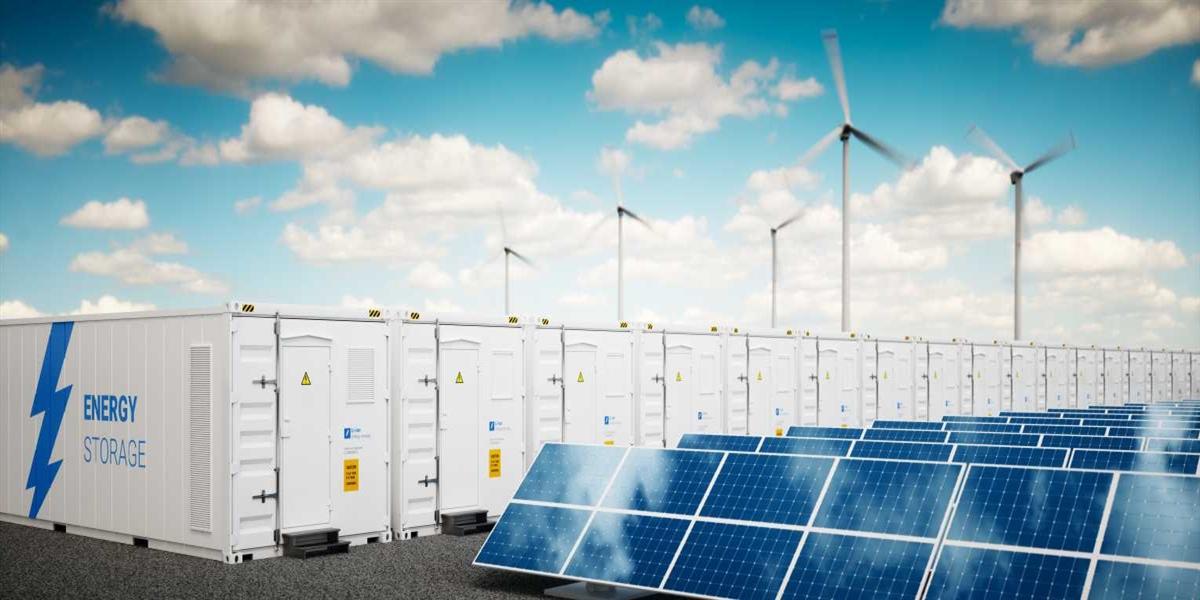
MIDA 240kW Ultra-Fast Solar EV Charging Systems with Integrated Energy Storage
[Image Placeholder: Thumbnail 400*350, ~30KB — a 240kW solar-integrated EV charging station with a photovoltaic carport canopy and a compact battery storage cabinet on a sunny commercial site]
Quick Answer:
A MIDA 240kW ultra-fast solar EV charging system with integrated energy storage is a grid-connected charging plant in which a 240kW liquid-cooled DC power cabinet, a solar photovoltaic array, and a lithium iron phosphate (LFP) battery buffer operate as one dispatchable energy system under a single Energy Management System (EMS). Combined with 800V-capable output and 400A-class liquid-cooled connectors, it delivers roughly 200km of range in 20–30 minutes while drawing a fraction of its peak power from the utility. Typical configurations pair a 240kW cabinet with 100–300kWp of solar and 200–400kWh of storage, cutting grid connection requirements by 25–40% and demand charges by 30–50%. The result is the first charging tier that is genuinely bankable in both sunny and grid-constrained markets, without sacrificing driver experience.
Key Takeaways:
- 240kW Is the Commercial Sweet Spot: Fast enough for 800V passenger vehicles and light commercial fleets, yet sited on grid connections that most urban and highway plots already have.
- Solar Plus Storage Changes the Cash Flow: The battery absorbs midday generation and releases it into the evening charging peak — the highest-margin hours of the day.
- Wide-Voltage Architecture Protects the Investment: 150–1000V output supports 400V, 800V, and future higher-voltage platforms from a single cabinet.
- Liquid Cooling Enables Sustained Rating: A 240kW rating is only meaningful if it can be held continuously; liquid-cooled modules and cables are what convert a peak number into a contractual one.
- Integration Beats Assembly: One vendor for cabinet, storage, solar interface, and EMS means one compliance file, one service desk, and one accountable performance guarantee.
The Real-World Problem: Fast Charging on a Grid That Was Never Built for It
A 240kW charger is a modest machine by corridor standards — and an enormous load by the standards of the distribution network serving an urban retail park, a hotel, or a logistics depot. Three constraints recur in every project:
The connection is too small. Many commercial sites have a usable capacity of 100–200kW. Installation of a charging-only 240kW system therefore triggers reinforcement: new transformer, new cabling, and a lead time measured in quarters, not weeks.
The tariff punishes peaks. Even where the connection exists, commercial demand tariffs bill the maximum 15- or 30-minute demand of the month. A site that pulls its full rating a handful of times pays for it every month thereafter.
The afternoon is wasted. Solar generation peaks between 11:00 and 15:00, while public charging demand peaks between 17:00 and 21:00. Without storage, that mismatch forces either export at wholesale prices or curtailment.
Solar and storage, integrated rather than bolted on, resolve all three. The battery spreads the charging load across time, the solar array serves a portion of it at near-zero marginal cost, and the EMS keeps the site’s grid draw inside the connection limit at all times. MIDA Power builds this complete stack, from DC fast charging stations to the liquid-cooling power modules at its core.
Anatomy of a MIDA 240kW Solar-Storage Charging System
1. The 240kW liquid-cooled power cabinet
The cabinet houses paralleled liquid-cooled DC modules with a 150–1000V wide output range and 400A-class connectors. It is engineered for continuous duty: liquid cooling holds junction temperatures stable at ambient temperatures up to 55°C, which is what allows the 240kW figure to be quoted as a sustained rating rather than a short-term peak. Modules are hot-swappable, so a failed unit is replaced in minutes and the cabinet degrades gracefully to 200kW or 160kW instead of going offline — a critical property for a site that anchors fleet schedules.
2. The integrated energy storage
An LFP battery of 200–400kWh, connected at the DC bus for maximum round-trip efficiency. LFP chemistry is the default for commercial sites in 2026 because of cycle life — 6,000+ cycles at 80% depth of discharge — thermal stability, and the absence of cobalt and nickel in the supply chain, which simplifies both cost forecasting and sustainability reporting.
3. The solar interface
Photovoltaic capacity of 100–300kWp, delivered via canopy, rooftop, or ground-mount, integrated through a DC-DC or AC-coupled interface depending on site geometry. Canopies do double duty: they generate electricity and provide weather protection over charging bays, which improves the driver experience and, at retail sites, increases dwell time.
4. The EMS and control plane
The EMS is the difference between three appliances sharing a site and one system. It forecasts session demand, tracks battery state of charge and state of health, and decides in real time whether each kilowatt flows to a vehicle, into the battery, or from the grid. It enforces the site’s grid limit as a hard constraint, exposes module-level telemetry, and speaks OCPP 2.0.1 and ISO 15118 so the site can participate in smart charging programs and Plug & Charge.
[Image Placeholder: Content 1200*600, ~250KB — technical layout drawing of a 240kW solar EV charging system showing the PV array, DC-coupled battery storage, 240kW liquid-cooled power cabinet, dispensers, and the energy management system]
Configuration Options and What They Deliver
| Parameter | Compact Commercial | Balanced Retail / Fleet | Maximum Independence |
|---|---|---|---|
| Power cabinet | 240kW liquid-cooled | 240kW liquid-cooled | 2 × 240kW, shared DC bus |
| Solar array | 100–150kWp | 150–250kWp | 250–300kWp+ |
| Battery storage | 200kWh LFP | 300kWh LFP | 400kWh+ LFP |
| Grid connection | 100–150kW | 150–200kW | 200–250kW |
| Typical site | Hotel, office, small depot | Retail park, fleet yard | Highway rest area, logistics hub |
| Stalls served | 2–4 | 4–8 | 8–16 (with dynamic sharing) |
| Deliverable | Charging Only | + Solar | + Solar & Storage |
|---|---|---|---|
| Grid connection size | 100% | 90–100% | 50–70% |
| Demand charge (relative) | 100% | 95–100% | 50–70% |
| Levelized energy cost | Baseline | 5–15% lower | 15–30% lower |
| Renewable share of delivered energy | 0–5% | 20–40% | 60–90% |
| Sessions at full 240kW | Grid-limited | Grid + solar limited | Grid + battery backed |
The Engineering Detail That Determines Whether the 240kW Rating Is Real
Buyers frequently compare 240kW cabinets on price and ignore the variable that decides lifetime performance: thermal design. Three specifics are worth interrogating.
Module cooling method. Air-cooled modules in a 240kW cabinet are typically derated above 40–45°C ambient and lose output as filters load with dust. Liquid-cooled modules such as MIDA’s 40kW/60kW liquid-cooling power modules maintain full rating across a −30°C to +55°C window, which matters in the Middle East, Southeast Asia, and increasingly in southern Europe.
Cable cooling. At 400A, resistive heating in an air-cooled cable assembly becomes the limiting factor long before the power modules are. Liquid-cooled cable assemblies are what make sustained 400A sessions possible without thermal cutbacks that quietly reduce delivered energy per hour.
Conversion efficiency. A 1–2 percentage-point efficiency difference between module families sounds trivial until it is multiplied by 200,000kWh per stall per year. At €0.20/kWh, two points of efficiency on a busy 240kW stall is worth several thousand euros annually — more than the cost difference between a premium and a budget module.
For operators who have already scaled beyond 240kW — for example at a motorway corridor — the same module platform appears in the 480kW ultra-fast liquid-cooled DC charging station for motorways, preserving spares, training, and software across a mixed fleet. For attended public hubs requiring payment integration at the terminal, the 360kW liquid-cooled charging station with RFID, OCPP, and POS extends the same architecture upward with an integrated payment layer.
Financial Performance: What a 240kW Solar-Storage Site Looks Like on Paper
Take a representative retail site in a mid-latitude, moderately sunny market: one 240kW cabinet, four dispensers, 200kWp of canopy solar, and a 300kWh LFP battery, serving roughly 180 sessions per week at an average 42kWh delivered.
- Energy cost: 18–30% lower than a grid-only site, because solar and stored off-peak energy displace retail purchases at the expensive evening hours.
- Demand charges: 30–50% lower, because the EMS limits grid draw to the contracted capacity while the battery covers the difference.
- Grid connection CAPEX: reduced by 25–40%, frequently the largest single line-item saving in the project.
- Additional revenue: where flexibility markets exist, the battery earns frequency-regulation or demand-response payments, offsetting its own capital cost while charging continues.
The practical consequence is that the solar and storage components often pay for themselves through avoided connection and demand costs alone, before counting energy arbitrage or grid-service revenue. That is a very different investment profile from adding sustainability features as a cost of compliance. MIDA’s broader EV charging solutions portfolio is engineered around this economics-first approach to solar and storage integration.
Deployment Checklist for a 240kW Solar-Storage Project
- Audit the site: solar resource (kWh/m²/year), grid capacity, tariff structure, and hourly charging demand forecast.
- Fix the grid limit first: design the site around the existing connection wherever possible; every kilowatt of connection avoided is capital returned.
- Size storage to the evening peak gap: 1.5–2× the largest single peak event is a sound starting rule, adjusted for solar penetration.
- Specify sustained ratings, not peak ratings: demand performance data at 45–55°C ambient, and cable assemblies rated for continuous 400A.
- Insist on protocol completeness: OCPP 2.0.1, ISO 15118, and grid-code-compliant export limits configured during commissioning.
- Plan the upgrade path: cabinet slots, DC bus capacity, and enclosure space provisioned for additional modules and storage from day one.
FAQ
1. Is 240kW fast enough for 800V vehicles?
Yes. A 240kW cabinet on a 150–1000V output serves 800V platforms efficiently and delivers roughly 200km of range in 20–30 minutes for typical consumption — the standard expectation for a destination or fleet opportunity charge.
2. How much solar do I actually need?
For a single 240kW cabinet, 150–250kWp is the practical band. Below 100kWp the array contributes meaningfully to energy cost but not to peak reduction; above 300kWp you are typically exporting, which requires an export-capable connection.
3. Can I add the battery later?
Only if the cabinet was designed with an accessible DC bus and space for the storage enclosure. MIDA’s architecture supports staged deployment; most legacy monolithic chargers do not.
4. What happens at night or on cloudy days?
The battery refills from off-peak grid power, which is usually the cheapest energy of the day. Solar is a margin enhancer, not a dependency — the site charges reliably in all conditions.
5. How long does the LFP battery last?
LFP cells rated for 6,000+ cycles at 80% depth of discharge typically deliver 10–15 years of service in a charging-hub duty cycle, with the EMS managing depth and rate to protect cycle life.
6. Does the solar canopy need separate certification?
Yes — the photovoltaic structure, the storage system, and the EVSE each have their own compliance requirements (structural, fire safety, and electrical respectively). A single-vendor integrated stack simplifies this into one coordinated compliance package.
7. How is the system monitored?
Module-level telemetry feeds the EMS and, via OCPP 2.0.1, upstream to the operator’s charge point management system — covering module health, cabinet temperature, battery state of charge, and per-session energy attribution.
Conclusion
The 240kW solar-plus-storage charging system is the practical answer to the two constraints that limit most commercial EV projects: a grid connection that cannot carry the load, and a tariff structure that punishes peaks. By combining a continuously rated 240kW liquid-cooled cabinet with integrated LFP storage, a solar array, and a single control plane, MIDA Power delivers a site that charges quickly, costs less to operate, and reports its renewable share credibly. Operators can start with charging and stage the storage and generation as utilization proves out — the architecture is designed for that path, and the MIDA product portfolio provides every component under one engineering authority.
Post time: Sep-15-2026


