
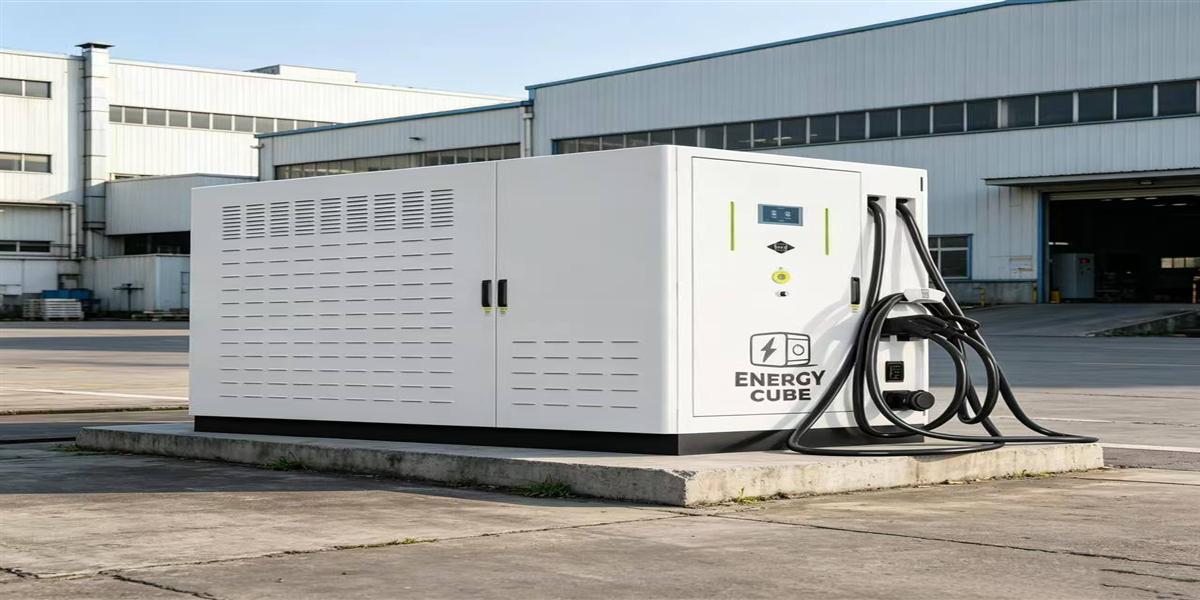
The New Standard in Roadside Support: MIDA 30kW Movable Energy Storage Units
Quick Answer
A 30kW movable energy storage unit is a battery-integrated DC fast charger on wheels — typically 60–120kWh of LFP storage delivering 30kW of true DC output through CCS2, CCS1, NACS, or GB/T connectors — that brings fast charging directly to a stranded vehicle instead of a tow truck. At 30kW, a 20-minute session adds roughly 30–45km of range: enough for the driver to reach the nearest fixed charger under their own power. The unit deploys in under five minutes, requires no generator, no fuel, and no grid connection, and operates from −20°C to +55°C. For roadside operators, dealerships, and fleets, it converts an expensive tow-and-recover event into a billable, repeatable charging service.
Key Takeaways
- 30kW is the roadside sweet spot. It is the lowest power level that still delivers meaningful range in a 15–30 minute stop, while keeping battery size, weight, and cost inside a service-van payload.
- Tow replacement, not tow supplement. A movable storage unit lets the stranded vehicle drive away; a flatbed recovery costs 3–10x more and removes the vehicle from service for hours.
- Battery-integrated beats generator-based. No fuel logistics, no noise complaints, no exhaust, no engine maintenance — and the unit recharges overnight from a standard three-phase supply.
- One asset, multiple revenue streams. Roadside rescue, dealership pre-delivery, fleet depot gaps, valet and parking services, and event standby all draw on the same unit.
- Specification discipline decides reliability. Wide-range DC output (200–1000V), OCPP 1.6J or 2.0.1 telemetry, IP54+ enclosure, and UN38.3 transport certification are the non-negotiable line items.
Why Roadside Assistance Is the Weakest Link in the EV Ecosystem
Every EV market reaches the same inflection point. Charging networks densify, home charging becomes normal, and range anxiety fades — yet one failure mode remains stubbornly unresolved: the vehicle that arrives at a charger with a depleted pack, or stops at the roadside with more demand than remaining energy. Today, the default answer is a flatbed. The vehicle is lifted, transported to a depot or a charger, and the driver loses half a day.
That answer is economically irrational. A flatbed dispatch consumes a heavy vehicle, a trained operator, and several hours of road time to solve a problem whose actual requirement is 15–25kWh of energy. Roadside assistance providers, automakers, insurers, and fleet operators all recognise the mismatch, but for a decade the tooling did not exist to fix it. Portable AC units at 7–22kW were too slow to matter. Diesel generators at the roadside were noisy, emissions-heavy, and dependent on fuel logistics. Mobile DC chargers existed as prototypes but rarely as products engineered for a van-mounted, all-weather, daily-duty life.
The 30kW movable energy storage unit is the first format that closes that gap profitably. It carries its own energy, delivers DC fast-charging currents the vehicle recognises as legitimate (not a slow AC trickle), and returns to base to recharge from an ordinary commercial supply. It is not a novelty demonstration unit — it is the working tool that turns EV rescue from an exception into a service line.
What a 30kW Movable Energy Storage Unit Actually Contains
The engineering challenge is not producing 30kW. It is producing 30kW reliably, repeatedly, at the roadside, from a box that a technician can move and a service van can carry. A production-grade unit integrates five subsystems:
| Subsystem | Function | Typical specification |
|---|---|---|
| LFP battery pack | Energy reservoir, transport-safe chemistry | 60–120kWh, 250–400V nominal, 3,000+ cycles |
| DC/DC or AC/DC power stage | Regulates pack voltage to the vehicle’s charging profile | 30kW continuous, 200–1000V output window |
| Liquid-cooled charging modules | Power conversion with thermal stability under sustained load | 30kW–40kW module platform, hot-swappable |
| Charging connectors | Vehicle interface | CCS2 / CCS1 / NACS / GB/T, liquid-cooled or air-cooled cable |
| EMS, telematics, and HMI | Session control, billing, remote monitoring, safety interlocks | OCPP 1.6J or 2.0.1, 4G, ISO 15118-ready |
Two design decisions separate a professional unit from a compromised one. The first is the power module. Units built on the same liquid-cooled module platform used in permanent stations — such as the 40kW/60kW liquid-cooling power modules for DC EV charging stations — inherit field-proven efficiency, derating behaviour, and a spares pool that already exists in the service network. The second is the control layer. A roadside unit that speaks only a proprietary protocol is invisible to the operator’s platform; a unit with OCPP and telematics reports location, state of charge, session data, and faults to the same dashboard that manages fixed sites.
Because the output stage is a genuine DC fast-charging converter rather than an inverter feeding an on-board charger, the vehicle accepts the full 30kW. Sessions are measured in tens of minutes rather than hours — the difference between a service call and a recovery operation.
Deployment: From Van Roll to Charge in Five Minutes
A roadside unit is only as valuable as its deployment speed. The workflow a competent 30kW movable unit supports looks like this:
- Position — the unit is rolled off the van or trolley-cart to within cable reach of the vehicle’s charge port. No crane, no forklift, no site preparation.
- Connect — the operator selects the matching connector (CCS2, CCS1, NACS, or GB/T); the unit performs insulation, continuity, and isolation checks automatically.
- Authorise — the technician authenticates by RFID card, app, or PIN, and the session starts as a normal DC fast-charge event.
- Charge — at 30kW, the pack gains approximately 1.5–2.5kWh per five minutes depending on the vehicle’s acceptance curve and state of charge.
- Return to service — the vehicle drives to the nearest fixed charger; the unit returns to base and recharges overnight.
Total on-scene time for a 20-minute top-up is typically 30 minutes including setup and payment. A flatbed recovery for the same event averages two to four hours of vehicle downtime and a far higher dispatch cost.
30kW vs 40kW vs Diesel Generator: Choosing the Right Roadside Unit
Power level is a commercial decision as much as a technical one. The table below frames the trade-offs for roadside duty.
| Option | Typical output | Energy carried | On-scene top-up | Best suited to |
|---|---|---|---|---|
| 20kW portable | 20kW DC | 30–60kWh | ~25–35km in 25 min | Low-volume urban coverage, valet, dealership lots |
| 30kW movable ESS | 30kW DC | 60–120kWh | ~30–45km in 20 min | General roadside assistance, motorway patrol, fleet rescue |
| 40kW portable | 40kW DC | 80–160kWh | ~50–70km in 25 min | High-demand corridors, heavy passenger EVs, small vans |
| Diesel generator + charger | 20–40kW DC | Unlimited (fuel) | Comparable | Sites with no access to overnight charging power |
| Flatbed recovery | n/a | n/a | Vehicle relocated | Non-chargeable faults, damage, unsafe locations |
The 30kW class wins on balance. It is heavy enough that the range delivered is decisive, light enough that a two-person crew handles it without equipment, and mature enough that battery, module, and connector supply chains are standardised. Operators who later expand can add 40kW units for the busiest corridors while keeping one control platform and one spares inventory across the fleet.
The diesel alternative deserves a caveat. Where a roadside unit can be recharged overnight at the depot, a battery unit is always cheaper per delivered kilowatt-hour and free of emissions and noise constraints. Only where the fleet has no access to recharging power at all does a generator remain rational — and even then, hybrid designs that pair a small generator with a buffer battery are replacing pure generator sets.
The Economics of Battery-Based Roadside Charging
Roadside charging is priced not by the kilowatt-hour but by the incident. That is the core of the business case.
- Revenue per call. A roadside top-up is a premium service. Markets price an on-scene DC charge at a meaningful multiple of the network rate because it saves the customer a tow, a day of lost vehicle use, and often a missed appointment.
- Calls per charge cycle. A 100kWh unit delivering 20–25kWh per incident covers four to five calls before returning to base. Two units in rotation keep a patrol vehicle continuously available.
- Avoided tow cost. The operator’s own saving is equally real: recovering a passenger EV with a flatbed is a heavy-vehicle dispatch. Replacing three of ten weekly tows with a charging call materially improves fleet productivity.
- Contract value. Automaker roadside programmes, insurers, leasing companies, and fleet operators all contract for “first-response charging” because it reduces claim severity and protects brand experience. These contracts are recurring and are often awarded to the operator with a credible, certified DC-capable unit.
- Asset utilisation. The same unit covers dealership pre-delivery top-ups, hotel and valet requests, and depot gap charging during off-peak hours — turning a rescue tool into a multi-purpose asset with year-round utilisation.
Set against the purchase price, the dominant variable is utilisation, not hardware cost. A unit deployed on 120 incidents a year at premium pricing pays for itself well inside its warranty period, before any contract revenue is counted.
Cold Weather, Remote Sites, and Grid-Free Resilience
Roadside demand peaks exactly when conditions are worst: winter cold snaps, storm outages, and remote stretches of motorway where the nearest charger is 80km away. A movable storage unit is engineered for precisely these conditions.
- Cold-weather operation. LFP cells with active thermal management maintain charge acceptance and output at −20°C; the unit warms its own pack during the drive to the incident, so it arrives ready.
- Grid independence. The unit carries its own energy. It does not need a nearby grid connection when the distribution network is down after a storm — it becomes part of the resilience response rather than a casualty of it.
- Remote corridors. The economics of a motorway patrol vehicle change where the nearest fixed charger is far away. Carrying 60–120kWh means the patrol can resolve incidents without a long recovery trip.
- Safety systems. Multi-layer protection against over-current, insulation failure, over-temperature, and connector faults, plus emergency stop, are standard. Isolation monitoring before every session protects both the technician and the vehicle.
For utilities, municipal fleets, and disaster-response organisations, this grid-free attribute is often the deciding factor: the unit that helps during a normal week is the same unit that performs when the grid does not.
What to Specify Before You Buy
Procurement decisions on roadside units are usually made once and lived with for a decade. Five specifications decide whether the asset delivers:
- Wide DC output window (200–1000V). A unit that cannot serve both 400V legacy vehicles and 800V architectures will strand half the modern fleet.
- Open protocol stack. OCPP 1.6J as a minimum, OCPP 2.0.1 preferably, with ISO 15118 readiness. Insist on a documented API for your dispatch platform.
- Liquid-cooled power modules from a known platform. Thermal stability under sustained output is what separates a lab rating from a road rating. MIDA builds roadside and depot equipment around the same 40kW/60kW liquid-cooling power modules used in fixed infrastructure, so component behaviour is predictable and spares are available.
- Transport and safety certification. UN38.3 for the pack, IP54 or better for the enclosure, CE for Europe, UL and ETL for North America, and clear documentation of the vehicle-interface protection scheme (UL 2231/UL 2202 equivalents). Insurers underwrite certified hardware faster.
- Serviceability. Hot-swappable modules, a documented fault-code map, and remote diagnostics. A unit that requires a factory return is a unit that is not on the road.
Operators planning a mixed fixed-and-mobile network get an additional benefit from platform standardisation: the 360kW liquid-cooled charging station with RFID, OCPP, and POS that anchors a depot and the movable unit that patrols the corridor share the same control logic, the same connector standards, and the same maintenance procedures. That is what turns mobile charging from a pilot into an operating standard.
FAQ
1. How far can a stranded EV drive after a 20-minute charge at 30kW?
Typically 30–45km. A 20-minute session delivers roughly 8–10kWh, and most passenger EVs consume 15–20kWh per 100km. That is normally sufficient to reach the nearest fixed DC charger under the vehicle’s own power.
2. Can a 30kW unit charge a vehicle that uses a NACS or GB/T connector?
Yes, provided the unit is specified with the matching connector type or a multi-standard cable set. Operators serving mixed fleets should specify at least two connector standards and treat connector choice as a configurable option rather than a fixed build.
3. How long does the movable unit take to recharge itself?
From a three-phase 32A (22kW) supply, a 100kWh unit refills from 20% to 90% in roughly three to four hours — an overnight turnaround. Faster depot replenishment is possible with a higher-power AC or DC supply at base.
4. Is a movable energy storage unit legal to operate on the road and to transport?
Yes, when it is built and certified for it: UN38.3 testing for the battery, compliant transport securing points, and CE or UL marks for the electrical assembly. Units designed for van mounting with proper restraint systems are routinely operated in Europe, North America, and Asia.
5. What happens if the battery is depleted and the vehicle still needs more energy?
The unit’s EMS reports remaining state of charge and estimated deliverable energy before dispatch, so the operator sends a second unit or a flatbed when appropriate. Depth-of-discharge limits are deliberately conservative to protect cycle life.
6. Does roadside DC charging damage the vehicle battery?
No. The unit behaves as a compliant DC charger and follows the vehicle’s requested charging profile, including current limits. At 30kW the charge rate is far below what most vehicles accept, so thermal stress is low.
7. Is a movable storage unit cheaper than a diesel generator over its life?
For any operator with access to overnight recharging, yes. Electricity costs a fraction of diesel per delivered kWh, and there is no engine servicing, no fuel logistics, no noise compliance risk, and no exhaust. The gap widens with utilisation.
Conclusion
Roadside assistance is where the EV ownership experience is won or lost, and until recently it was the one part of the ecosystem still built on diesel generators and flatbed trucks. The 30kW movable energy storage unit replaces both. It delivers genuine DC fast charging on the scene, deploys in minutes, operates in cold and remote conditions, reports into a normal OCPP platform, and returns to base for an overnight refill. For roadside operators, dealerships, and fleets, the strategic value is that the same asset serves rescue, pre-delivery, depot gaps, and resilience duties — a single investment that raises service quality across the whole operation.
MIDA Power designs and manufactures movable energy storage and DC charging solutions, built around the same liquid-cooled module platform as its permanent infrastructure. Explore the DC fast charging stations portfolio or the MIDA commercial DC fast charging range for integrated mobile and fixed deployments, and contact MIDA via midapower.com for unit sizing and configuration support.
Post time: Sep-15-2026


