


MIDA 600kW 960kW 1440kW N+1 Power Redundancy Split-Type DC Charging Station for Mining Fleet Charging
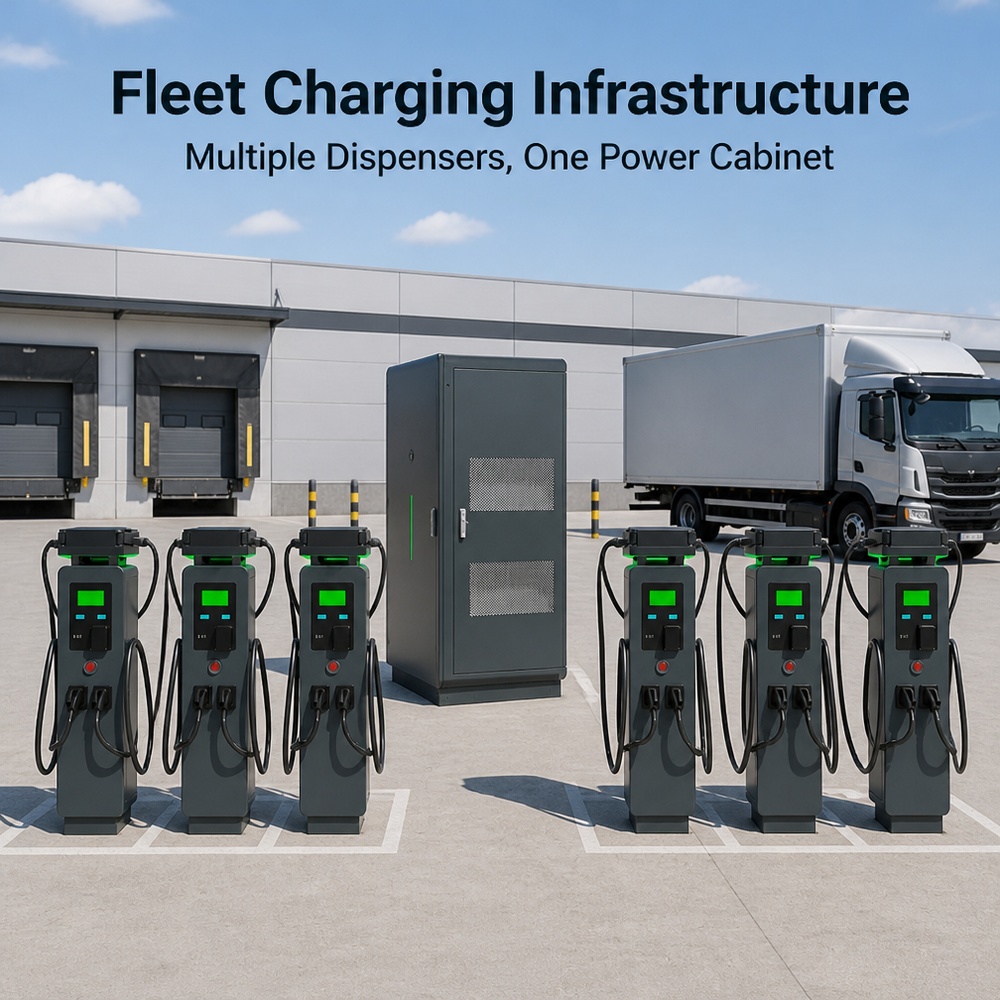
A Fault Should Cost kW, Not a Shift
A charger that fails at 04:00 stops a haul circuit until someone drives out with a spare module. With N+1 the cabinet keeps serving at reduced output while the failed module is isolated, and the operation sees a derate warning in the monitoring portal instead of a dead dispenser in the pit. The margin is sized on the actual load profile, not on the nameplate: 600kW, 960kW and 1440kW enclosures each reserve one rectifier position beyond peak demand, so redundancy does not eat into charging time. Operators comparing architectures read the 800kW 960kW liquid-cooled split DC fast charger, the 800kW 960kW electric truck fleet charger and the 360kW 600kW 720kW intelligent power sharing station on how they handle a module fault.
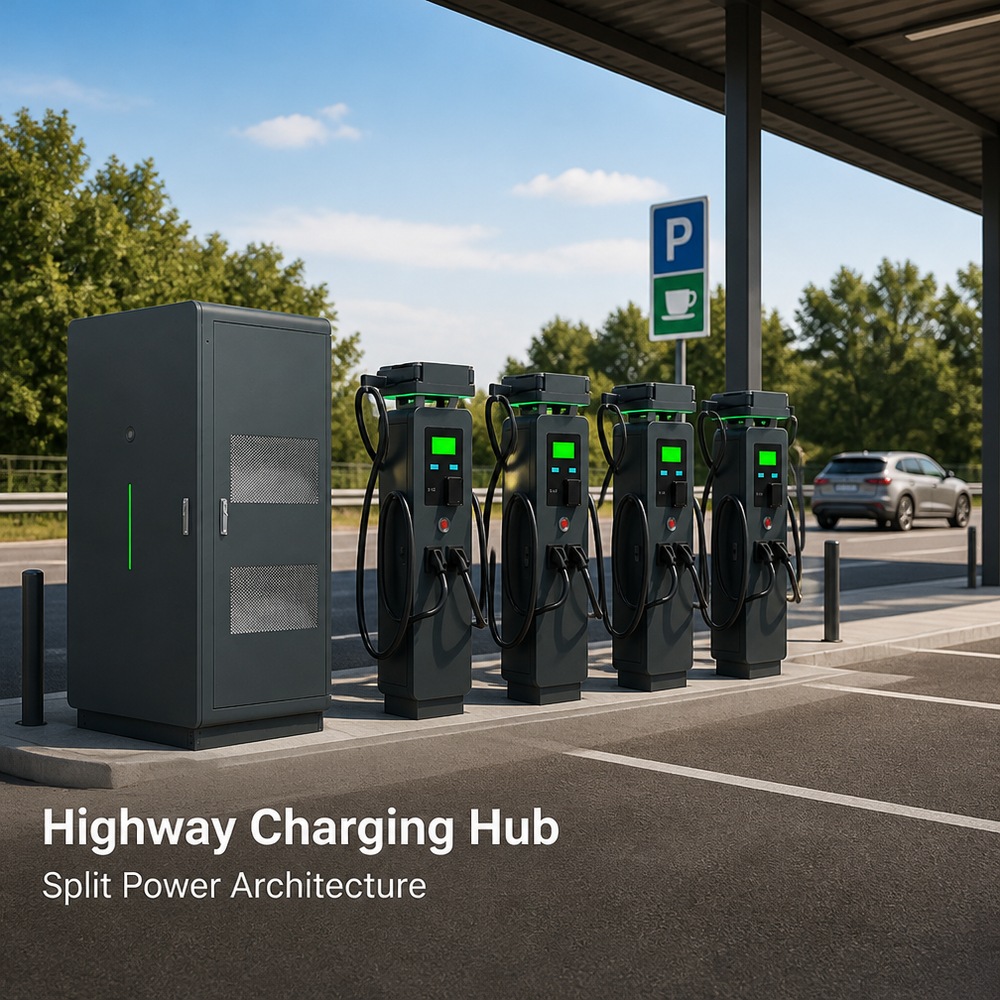
Hot Swap Without a Shutdown
Module replacement is a drawer operation. The DC bus stays live, the remaining rectifiers pick up the lost share, and a technician swaps the unit in under thirty minutes with the cabinet still feeding trucks, which matters when the nearest service crew is a four-hour drive. Each slot reports input current, output current and heatsink temperature separately, so trending tells you a fan bearing is going before it takes the module out. The same architecture carries a per-gun power limit, letting the site cap a gun for a smaller vehicle instead of running the whole cabinet soft. Engineers weighing redundancy cost read the 720kW 960kW dynamic load balancing charger, the 1000kW 1200kW liquid-cooled split EV charger, the 360kW 480kW 600kW split-type DC charging system and the EV charging FAQs.
Leave Your Message:
Products categories
-

MIDA 241kWh 160kW, 240kW 260kWh, 261kWh 120kW H...
-

MIDA 360kW 720kW 960kW Weatherproof Outdoor Spl...
-

MIDA 2MW Industrial Battery Energy Storage Syst...
-

120kW 160kW 180kW High-Power DC Charging Statio...
-

MIDA 60kW 80kW 120kW Floor-Mounted DC Fast Char...
-

160kWh 90kW, 200kWh 120kW, 120kW 241kWh Portabl...


