
Quick Answer
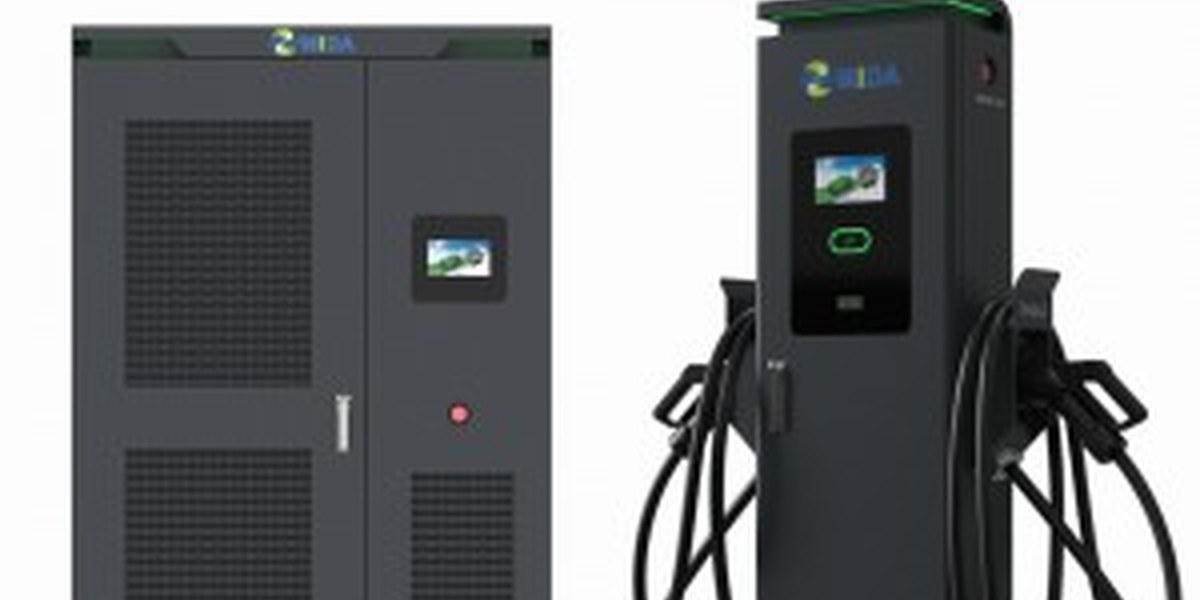
Liquid-cooled HPC is not a connector upgrade — it is a thermal system. Sustaining 800–1,000 A continuously requires a cooled cable, a matched coolant loop, power modules built for sustained current, and a station architecture that removes heat from the right place. MIDA’s stack combines CCS2 liquid-cooled connectors rated to 1,000 V DC and 1,000 A with integrated cooling units from 3.5 kW to 9 kW, HPC cooling units up to 72 kW, and liquid-cooled power modules from 40 kW to 125 kW feeding charging stations from 600 kW to 1,080 kW. Buyers should evaluate cooling capacity, coolant compatibility and cycle life together — not as separate line items on a quotation.
Key Takeaways
- Heat, not voltage, is the binding constraint. Air-cooled CCS-class connectors are typically limited to around 200–300 A per gun; reaching 800–1,000 A requires active liquid cooling of the connector and cable.
- Cooling is a matched system, not a generic pump. MIDA’s published connector data specifies a matched coolant (FUCHS BluEV TF8016) and a cooling system above 6 kW including 6 kW, with re-calibration required if the coolant is changed.
- The connector must survive thousands of cycles. MIDA’s liquid-cooled CCS2 connector is rated for more than 10,000 mechanical cycles, IP54 protection at the mating area, and UL94-V0 flame retardance.
- MIDA supplies the whole chain. Connectors, integrated and split cooling units, liquid-cooled power modules (40–125 kW), and liquid-cooled charging stations (600–1,080 kW) come from one portfolio.
- Ultra-fast charging is a small but growing share. The IEA reports that under 5% of the electric car stock can use chargers above 250 kW, but the segment is expanding alongside megawatt-scale deployment.
The IEA’s Global EV Outlook 2026 records a clear direction of travel: the first 1,000-volt models arrived in 2025, and announcements of charging times under 10 minutes continued into 2026. Higher pack voltage reduces current for a given power, but it does not eliminate the thermal problem at the connector. A 1,000 V pack drawing 1,000 A is still moving a megawatt of electrical power through a handheld interface — and that interface is where heat, safety and user experience meet.
Why Air Cooling Runs Out of Road Around 500 A
The physics is straightforward. Resistive heating in a conductor rises with the square of current. Doubling current quadruples the heat generated inside the same cross-section. Air cooling removes heat from the surface of the conductor and cable; once current rises beyond a few hundred amperes, the surface area available for natural or forced convection is no longer sufficient to hold the conductor within a safe temperature window.
Engineers face three options, and each has a cost:
- Increase conductor cross-section. This works electrically but makes the cable heavy and stiff — a real problem for drivers, who must lift, drag and seat the connector repeatedly.
- Limit duty cycle. Throttle power after a fixed period. This protects hardware but extends dwell time, which is precisely what ultra-fast charging exists to avoid.
- Cool the conductor actively. Circulate coolant through or alongside the current-carrying path, so heat is removed at source rather than after it has already warmed the cable jacket.
Liquid cooling is the option that preserves both power and ergonomics. It is also the option that introduces new dependencies: coolant chemistry, pump reliability, hose routing, leak detection, and a station-level cooling strategy.
The Four-Part Liquid-Cooled Stack
A liquid-cooled HPC installation is best understood as four components that must be specified as one system.
1. The connector
MIDA’s CCS2 liquid-cooled charging connector is published in 500 A, 800 A and 1,000 A variants for ultra-fast charging stations. The core electrical and mechanical envelope is documented:
| Parameter | Specification |
|---|---|
| Rated voltage | 1,000 V DC |
| Rated current | 800 A / 1,000 A variants |
| Output power (station class) | 800 kW / 1,000 kW |
| Ambient temperature | −30 °C to +50 °C |
| Insulation resistance | > 500 MΩ at 1,000 V DC, 1 minute |
| Withstand voltage | 4,000 V AC, 1 minute |
| Leakage current | ≤ 10 mA |
| Protection level | IP54 (mating area) |
| Mechanical life | > 10,000 cycles |
| Flame retardant rating | UL94-V0 |
| Matched coolant | FUCHS BluEV TF8016 |
| Cooling system | Above 6 kW (including 6 kW) |
The liquid-cooled CCS2 connector specification matters because it tells the buyer exactly where the engineering burden sits. A 4,000 V AC withstand test and > 500 MΩ insulation resistance are not marketing numbers; they are the safety envelope that distinguishes a genuine HPC connector from a dressed-up 300 A unit.
2. The coolant and the cooling unit
This is the most under-specified element in most procurement documents. MIDA’s published data notes that the coolant is matched to the FUCHS BluEV TF8016 fluid and the cooling system above 6 kW, and that if the coolant is replaced, the cooling system must be re-calibrated and re-tested to confirm adaptation, performance compatibility, and cooling capability.
That single sentence is the difference between a reliable HPC site and a maintenance liability. Coolant chemistry affects thermal conductivity, viscosity at low temperature, electrical compatibility, and material ageing of seals and hoses. Treating coolant as a commodity consumable is a predictable cause of premature connector failure.
MIDA’s cooling unit portfolio provides the matching hardware at several scales:
| Cooling unit type | Capacity range | Typical role |
|---|---|---|
| Integrated liquid cooling unit | 3.5 kW / 4.5 kW / 6 kW / 9 kW | Compact dispenser-integrated cooling |
| Split-type cooling unit | 2.4 kW / 3.5 kW | Separated cooling for layout flexibility |
| HPC cooling unit | 25 kW – 72 kW | Multi-gun high-power cabinets |
3. The power modules
Cooling the connector is pointless if the modules that generate the current cannot sustain it. MIDA’s liquid-cooled power module range runs from 40 kW to 125 kW, alongside standard modules from 20 kW to 60 kW, bidirectional AC-DC modules from 20 kW to 62.5 kW, and V2G modules from 20 kW to 45 kW.
Liquid-cooled modules matter in HPC because they allow higher power density inside a smaller cabinet — a direct constraint on urban sites where floor area and cooling noise are limited. The MIDA product portfolio positions these modules as the building blocks for stations above half a megawatt.
4. The station
At station level, MIDA’s liquid-cooled charging station family spans 600 kW to 1,080 kW, while the split-type DC family spans 360 kW to 1,440 kW with consolidated cooling cabinets. For sites that do not require liquid-cooled HPC on every gun, a hybrid approach is common: liquid-cooled guns for high-throughput positions, and conventional commercial DC charging piles for secondary bays.
Thermal Testing Principles Buyers Should Understand
Liquid-cooled HPC hardware is validated by a sequence of tests that map directly onto field failure modes. When reviewing a supplier’s documentation, these are the ones to confirm:
- Insulation resistance (> 500 MΩ at 1,000 V DC, 1 minute) — detects degradation of the insulation path, the first warning sign of moisture ingress or thermal ageing.
- Withstand voltage (4,000 V AC, 1 minute) — confirms dielectric strength under a defined over-voltage condition.
- Leakage current (≤ 10 mA) — a safety-critical limit for an interface that a person touches while wet.
- Mechanical life (> 10,000 cycles) — directly proportional to contact wear and, therefore, to resistance and heat generation over the connector’s service life.
- Flame retardance (UL94-V0) — the material-level safeguard if a fault does occur.
- Cooling system validation — the matched coolant and cooling capacity test that determines whether rated current can actually be sustained.
A useful procurement rule: if a supplier quotes 1,000 A but cannot state the coolant, the cooling capacity in kW, and the re-calibration requirement, the specification is incomplete.
Matching HPC Architecture to the Site
Not every location justifies liquid-cooled hardware. The table below maps station classes to realistic deployment scenarios so that cooling investment lands where it produces throughput.
| Station class | Power range | Cooling approach | Best-fit scenario |
|---|---|---|---|
| Floor-standing commercial DC | 60 – 320 kW | Forced air | Retail, hotels, workplace, fleet depots |
| Split DC system | 360 – 720 kW | Air or liquid cabine | Highway corridors, bus depots |
| Liquid-cooled HPC | 600 – 1,080 kW | Liquid, connector + cable | High-frequency corridors, heavy-duty fleets |
| Ultra-high-power split | 1,440 kW+ | Liquid, consolidated | Long-haul truck corridors |
The IEA’s charging outlook reinforces the sequencing logic: ultra-fast and megawatt-scale chargers are expanding, but they sit at the top of a pyramid whose base is still dominated by slower charging. Pairing a small number of liquid-cooled HPC guns with a larger number of conventional DC bays is usually the most capital-efficient configuration.
Frequently Asked Questions
1. What is the difference between liquid-cooled and air-cooled HPC? Air-cooled connectors remove heat from the cable surface and are typically practical up to a few hundred amperes per gun. Liquid-cooled connectors circulate coolant through or alongside the current path, allowing sustained currents of 800–1,000 A and above. The trade-off is added complexity: coolant, pumps, hoses and leak management.
2. Why does coolant compatibility matter so much? MIDA’s connector data specifies a matched coolant and requires re-calibration and re-testing if it is replaced. Coolant affects thermal conductivity, low-temperature viscosity, seal compatibility and electrical behaviour. Substituting an untested fluid can void performance assumptions and accelerate connector wear.
3. How long can a liquid-cooled connector last? MIDA publishes a mechanical life of more than 10,000 mating cycles for its liquid-cooled CCS2 connector. Real service life also depends on coolant maintenance, ambient temperature, and the actual current profile over time.
4. Does liquid cooling require more maintenance than air cooling? Yes, but the maintenance is manageable and predictable. Coolant level and quality checks, pump inspection, and hose integrity checks should be part of the site’s scheduled maintenance plan. The payoff is higher sustained power and longer connector life under heavy use.
5. Can a liquid-cooled connector be used with a modest-power station? It can, but it is usually unnecessary. Liquid-cooled connectors are specified when sustained high current is the operational requirement. Below roughly 300 A per gun, a well-designed air-cooled connector is normally sufficient and simpler to maintain.
6. What station power can MIDA’s liquid-cooled architecture reach? MIDA’s liquid-cooled charging stations are published from 600 kW to 1,080 kW, with split-type DC systems extending from 360 kW to 1,440 kW+. Configuration depends on the number of guns and the cabinet capacity selected.
7. Is liquid-cooled HPC compatible with Plug and Charge and OCPP? Yes. OCPP 1.6 and 2.0 backend support is available across the DC charging range, and Plug and Charge is supported where the vehicle and charger both implement the relevant ISO 15118 profile. Connector variant selection (CCS1, CCS2, NACS, GB/T) should follow the target market.
All specifications cite MIDA’s published connector, cooling unit, module and station data. Site-level capacity planning should always be validated through a dedicated load and thermal study before procurement.
Post time: Sep-28-2026


